Admin July 24, 2026
The Rise of Autonomous Textile Factories
Meta Description: Discover how autonomous textile factories are transforming manufacturing through Artificial Intelligence, robotics, smart machines, automation, predictive maintenance, intelligent quality control, and advanced digital technologies.
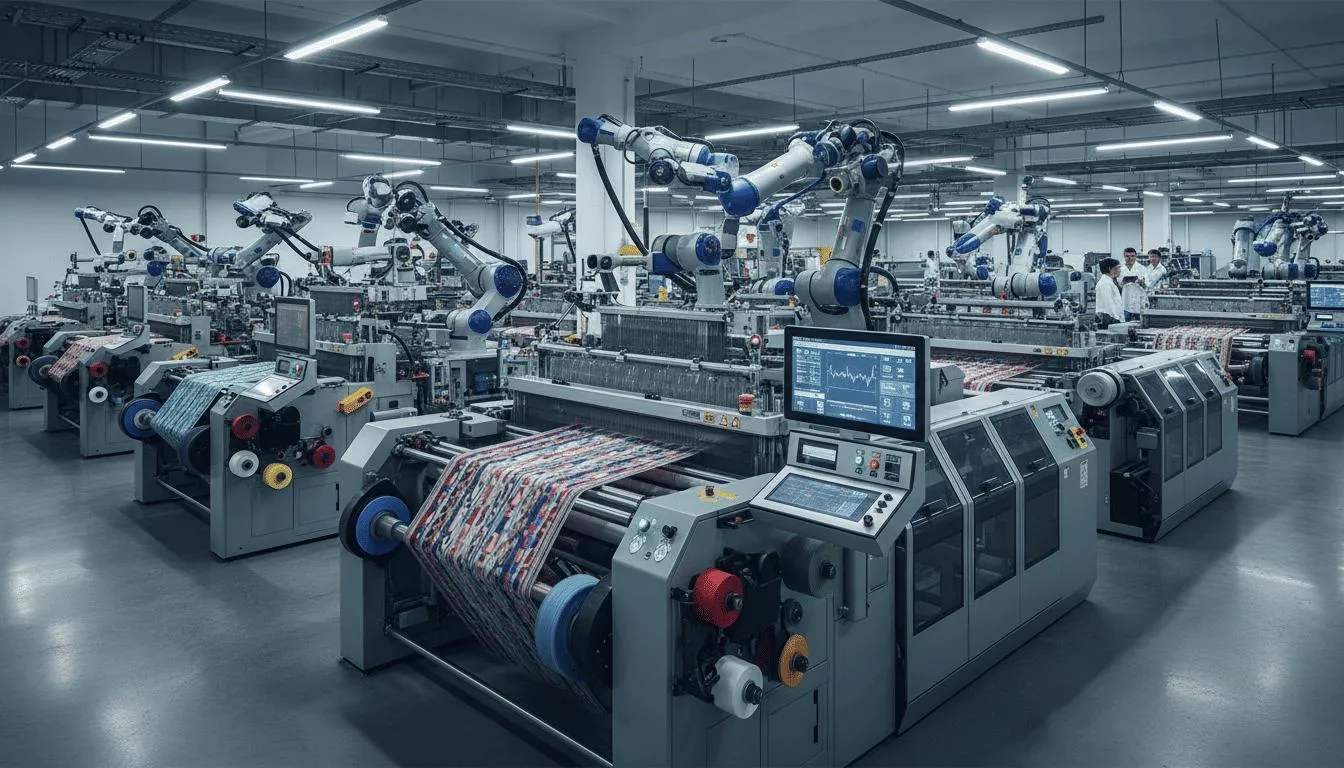
The textile industry is entering a new era of manufacturing as autonomous textile factories become an increasingly important part of modern industrial development. Traditional textile factories have always depended on a combination of human workers, machinery, manual inspections, and management decisions to maintain production. However, the rapid growth of Artificial Intelligence, robotics, machine learning, computer vision, smart sensors, Internet of Things devices, and advanced automation is changing the way factories operate. Autonomous textile factories are designed to perform many manufacturing activities with limited human intervention by using intelligent systems that can monitor production, analyze data, identify problems, and make operational decisions. These factories are not simply automated versions of traditional manufacturing facilities. They are connected and intelligent environments where machines communicate with each other, Artificial Intelligence analyzes real time information, and digital systems continuously optimize production. The rise of autonomous textile factories is helping manufacturers improve productivity, reduce production costs, increase quality, minimize waste, improve workplace safety, and respond more quickly to changing customer demands. As technology continues to advance, autonomous manufacturing may become one of the most important developments shaping the future of the global textile industry.
What Are Autonomous Textile Factories
An autonomous textile factory is a highly intelligent manufacturing facility that uses Artificial Intelligence, robotics, automation, sensors, and digital technologies to perform production activities with limited human intervention.
In a traditional factory, employees may need to monitor machines, inspect products, adjust production settings, manage inventory, and respond to equipment problems manually.
In an autonomous factory, many of these tasks are performed or supported by intelligent systems.
Machines continuously collect information about their performance and communicate this information to central digital systems.
Artificial Intelligence analyzes the data and helps determine what actions should be taken to improve production.
This creates a manufacturing environment that can respond to changing conditions faster and more efficiently.
The Role of Artificial Intelligence
Artificial Intelligence is one of the most important technologies behind autonomous textile factories.
AI systems analyze large amounts of information collected from machines, sensors, production lines, warehouses, suppliers, and customer orders.
The system can identify patterns, predict future events, and recommend actions without requiring managers to manually analyze every piece of information.
For example, AI can predict when a textile machine may require maintenance or identify a quality problem before large quantities of defective fabric are produced.
Artificial Intelligence allows factories to become more responsive, intelligent, and efficient.
Smart Machines and Connected Production
Autonomous factories depend on smart machines that can collect and share information.
Sensors monitor machine speed, temperature, vibration, energy consumption, production output, and other operational conditions.
This information is continuously transferred to digital systems where it can be analyzed.
When one machine experiences a problem, the system can immediately notify operators or adjust production plans.
Connected machines also help manufacturers understand how changes in one part of the production process may affect the entire factory.
This creates greater visibility and control over manufacturing operations.
Robotics in Autonomous Textile Factories
Robotics is playing an increasingly important role in autonomous textile manufacturing.
Robotic systems can perform repetitive tasks such as material handling, fabric movement, packaging, warehouse operations, and product sorting.
Advanced robotic systems can also work alongside intelligent machines to improve production speed and accuracy.
Artificial Intelligence helps robots understand their surroundings and respond to changing production conditions.
As robotic technologies become more advanced, textile factories may rely increasingly on automated systems for repetitive and physically demanding tasks.
Automated Fabric Inspection
Quality control is one of the most important applications of autonomous manufacturing.
Traditional textile inspection often requires human workers to examine fabrics for defects.
Autonomous factories use computer vision systems and Artificial Intelligence to inspect fabrics continuously during production.
High resolution cameras capture images of fabric surfaces while AI systems analyze the images to identify holes, stains, broken threads, color variations, and pattern problems.
When a defect is detected, the system can immediately alert factory employees or trigger an automated response.
This improves quality while reducing waste and production losses.
Predictive Maintenance
Equipment failure can create serious problems for textile manufacturers.
A single machine breakdown may stop production and delay customer orders.
Autonomous factories use sensors and Artificial Intelligence to monitor equipment performance continuously.
AI systems analyze changes in vibration, temperature, energy consumption, and machine behavior to predict possible failures.
Maintenance teams can then repair equipment before a major breakdown occurs.
Predictive maintenance reduces downtime, improves machine reliability, and extends equipment life.
Autonomous Inventory Management
Inventory management is another area where automation can provide significant benefits.
Textile factories need to manage raw materials such as yarn, fabric, dyes, chemicals, packaging materials, and finished products.
Autonomous inventory systems monitor stock levels in real time and use Artificial Intelligence to predict future requirements.
When inventory levels become too low, the system can generate purchasing recommendations or automatically initiate procurement processes.
This reduces the risk of material shortages and prevents unnecessary excess inventory.
Intelligent Production Planning
Autonomous factories can also improve production planning.
Artificial Intelligence analyzes customer orders, production capacity, machine availability, raw material supplies, and delivery requirements.
The system creates production schedules that maximize efficiency and reduce unnecessary delays.
If demand changes or a machine becomes unavailable, AI can automatically adjust the production plan.
This flexibility allows manufacturers to respond quickly to unexpected changes.
Supporting Home Textile Manufacturing
Autonomous textile factories can improve the production of many home textile products.
These include:
-
Bed Sheets
-
Pillowcases
-
Duvet Covers
-
Comforters
-
Blankets
-
Towels
-
Curtains
-
Cushion Covers
-
Mattress Protectors
-
Table Linen
Artificial Intelligence and automation can improve quality control, production planning, inventory management, machine maintenance, and packaging for these products.
Reducing Textile Waste
Textile waste is a major challenge for manufacturers and the environment.
Autonomous factories can reduce waste by detecting quality problems early and optimizing production processes.
Artificial Intelligence helps manufacturers predict demand more accurately, reducing unnecessary production.
Automated quality inspection prevents defective materials from moving through the entire production process.
Smart inventory management also reduces the risk of excess materials becoming outdated or unused.
Together, these technologies help manufacturers use resources more efficiently.
Improving Energy Efficiency
Energy consumption is an important part of textile manufacturing costs.
Autonomous factories continuously monitor energy usage across machines and production lines.
Artificial Intelligence analyzes this information and identifies inefficient equipment or unnecessary energy consumption.
Manufacturers can optimize production schedules and machine settings to reduce energy use.
This can lower operating costs while supporting environmental goals.
Improving Worker Safety
Autonomous textile factories can also improve workplace safety.
Robots and automated systems can perform repetitive or physically demanding tasks that may expose workers to injury.
Artificial Intelligence can monitor factory environments and identify unusual conditions.
Smart sensors may detect temperature changes, equipment problems, or other safety risks.
Although human employees remain important, automation can help create safer working environments by reducing exposure to dangerous tasks.
Challenges of Autonomous Textile Factories
Despite their many advantages, autonomous textile factories also face challenges.
The initial investment in robotics, Artificial Intelligence systems, sensors, software, and digital infrastructure can be significant.
Factories may also need skilled employees who understand both textile manufacturing and advanced digital technologies.
Cybersecurity is another important concern because connected factories depend heavily on digital networks and data systems.
Manufacturers must protect their systems from cyber threats and ensure that important production data remains secure.
Successful implementation also requires careful planning and integration with existing factory equipment.
The Changing Role of Human Workers
The rise of autonomous factories does not necessarily mean that humans will disappear from textile manufacturing.
Instead, the role of workers is likely to change.
Employees may spend less time performing repetitive manual tasks and more time managing intelligent systems, analyzing data, maintaining advanced equipment, and making strategic decisions.
Human creativity and professional knowledge will remain valuable, especially in areas such as product design, innovation, quality strategy, and customer understanding.
The future of textile manufacturing is likely to involve collaboration between people and intelligent machines.
The Future of Autonomous Textile Manufacturing
The future of autonomous textile factories will involve even greater levels of intelligence and connectivity.
Artificial Intelligence will become more capable of making real time decisions based on production data.
Robots will become more flexible and capable of performing complex tasks.
Digital twins will allow manufacturers to create virtual models of factories and test production changes before implementing them physically.
Smart sensors will provide continuous information about every stage of manufacturing.
These technologies will create factories that can adapt quickly to customer demand, market changes, equipment conditions, and resource availability.
Why Textile Manufacturers Should Invest in Autonomous Technology
Autonomous manufacturing provides textile companies with significant opportunities to improve their operations.
Companies can increase productivity, reduce costs, improve product quality, reduce waste, optimize energy consumption, improve workplace safety, and respond more quickly to customer requirements.
Automation also allows manufacturers to collect valuable data that can support better decision making.
Businesses that invest in autonomous technologies today may gain a significant advantage as global competition increases.
Sustainable Manufacturing and Autonomous Factories
Autonomous textile factories can contribute to more sustainable manufacturing practices.
Artificial Intelligence helps optimize the use of raw materials, energy, water, and other resources.
Automated systems can reduce production errors and minimize waste.
Smart machines can operate more efficiently and reduce unnecessary energy consumption.
Manufacturers can also use real time data to identify environmental inefficiencies and improve their production processes.
Organizations such as Textile Exchange promote responsible practices and innovation across the textile industry.
Conclusion
The rise of autonomous textile factories represents a major transformation in the global textile industry. By combining Artificial Intelligence, robotics, smart machines, sensors, computer vision, predictive maintenance, and advanced automation, manufacturers can create production environments that are more intelligent, efficient, flexible, and sustainable.
Autonomous factories are changing the traditional role of manufacturing by allowing machines and digital systems to monitor operations, identify problems, optimize processes, and support real time decision making. Human expertise will continue to remain important, but employees will increasingly work alongside intelligent technologies rather than performing every repetitive task manually.
As Artificial Intelligence and automation continue to develop, autonomous textile factories will become an increasingly important part of the future manufacturing landscape. Companies that embrace these technologies can improve their competitiveness, reduce operational challenges, support sustainability, and prepare themselves for a future where intelligent manufacturing drives the next generation of textile production.
Frequently Asked Questions
1. What is an autonomous textile factory?
An autonomous textile factory is a manufacturing facility that uses Artificial Intelligence, robotics, sensors, and automation to perform many production activities with limited human intervention.
2. How does Artificial Intelligence support autonomous factories?
AI analyzes real time production data, predicts problems, optimizes processes, supports decision making, and helps machines respond to changing conditions.
3. Can autonomous factories improve textile quality?
Yes. Computer vision and AI powered inspection systems can continuously identify fabric defects and quality problems.
4. Can autonomous textile factories reduce production costs?
Yes. Automation can reduce waste, improve productivity, prevent equipment failures, optimize inventory, and improve energy efficiency.
5. Will autonomous factories replace human workers?
Autonomous factories are more likely to change the role of workers rather than completely replace them. Employees will increasingly focus on technical, creative, analytical, and strategic responsibilities.
6. Which textile products can be manufactured in autonomous factories?
Bed sheets, pillowcases, duvet covers, comforters, blankets, towels, curtains, cushion covers, mattress protectors, and table linen can all benefit from intelligent manufacturing technologies.
7. How do autonomous factories reduce textile waste?
They use AI powered quality control, accurate demand forecasting, smart inventory management, and optimized production planning to reduce unnecessary waste.
8. Are autonomous textile factories sustainable?
They can support sustainability by reducing material waste, improving energy efficiency, optimizing resource usage, and preventing unnecessary production.
9. What technologies are used in autonomous textile factories?
Artificial Intelligence, robotics, machine learning, computer vision, sensors, Internet of Things devices, digital twins, cloud computing, and advanced automation are important technologies.
10. What is the future of autonomous textile factories?
The future will involve highly intelligent factories where machines, robots, AI systems, and human workers collaborate to create efficient, flexible, high quality, and sustainable textile manufacturing environments.
Recent Posts
Categories
- Home Textiles (11)
- AI & Textile Innovation (10)
- AI + Textile Manufacturing (10)
- AI + Sustainability (5)
- AI + Home Textiles (4)
- AI + Supply Chain (5)
- AI + Future Technology (7)