Admin July 21, 2026
Digital Twins in Textile Manufacturing
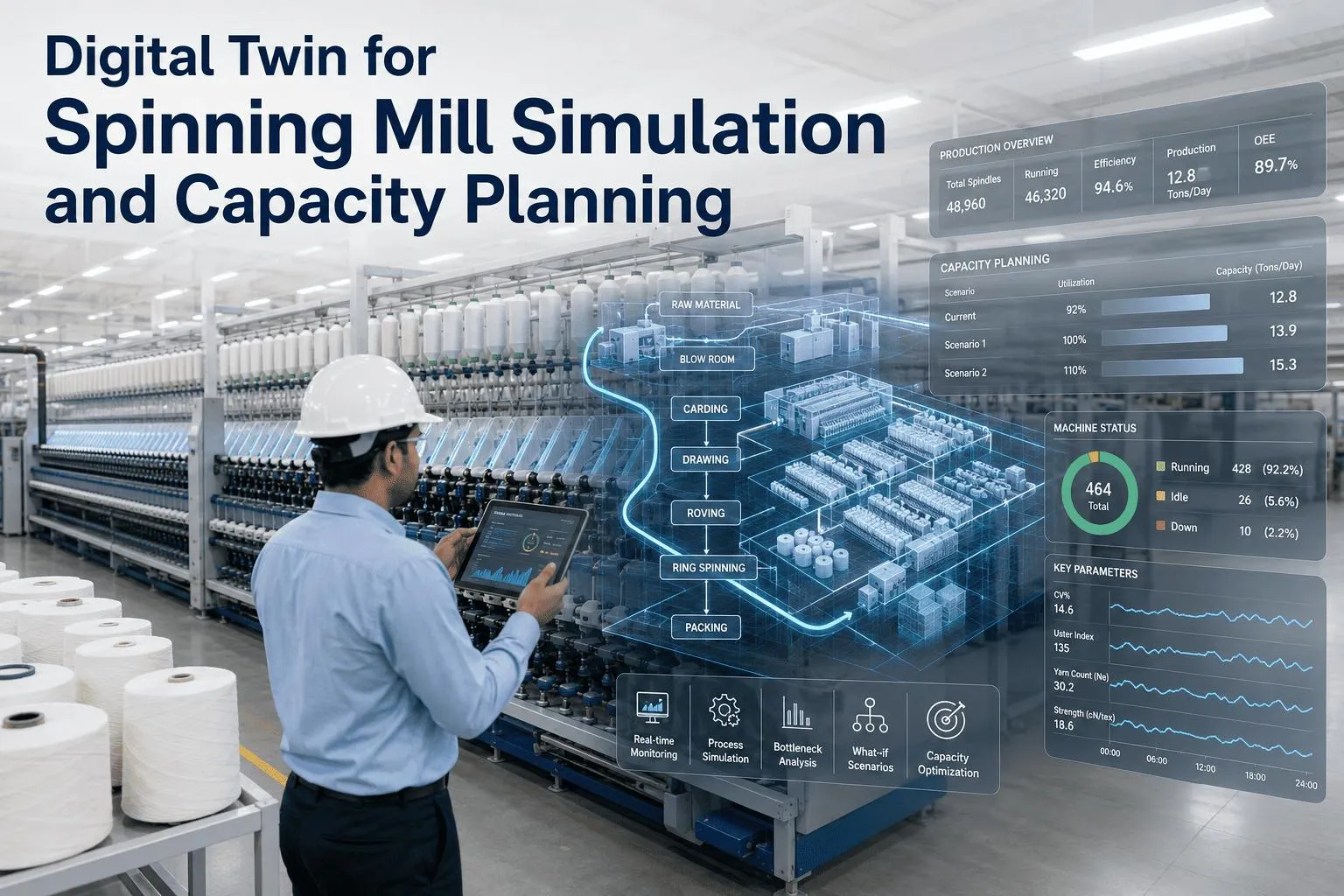
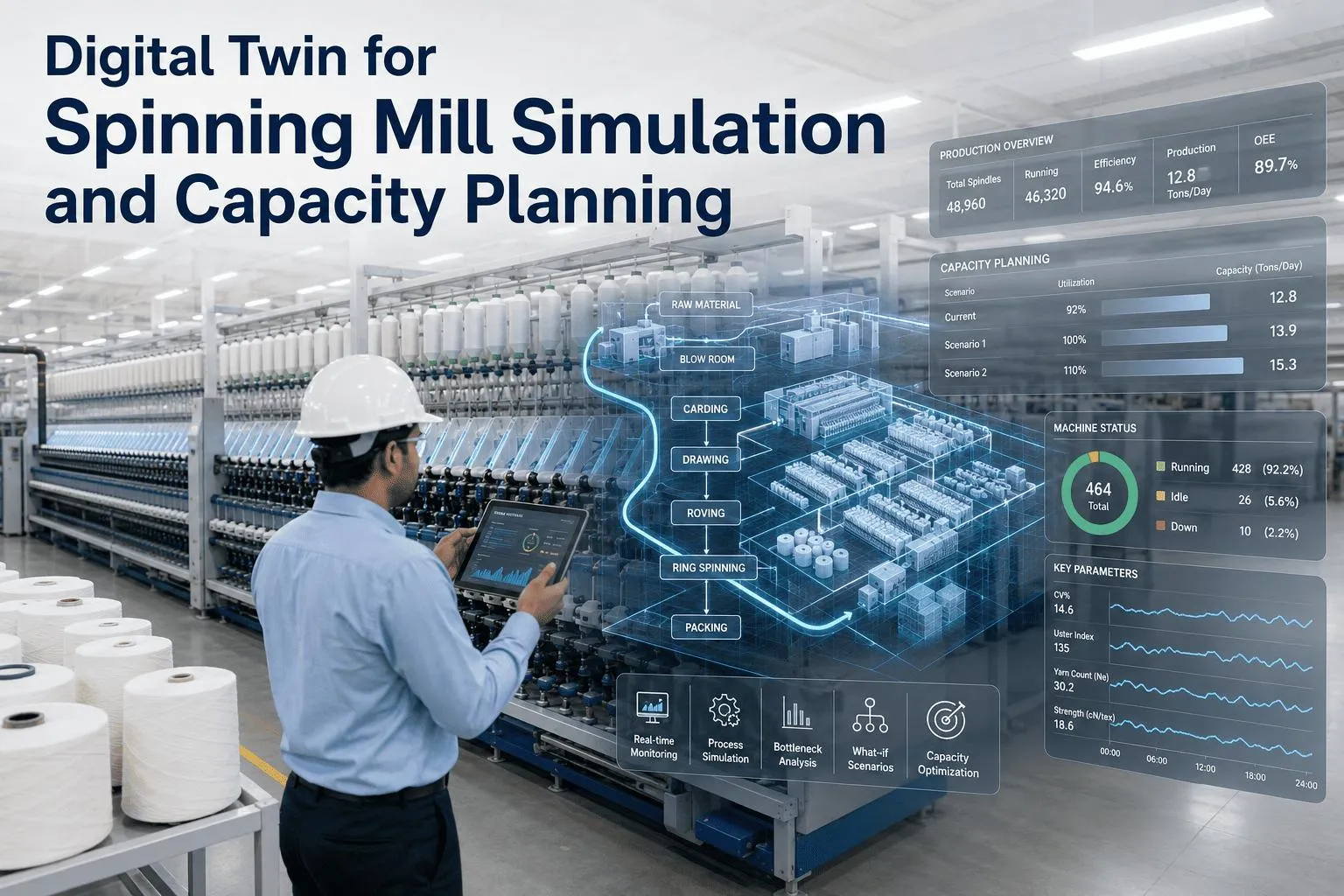
Digital twins are becoming one of the most important technologies in modern textile manufacturing as factories around the world move toward intelligent and connected production systems. A digital twin is a virtual representation of a physical machine, production line, factory, or manufacturing process that uses real time data to mirror what is happening in the physical environment. In the textile industry, digital twins allow manufacturers to create a detailed digital version of their production operations and monitor performance without depending entirely on physical testing. Artificial Intelligence, machine learning, Internet of Things devices, sensors, and advanced data analytics work together to keep the digital model updated with information from the real factory. Manufacturers can use this virtual environment to understand how machines are performing, identify potential problems, test production changes, predict maintenance requirements, and improve overall efficiency. This technology is helping textile companies reduce production risks, lower costs, improve quality, conserve resources, and create more sustainable manufacturing processes. As the industry continues adopting smart factory technologies, digital twins are expected to play an increasingly important role in the future of textile production.
What Is a Digital Twin
A digital twin is a virtual model of a physical object, machine, production line, or complete manufacturing facility.
The virtual model receives real time information from sensors and connected devices installed within the physical production environment.
This information allows manufacturers to observe machine performance, production conditions, energy consumption, and operational changes through a digital platform.
Artificial Intelligence analyzes this information and helps identify patterns, predict future problems, and recommend improvements.
The digital twin therefore becomes a powerful tool for understanding and optimizing real manufacturing operations.
How Digital Twins Work in Textile Manufacturing
Digital twins connect physical textile manufacturing equipment with digital software systems through sensors, Internet of Things devices, cloud platforms, and data analytics.
Sensors collect information about machine speed, temperature, vibration, energy consumption, production output, and other operational conditions.
This information is transferred to the digital twin, which creates a real time representation of the physical production process.
Manufacturers can then monitor factory operations through digital dashboards and analyze performance without physically inspecting every machine.
Artificial Intelligence adds another level of intelligence by predicting possible problems and recommending actions.
Improving Production Planning
Digital twins help textile manufacturers understand how production systems will perform under different conditions.
Before changing a production schedule, manufacturers can use the digital model to simulate different scenarios and identify the most efficient option.
For example, companies can test how a new production schedule may affect machine utilization, workforce requirements, energy consumption, and delivery times.
This reduces the risk of making costly decisions in the physical factory.
Better planning improves productivity while reducing production delays.
Predictive Maintenance
Machine breakdowns can cause serious problems for textile manufacturers.
A single machine failure may stop production, delay customer orders, and increase repair costs.
Digital twins continuously monitor machine performance and use Artificial Intelligence to identify early warning signs of potential failures.
Manufacturers can schedule maintenance before equipment breaks down, reducing unexpected downtime.
Predictive maintenance also extends machine life and improves overall factory reliability.
Improving Textile Quality
Quality control is another important area where digital twins provide significant advantages.
The technology monitors production conditions and identifies factors that may contribute to product defects.
Manufacturers can analyze machine settings, production speed, temperature, pressure, and other variables to understand how they influence fabric quality.
Artificial Intelligence helps identify patterns associated with defects and recommends adjustments before large quantities of products are affected.
This improves consistency and reduces costly material waste.
Supporting Sustainable Manufacturing
Digital twins can help textile manufacturers improve sustainability by analyzing resource consumption throughout production.
Factories can monitor energy use, water consumption, raw material utilization, and production waste in real time.
Manufacturers can test different production scenarios within the digital environment before implementing changes in the physical factory.
This helps companies identify opportunities to reduce resource consumption while maintaining production efficiency.
Digital twins therefore support both environmental responsibility and cost reduction.
Supporting Home Textile Manufacturing
Digital twin technology can improve manufacturing processes for many home textile products.
These include:
-
Bed Sheets
-
Pillowcases
-
Duvet Covers
-
Comforters
-
Blankets
-
Towels
-
Curtains
-
Cushion Covers
-
Mattress Protectors
-
Table Linen
Manufacturers can use digital twins to optimize machines, production schedules, quality control, and resource usage for each product category.
Testing New Production Processes
One of the greatest benefits of digital twins is the ability to test changes virtually.
Manufacturers can simulate new machines, production methods, factory layouts, or material combinations without immediately changing physical operations.
The digital environment allows companies to identify potential problems before investing significant resources.
This reduces development costs and accelerates innovation.
Companies can experiment more frequently while maintaining lower levels of operational risk.
Improving Energy Efficiency
Energy consumption is an important concern for textile manufacturers.
Digital twins analyze energy usage across machines and production lines to identify inefficient operations.
Artificial Intelligence can recommend changes to machine schedules, production settings, and operating conditions that reduce unnecessary energy consumption.
Manufacturers can lower operating costs while reducing their environmental impact.
Improving Supply Chain Performance
Digital twins can also support supply chain management by creating virtual models of production and logistics operations.
Manufacturers can simulate changes in raw material availability, production capacity, warehouse inventory, and transportation schedules.
This helps companies understand how supply chain changes may affect production before making actual adjustments.
Better visibility improves decision making and reduces the risk of unexpected disruptions.
Challenges of Digital Twin Technology
Although digital twins provide many advantages, implementing this technology requires investment in sensors, software, cloud systems, data infrastructure, cybersecurity, and employee training.
Manufacturers must also ensure that data collected from physical equipment is accurate and reliable.
Integrating digital twins with existing factory systems can require significant technical expertise.
Despite these challenges, the long term benefits make digital twins an attractive investment for modern textile manufacturers.
The Future of Digital Twins in Textile Manufacturing
The future of digital twins will become increasingly connected with Artificial Intelligence, robotics, automation, and smart factory technologies.
Future textile factories may operate with complete digital models that continuously monitor every machine, production line, warehouse, and supply chain activity.
Artificial Intelligence will analyze this information and automatically recommend or implement operational improvements.
Manufacturers will be able to simulate entire factories before construction, test new products before physical production, and predict operational risks before they affect customers.
This will create a new generation of highly efficient and intelligent textile manufacturing environments.
Why Textile Manufacturers Should Invest in Digital Twins
Digital twins provide significant benefits across the entire manufacturing process.
Manufacturers can reduce downtime, improve quality, optimize production planning, lower operating costs, reduce waste, improve energy efficiency, strengthen sustainability, and accelerate innovation.
Companies that adopt digital twin technology can also gain better visibility into their operations and make decisions based on real time information.
These advantages will become increasingly important as competition grows within the global textile industry.
Conclusion
Digital twins are transforming textile manufacturing by connecting physical production environments with intelligent digital models. Through Artificial Intelligence, sensors, Internet of Things devices, and advanced data analytics, manufacturers can monitor operations, predict equipment failures, improve quality, optimize production, and reduce resource consumption.
As smart factory technologies continue developing, digital twins will become an essential part of modern textile manufacturing. Companies that invest in this technology today will be better prepared for a future where intelligent automation, predictive analytics, and real time decision making drive manufacturing performance and sustainable growth.
Frequently Asked Questions
1. What is a digital twin in textile manufacturing?
A digital twin is a virtual representation of a physical textile machine, production line, factory, or manufacturing process.
2. How does a digital twin work?
It collects real time information from sensors and connected equipment and creates a digital model that mirrors physical operations.
3. Can digital twins reduce machine downtime?
Yes. Digital twins use Artificial Intelligence to identify potential equipment problems before failures occur.
4. Can digital twins improve textile quality?
Yes. They monitor production conditions and help identify factors that may cause defects.
5. Do digital twins support sustainable manufacturing?
Yes. They help manufacturers monitor and reduce energy consumption, water usage, raw material waste, and inefficient production.
6. Which textile products benefit from digital twin technology?
Bed sheets, pillowcases, duvet covers, comforters, blankets, towels, curtains, cushion covers, mattress protectors, and table linen.
7. Can digital twins improve production planning?
Yes. Manufacturers can simulate different production scenarios before implementing changes in the physical factory.
8. What technologies support digital twins?
Artificial Intelligence, machine learning, Internet of Things devices, sensors, cloud computing, and advanced data analytics.
9. What challenges exist when implementing digital twins?
Technology investment, data accuracy, cybersecurity, system integration, and employee training are major challenges.
10. Why are digital twins important for the future of textile manufacturing?
They enable manufacturers to monitor operations in real time, predict problems, test changes virtually, improve sustainability, and create smarter factories.
Recent Posts
Categories
- Home Textiles (11)
- AI & Textile Innovation (10)
- AI + Textile Manufacturing (10)
- AI + Sustainability (5)
- AI + Home Textiles (4)
- AI + Supply Chain (5)
- AI + Future Technology (7)