Admin July 24, 2026
AI Driven Decision Making in Textile Manufacturing
Meta Description: Discover how Artificial Intelligence is transforming decision making in textile manufacturing through predictive analytics, demand forecasting, quality control, inventory management, smart production planning, and sustainable operations.
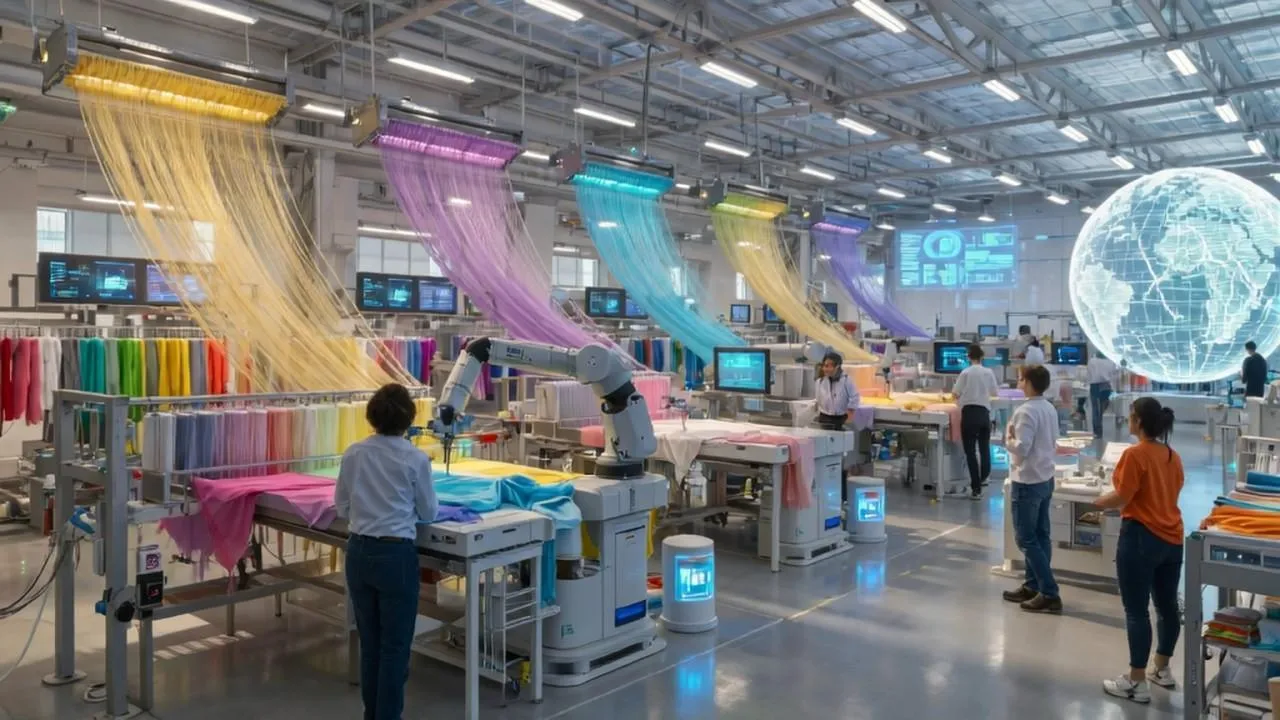
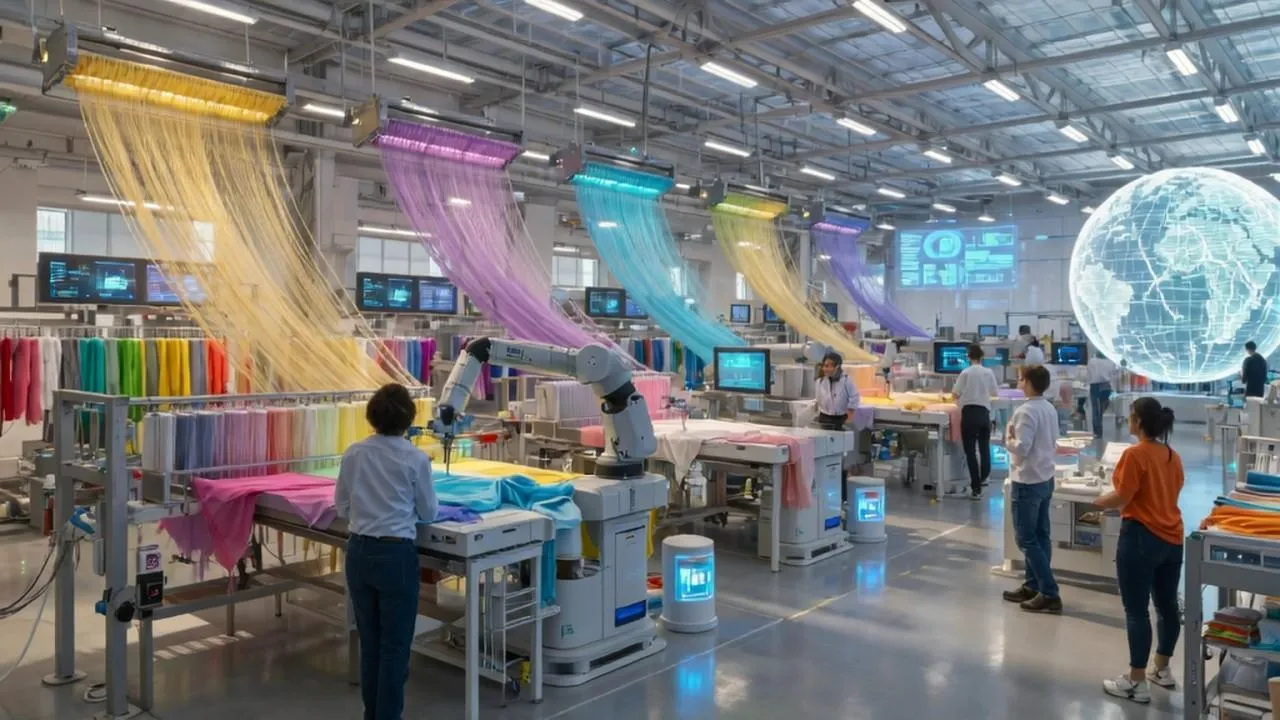
Artificial Intelligence is transforming the way textile manufacturers make important business and production decisions. For decades, textile manufacturing decisions were primarily based on human experience, historical records, manual calculations, and traditional management practices. While human knowledge remains extremely valuable, the modern textile industry generates enormous amounts of data from production machines, customer orders, inventory systems, quality inspections, suppliers, warehouses, and global markets. Managing and understanding all this information manually can be difficult and time consuming. Artificial Intelligence provides textile manufacturers with powerful tools that can analyze large amounts of data quickly, identify hidden patterns, predict future outcomes, and support better decision making. AI driven decision making allows manufacturers to understand what is happening in their factories, identify potential problems before they become serious, and choose the most effective actions based on real time information. From production planning and demand forecasting to quality control, inventory management, energy efficiency, and supply chain operations, Artificial Intelligence is helping textile companies become more intelligent, flexible, efficient, and competitive in a rapidly changing global market.
What Is AI Driven Decision Making
AI driven decision making refers to the use of Artificial Intelligence and advanced data analysis to support business and operational decisions.
Instead of relying only on historical information or human assumptions, manufacturers can use AI systems to analyze real time and historical data.
These systems identify patterns and provide insights that help managers make more informed decisions.
AI does not necessarily replace human decision makers.
Instead, it provides valuable information that allows managers and employees to understand complex situations and respond more effectively.
In textile manufacturing, this approach can improve almost every stage of the production process.
The Role of Data in Textile Manufacturing
Modern textile factories generate large amounts of data every day.
Machines produce information about speed, temperature, energy usage, production volume, and operational performance.
Quality control systems collect information about fabric defects and product consistency.
Inventory systems track raw materials and finished products.
Sales systems provide information about customer demand and purchasing behavior.
Artificial Intelligence brings all this information together and analyzes it to identify important patterns.
This allows manufacturers to make decisions based on current information rather than relying only on assumptions.
AI for Production Planning
Production planning is one of the most important areas where AI driven decision making can provide benefits.
Textile manufacturers need to decide which products should be produced, how much should be produced, which machines should be used, and when production should begin.
Artificial Intelligence analyzes customer orders, machine availability, production capacity, raw material supplies, and delivery deadlines.
Based on this information, AI can recommend production schedules that improve efficiency.
If a machine becomes unavailable or a customer changes an order, the system can analyze the new situation and suggest alternative production plans.
This creates a more flexible and responsive manufacturing environment.
AI Demand Forecasting
Understanding future customer demand is essential for textile manufacturers.
Producing too many products can lead to excess inventory, while producing too few can result in missed sales opportunities.
Artificial Intelligence analyzes historical sales, seasonal patterns, market trends, customer behavior, and external factors to predict future demand.
These predictions help manufacturers decide how much inventory to maintain and how much production capacity will be required.
Better demand forecasting can reduce waste and improve customer satisfaction.
AI for Inventory Decisions
Inventory management is another important area where Artificial Intelligence supports better decisions.
Textile manufacturers need to manage yarn, fabric, dyes, chemicals, accessories, packaging materials, and finished products.
AI systems monitor inventory levels and analyze future production requirements.
The system can identify when materials may run low and provide recommendations about when new supplies should be ordered.
AI can also identify slow moving inventory and help companies avoid unnecessary stock accumulation.
This improves cash flow and reduces storage costs.
AI Driven Quality Control
Quality control decisions have a direct impact on customer satisfaction and brand reputation.
Artificial Intelligence and computer vision systems can inspect textile products continuously during production.
High resolution cameras capture images of fabrics while AI algorithms analyze the images to identify defects.
These defects may include holes, stains, broken threads, color variations, uneven textures, and pattern inconsistencies.
AI provides immediate information about quality problems, allowing managers to take corrective action quickly.
This helps manufacturers reduce defective products and improve overall quality.
AI for Predictive Maintenance Decisions
Machine breakdowns can create serious production problems.
When important equipment stops working unexpectedly, production may be delayed and customer orders may be affected.
AI driven predictive maintenance systems analyze data from sensors installed on textile machines.
The system monitors vibration, temperature, energy consumption, and other machine conditions.
When AI identifies unusual patterns, it can predict that equipment may require maintenance.
Managers can then schedule repairs before a major breakdown occurs.
This improves machine reliability and reduces unexpected downtime.
AI for Supply Chain Decision Making
Textile supply chains involve many different participants, including raw material suppliers, manufacturers, warehouses, logistics companies, retailers, and customers.
A problem at one stage can affect the entire supply chain.
Artificial Intelligence analyzes supply chain information to identify potential risks and delays.
AI can monitor supplier performance, transportation conditions, inventory levels, and delivery schedules.
If the system identifies a possible disruption, managers can take action before the problem becomes serious.
This creates a more resilient and responsive textile supply chain.
AI and Sustainable Decision Making
Sustainability is becoming an increasingly important consideration for textile manufacturers.
Companies need to make decisions about water consumption, energy use, raw materials, waste, and chemical usage.
Artificial Intelligence analyzes production data to identify areas where resources can be used more efficiently.
For example, AI can identify machines that consume excessive energy or production processes that generate unnecessary waste.
Managers can use these insights to improve operations and reduce environmental impact.
Organizations such as Textile Exchange encourage responsible practices and sustainability across the global textile industry.
External Source
AI for Energy Management
Textile manufacturing can require significant amounts of energy.
Factories use energy for spinning, weaving, knitting, dyeing, finishing, drying, lighting, and other operations.
Artificial Intelligence can analyze energy consumption across different machines and production stages.
The system can identify periods of high energy usage and recommend ways to improve efficiency.
Manufacturers can use these insights to reduce unnecessary energy consumption and lower operational costs.
AI Driven Pricing Decisions
Artificial Intelligence can also support pricing decisions in the textile industry.
Pricing depends on many factors, including production costs, material prices, customer demand, market competition, and product popularity.
AI systems can analyze these factors and help companies understand how different pricing strategies may affect sales and profitability.
This allows manufacturers and retailers to make more informed pricing decisions.
AI for Product Development Decisions
Artificial Intelligence helps textile companies decide which new products they should develop.
AI analyzes customer preferences, online searches, social media activity, market trends, and sales data.
These insights help companies identify emerging opportunities.
For example, AI may identify increasing demand for sustainable fabrics, intelligent bedding, personalized home textiles, or new color trends.
Manufacturers can use this information to develop products that are more likely to attract customers.
Supporting Home Textile Manufacturing
AI driven decision making provides significant benefits for home textile manufacturers.
Companies producing bed sheets, pillowcases, duvet covers, comforters, blankets, towels, curtains, and cushion covers can use AI to improve production planning and customer demand forecasting.
Artificial Intelligence can help manufacturers decide which products to produce, how much inventory to maintain, which materials to purchase, and when production should take place.
AI and Human Decision Making
Artificial Intelligence is powerful, but human expertise remains extremely important.
AI systems analyze data and provide recommendations, but experienced managers understand business priorities, customer relationships, cultural factors, and industry conditions.
The best approach is to combine Artificial Intelligence with human knowledge.
Managers can use AI insights to make faster and more informed decisions while applying their own professional judgment.
This combination creates a balanced decision making process.
Challenges of AI Driven Decision Making
Although AI provides significant advantages, implementing AI driven decision systems can be challenging.
Companies need reliable and high quality data for AI systems to produce useful results.
Poor data can lead to inaccurate predictions and incorrect recommendations.
Manufacturers may also need to invest in software, digital infrastructure, employee training, and cybersecurity.
Another challenge is ensuring that employees understand how to use AI systems effectively.
Successful implementation requires both technology and organizational change.
The Future of AI Decision Making in Textiles
The future of textile manufacturing will involve increasingly intelligent decision making systems.
Artificial Intelligence will become more connected with robotics, smart sensors, computer vision, digital twins, Internet of Things devices, and cloud computing.
AI systems will be able to analyze information from across entire factories and supply chains.
Manufacturers may receive real time recommendations about production schedules, inventory levels, machine maintenance, quality control, and customer demand.
This will allow companies to respond faster to changing market conditions.
Why Textile Manufacturers Should Adopt AI Decision Making
AI driven decision making can provide textile manufacturers with significant competitive advantages.
Companies can improve productivity, reduce operational costs, minimize waste, improve product quality, optimize inventory, strengthen supply chains, and respond faster to customer needs.
Better decision making also reduces uncertainty and helps managers understand potential risks before they become serious problems.
As competition increases, manufacturers that use AI effectively will be better positioned to improve efficiency and achieve long term growth.
Conclusion
AI driven decision making is transforming textile manufacturing by helping companies move from traditional decision methods toward intelligent, data based operations. Artificial Intelligence can analyze information from production systems, machines, customers, suppliers, inventories, and markets to provide valuable insights that support better decisions.
From production planning and demand forecasting to predictive maintenance, quality control, supply chain management, sustainability, and product development, AI is becoming an important tool for modern textile manufacturers. The future will not depend entirely on machines making decisions without human involvement. Instead, the strongest manufacturing organizations will combine the analytical power of Artificial Intelligence with human experience, creativity, and strategic thinking.
As AI technology continues to advance, textile companies that successfully adopt intelligent decision making systems will be able to respond more quickly to market changes, reduce costs, improve quality, minimize waste, and create more efficient manufacturing operations. Artificial Intelligence is therefore becoming not just a technology for automation, but a powerful tool for making smarter decisions across the entire textile industry.
Frequently Asked Questions
1. What is AI driven decision making in textile manufacturing?
AI driven decision making uses Artificial Intelligence and data analysis to support decisions related to production, quality, inventory, supply chains, maintenance, and business operations.
2. How does AI improve textile production planning?
AI analyzes customer orders, machine availability, production capacity, raw material supplies, and deadlines to recommend efficient production schedules.
3. Can AI improve textile quality control?
Yes. AI powered computer vision systems can identify fabric defects and quality problems during production.
4. How does AI support inventory management?
AI monitors inventory levels and predicts future material requirements, helping manufacturers avoid shortages and excess stock.
5. Can AI predict textile demand?
Yes. AI analyzes historical sales, seasonal patterns, customer behavior, and market trends to forecast future demand.
6. How does AI support predictive maintenance?
AI analyzes machine sensor data and identifies patterns that may indicate future equipment problems, allowing manufacturers to schedule maintenance in advance.
7. Can AI help textile manufacturers become more sustainable?
Yes. AI can identify opportunities to reduce energy consumption, minimize waste, and improve the efficient use of resources.
8. Does AI replace human decision makers?
No. AI provides data based insights and recommendations, while human managers continue to provide experience, judgment, creativity, and strategic direction.
9. Which textile products benefit from AI driven decisions?
Bed sheets, pillowcases, duvet covers, comforters, blankets, towels, curtains, cushion covers, clothing, technical textiles, and many other products can benefit from AI driven decision making.
10. What is the future of AI decision making in textiles?
The future will involve connected AI systems that analyze real time information from factories and supply chains to support faster, smarter, and more sustainable decisions.
Recent Posts
Categories
- Home Textiles (11)
- AI & Textile Innovation (10)
- AI + Textile Manufacturing (10)
- AI + Sustainability (5)
- AI + Home Textiles (4)
- AI + Supply Chain (5)
- AI + Future Technology (7)