Admin July 2, 2026
The Future of AI in the Textile Industry
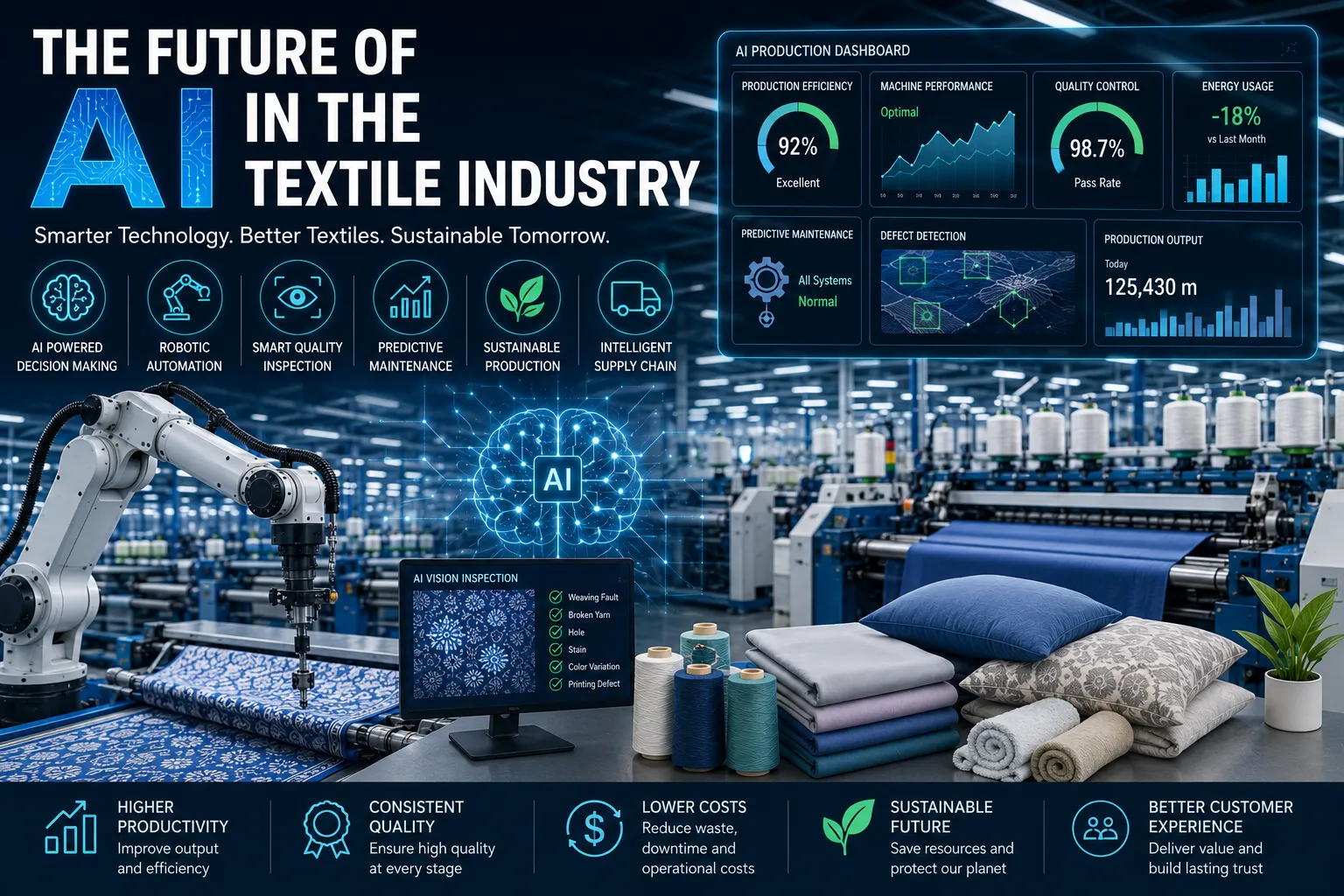
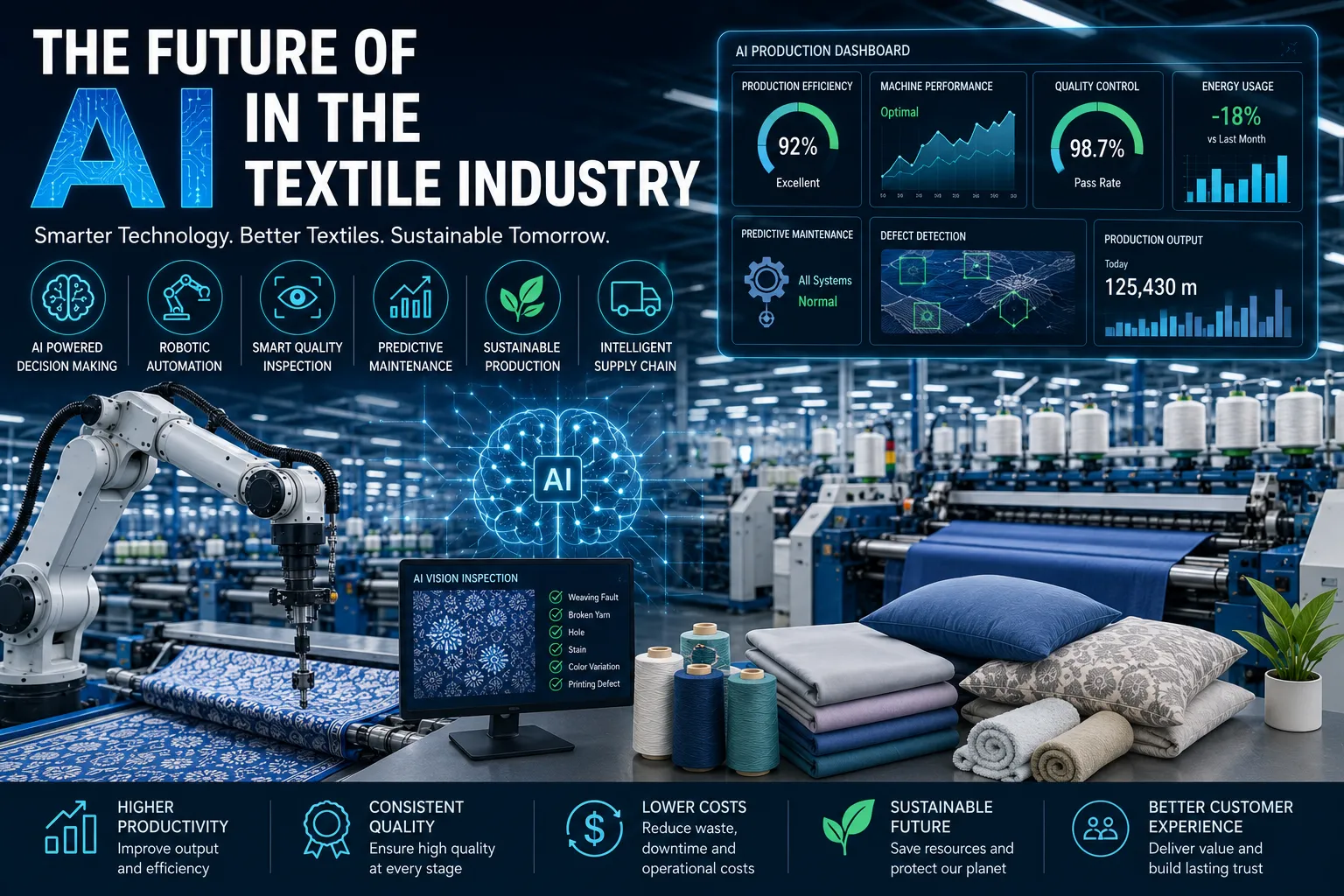
Artificial Intelligence is rapidly becoming one of the most influential technologies in the textile industry. Over the past few years, textile manufacturers have started using AI to improve production efficiency, product quality, inventory management, fabric inspection, and customer satisfaction. However, this is only the beginning. The future of AI in the textile industry goes far beyond automation. AI is expected to create intelligent factories, support personalized textile products, improve sustainability, reduce production waste, and help businesses make faster and more accurate decisions. As global competition continues to increase and customer expectations become more demanding, textile companies will rely on AI to remain competitive and innovative. From smart manufacturing systems to intelligent product development and digital supply chains, Artificial Intelligence will become an essential part of every stage of textile production. Companies that invest in AI today will be better prepared for future market changes while delivering higher quality products with greater efficiency and lower environmental impact.
What Is the Future of AI in Textile Manufacturing
The future of AI in textile manufacturing involves creating intelligent production environments where machines, software, sensors, robotics, and human expertise work together. Instead of simply automating repetitive tasks, future AI systems will continuously analyze production data, predict manufacturing challenges, optimize machine performance, and recommend improvements before problems occur.
Factories will become more connected, allowing every machine and production line to communicate through intelligent digital platforms. This connected environment will improve efficiency, reduce waste, and provide manufacturers with complete visibility across the entire production process.
As AI technology continues to evolve, manufacturing decisions will become faster, more accurate, and increasingly data driven.
AI Will Create Smarter Textile Factories
Smart factories represent one of the biggest developments expected in the future textile industry.
Artificial Intelligence will monitor production equipment continuously while collecting information about machine performance, product quality, energy consumption, maintenance requirements, and manufacturing efficiency. Intelligent software will automatically identify production bottlenecks and recommend solutions before delays occur.
Managers will have access to real time production insights that improve planning, increase productivity, and reduce unnecessary operational costs.
Smart factories will also improve communication between production teams, suppliers, warehouses, and logistics providers.
Predictive Manufacturing Will Become Standard
Traditional manufacturing often reacts to problems after they occur.
Future AI systems will predict equipment failures, quality issues, material shortages, and production delays before they affect manufacturing operations.
Machine learning algorithms will study historical production data together with live machine information to recognize patterns that indicate future risks.
This predictive approach will reduce downtime, improve machine reliability, extend equipment lifespan, and lower maintenance costs.
Manufacturers will spend less time solving problems and more time improving productivity.
AI Will Improve Textile Design
Textile design will become faster, more creative, and more personalized through Artificial Intelligence.
Future AI design systems will analyze global fashion trends, interior decoration styles, customer preferences, seasonal colors, and purchasing behavior before generating original textile concepts.
Designers will receive intelligent suggestions for patterns, color combinations, textures, and coordinated collections.
Rather than replacing creative professionals, AI will support designers by reducing repetitive work while allowing greater focus on innovation and artistic development.
This technology will become especially valuable for home textile collections where changing consumer preferences strongly influence product demand.
Personalized Home Textile Products
Consumers increasingly expect products that reflect their personal preferences.
Future AI systems will allow manufacturers to create customized home textile collections based on customer requirements, regional design preferences, and individual lifestyle choices.
Manufacturers may offer personalized bed sheets, pillowcases, duvet covers, towels, curtains, and decorative fabrics that match specific colors, room styles, or customer preferences.
This level of customization will strengthen customer satisfaction while creating new business opportunities.
AI Will Improve Quality Control
Quality inspection will become faster and more accurate through advanced computer vision and machine learning.
Future inspection systems will detect even the smallest fabric defects before products leave the production line.
Artificial Intelligence will recognize weaving faults, color inconsistencies, printing defects, stitching errors, holes, stains, and damaged fibers with exceptional precision.
Early defect detection will reduce production waste while improving customer satisfaction and brand reputation.
Sustainable Manufacturing Through AI
Environmental responsibility will become an even greater priority for textile manufacturers.
Artificial Intelligence will help businesses reduce water consumption, optimize chemical usage, lower energy requirements, improve fabric utilization, and minimize production waste.
AI will also support recycling initiatives by identifying reusable materials and improving circular textile manufacturing processes.
Organizations such as Textile Exchange continue encouraging technology that promotes responsible manufacturing and sustainable production practices.
AI Will Strengthen Supply Chains
Future textile supply chains will become more intelligent through Artificial Intelligence.
AI will analyze supplier performance, transportation schedules, warehouse inventory, customer demand, production capacity, and global market conditions simultaneously.
Manufacturers will receive accurate recommendations for purchasing decisions, inventory planning, production scheduling, and logistics management.
Improved coordination across the supply chain will reduce delays while increasing customer satisfaction.
AI Will Improve Customer Experience
Artificial Intelligence will also transform how customers interact with textile brands.
Future online shopping platforms may recommend products based on previous purchases, home decoration preferences, room dimensions, climate conditions, and lifestyle habits.
Virtual room visualization, intelligent product recommendations, and personalized shopping experiences will help customers make more confident purchasing decisions.
Businesses will build stronger relationships through highly personalized customer service.
Challenges That Must Be Addressed
Although the future of AI offers exciting opportunities, manufacturers must also prepare for important challenges.
Successful implementation requires investment in technology, employee training, cybersecurity, reliable production data, and responsible AI governance.
Companies must also ensure that AI systems remain transparent, secure, and supportive of human decision making.
Balancing technological innovation with skilled human expertise will remain essential for long term success.
Emerging Technologies That Will Work With AI
Artificial Intelligence will become even more powerful when combined with other advanced technologies.
Machine learning will improve predictive analysis.
Computer vision will strengthen quality inspection.
Robotics will automate repetitive production tasks.
Internet of Things sensors will provide real time production data.
Cloud computing will support global collaboration.
Digital twins will simulate manufacturing processes before production begins.
Together these technologies will create highly connected textile factories capable of continuous improvement.
Why Textile Businesses Should Prepare Today
The companies that begin adopting AI today will gain significant competitive advantages in the future.
Benefits include higher productivity, improved product quality, stronger customer satisfaction, lower operating costs, better inventory management, faster product development, more sustainable manufacturing, improved workplace safety, and greater flexibility when responding to changing market demand.
Businesses that delay digital transformation may struggle to compete as AI becomes a standard part of textile manufacturing.
Conclusion
The future of AI in the textile industry is filled with opportunities for innovation, efficiency, and sustainable growth. Artificial Intelligence will transform manufacturing, design, quality control, inventory management, customer service, and supply chain operations while helping manufacturers produce higher quality products with fewer resources.
Rather than replacing skilled textile professionals, AI will provide intelligent tools that support better decisions, faster production, and continuous improvement. As the industry embraces digital transformation, companies that combine human expertise with Artificial Intelligence will lead the next generation of textile manufacturing and home textile innovation.
Frequently Asked Questions
1. What is the future of AI in the textile industry?
AI will improve manufacturing, product design, quality control, sustainability, inventory management, and customer experience.
2. Will AI replace textile workers?
No. AI will automate repetitive tasks while supporting workers with better data and intelligent decision making.
3. How will AI improve textile manufacturing?
AI will optimize production, predict maintenance needs, reduce waste, improve quality, and increase efficiency.
4. Can AI create personalized home textile products?
Yes. AI can help manufacturers develop customized bedding, towels, curtains, and other home textile products based on customer preferences.
5. How does AI support sustainability?
AI reduces waste, improves resource utilization, lowers energy consumption, and supports environmentally responsible manufacturing.
6. Will AI improve textile quality control?
Yes. AI powered computer vision systems detect defects faster and more accurately than traditional inspection methods.
7. What technologies will work alongside AI?
Machine learning, robotics, computer vision, Internet of Things, cloud computing, and digital twins.
8. Is AI useful for small textile manufacturers?
Yes. Many cloud based AI solutions are affordable and scalable for businesses of different sizes.
9. What are the biggest challenges of AI adoption?
Technology investment, employee training, cybersecurity, data quality, and system integration.
10. Why should textile companies invest in AI now?
Early adoption helps businesses improve productivity, reduce costs, strengthen competitiveness, and prepare for the future of textile manufacturing.
Recent Posts
Categories
- Home Textiles (11)
- AI & Textile Innovation (10)
- AI + Textile Manufacturing (10)
- AI + Sustainability (5)
- AI + Home Textiles (4)
- AI + Supply Chain (5)
- AI + Future Technology (7)