Admin June 29, 2026
Smart Textiles Explained: The Future of Intelligent Fabrics
Learn what smart textiles are, how they work, their types, benefits, applications, and why intelligent fabrics are shaping the future of the textile industry.
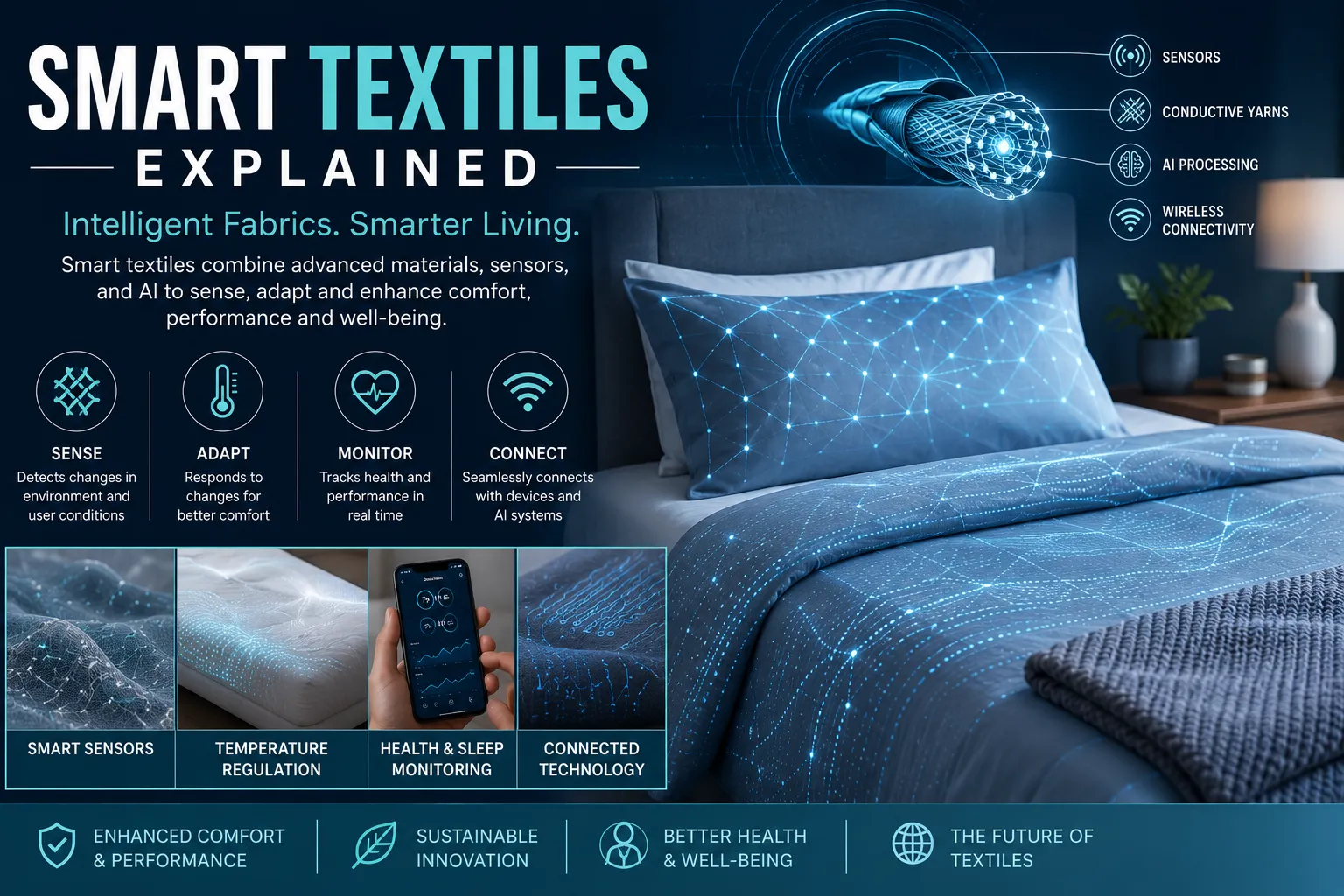
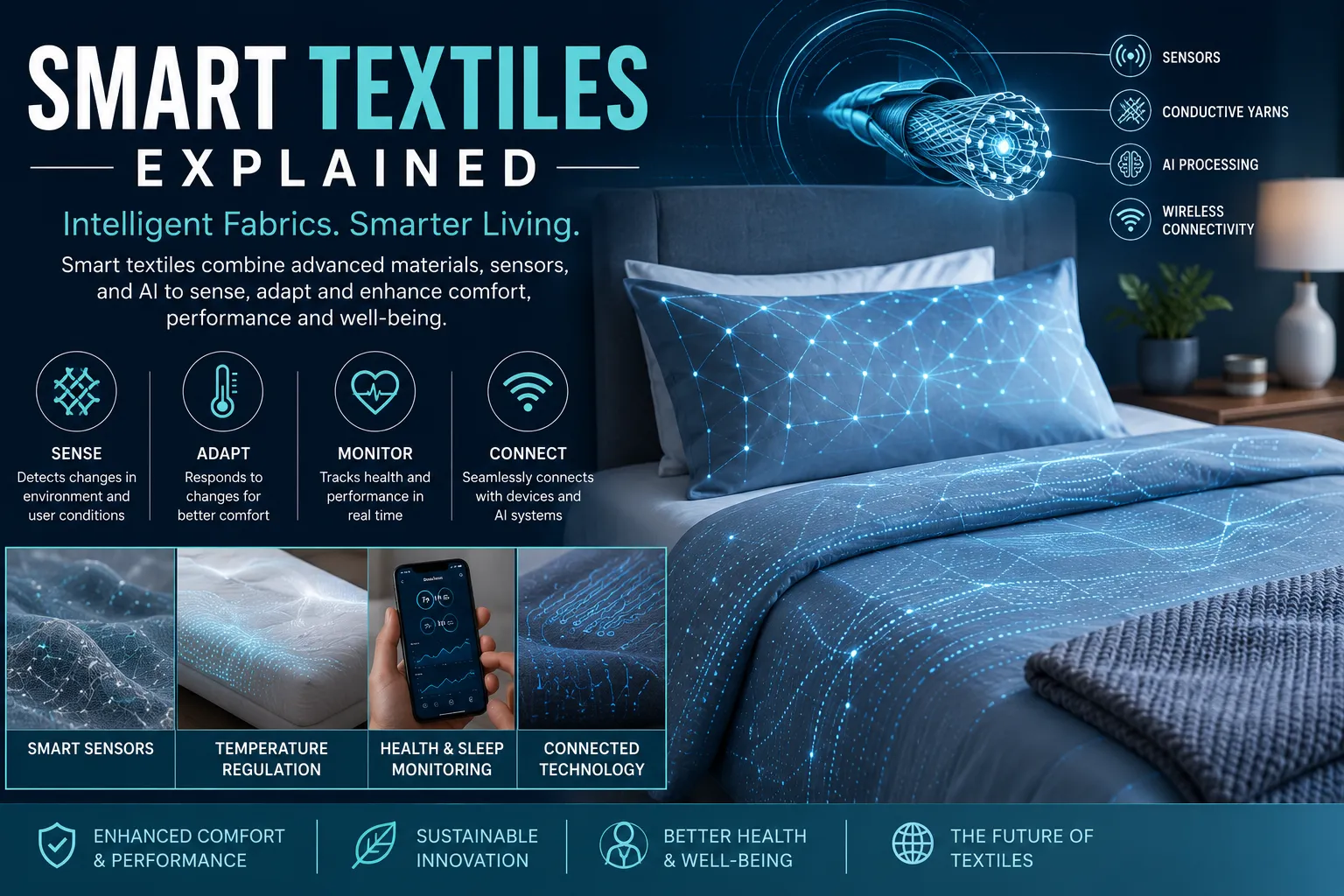
Smart textiles are transforming the way fabrics are designed and used. Unlike traditional textiles, smart textiles can sense, react, or adapt to changes in their environment. They combine textile engineering with modern technologies such as sensors, conductive fibers, and Artificial Intelligence (AI) to create fabrics with advanced capabilities.
From healthcare and sports to home textiles and fashion, smart textiles are opening new possibilities for manufacturers and consumers alike. As technology continues to evolve, these innovative fabrics are expected to play an increasingly important role in everyday life.
What Are Smart Textiles?
Smart textiles, also known as intelligent textiles or e-textiles, are fabrics designed to perform functions beyond those of conventional materials. They can detect environmental changes such as temperature, pressure, movement, or moisture and respond accordingly.
Unlike ordinary fabrics that only provide comfort and protection, smart textiles can interact with users or connected devices through built-in electronic components.
How Do Smart Textiles Work?
Smart textiles integrate advanced technologies directly into the fabric structure. These may include:
- Conductive yarns
- Miniature sensors
- Flexible circuits
- Microprocessors
- Wireless communication modules
The collected data can be analyzed in real time to improve comfort, monitor health, or automate various functions.
Artificial Intelligence (AI) further enhances smart textiles by analyzing data and making intelligent decisions based on user behavior.
Types of Smart Textiles
Smart textiles are generally divided into three categories.
Passive Smart Textiles
Passive smart textiles can detect environmental conditions but do not react.
Examples include:
- UV-protection fabrics
- Moisture-wicking sportswear
- Temperature-monitoring fabrics
Active Smart Textiles
Active smart textiles can both detect and respond to changes.
Examples include:
- Heated blankets
- Temperature-regulating bedding
- Self-adjusting sports apparel
Ultra Smart Textiles
Ultra smart textiles combine sensors, AI, and communication technologies to analyze information and make automated decisions.
Future applications may include:
- Health-monitoring beds
- Intelligent hospital bedding
- AI-powered sleep monitoring
- Connected smart home fabrics
Smart Textiles in Home Textiles
Although smart textiles first gained popularity in healthcare and sports, they are now becoming increasingly relevant in home textiles.
Potential applications include:
Smart Bed Sheets
Smart bed sheets may monitor:
- Sleep quality
- Body movement
- Body temperature
- Heart rate
These insights can help users improve their sleeping habits.
Temperature Regulating Bedding
Modern bedding can use smart materials to help maintain a comfortable sleeping temperature throughout the night.
Benefits include:
- Better sleep comfort
- Reduced overheating
- Improved energy efficiency
Smart Pillows
Some innovative pillows are designed to monitor sleeping positions and provide personalized sleep recommendations through connected mobile applications.
Smart Towels and Bathroom Textiles
Researchers are exploring smart towels capable of monitoring moisture levels and improving hygiene in healthcare environments.
Future hotel textiles may also incorporate smart fabric technologies for better guest experiences.
AI and Smart Textiles
Artificial Intelligence plays an important role in the future of smart textiles.
AI can:
- Analyze sensor data
- Predict maintenance needs
- Personalize user experiences
- Improve product performance
- Support healthcare monitoring
Rather than replacing traditional textiles, AI enhances their functionality.
Benefits of Smart Textiles
Smart textiles offer numerous advantages.
Improved Comfort
Advanced fabrics automatically adapt to changing environmental conditions.
Better Health Monitoring
Integrated sensors can collect useful health-related information.
Enhanced Safety
Smart textiles may detect hazards such as excessive heat or harmful environmental conditions.
Greater Energy Efficiency
Temperature regulating fabrics can reduce the need for excessive heating or cooling.
Personalized Experiences
AI powered textiles can learn user preferences and optimize comfort accordingly.
Industries Using Smart Textiles
Smart textile technology is expanding across multiple industries.
These include:
- Home Textiles
- Healthcare
- Sportswear
- Military
- Automotive
- Hospitality
- Fashion
- Industrial Safety
As technology becomes more affordable, adoption is expected to increase worldwide.
Challenges of Smart Textiles
Despite their potential, smart textiles also face several challenges.
These include:
- Higher production costs
- Complex manufacturing
- Electronic durability
- Washing and maintenance
- Battery integration
- Data privacy concerns
Manufacturers continue to invest in research to overcome these limitations.
The Future of Smart Textiles
Experts believe that smart textiles will become increasingly common over the next decade.
Future innovations may include:
- AI powered bedding
- Self-cleaning fabrics
- Energy-generating textiles
- Smart hospital linens
- Interactive furniture fabrics
- Connected hotel rooms
Organizations such as Textile Exchange continue to encourage innovation while promoting sustainability in textile manufacturing.
Why Smart Textiles Matter for Home Textile Manufacturers
For manufacturers, smart textiles represent an opportunity to create value added products that meet changing consumer expectations.
Companies investing in textile innovation can benefit from:
- Product differentiation
- Premium pricing
- Better customer experiences
- Sustainable manufacturing
- Long-term competitiveness
As demand grows, smart textile technology is expected to become an important part of the global home textile market.
Conclusion
Smart textiles combine traditional fabrics with advanced technologies such as sensors, electronics, and Artificial Intelligence to create products that are more intelligent, comfortable, and functional.
Although the technology is still evolving, smart textiles are already transforming industries including healthcare, sports, hospitality, and home textiles. As innovation continues, these intelligent fabrics are expected to become an integral part of modern living.
Frequently Asked Questions
1. What are smart textiles?
Smart textiles are fabrics that can sense, monitor, or respond to environmental changes using advanced technologies.
2. How do smart textiles work?
They integrate sensors, conductive fibers, electronics, and sometimes AI to collect and process information.
3. What is the difference between traditional and smart textiles?
Traditional textiles provide comfort and protection, while smart textiles also perform intelligent functions.
4. Are smart textiles used in home textiles?
Yes. They are being developed for bedding, pillows, temperature regulation, and sleep monitoring.
5. Can AI improve smart textiles?
Yes. AI analyzes sensor data and helps optimize comfort, performance, and predictive maintenance.
6. Are smart textiles washable?
Many are designed to be washable, although care instructions vary depending on the embedded technology.
7. Which industries use smart textiles?
Healthcare, sports, military, automotive, hospitality, fashion, and home textiles.
8. Are smart textiles environmentally friendly?
Many new developments focus on combining smart technology with sustainable textile manufacturing.
9. What are the biggest challenges of smart textiles?
Production costs, durability, maintenance, and electronic integration remain key challenges.
10. What is the future of smart textiles?
Smart textiles are expected to become more affordable, sustainable, and widely used in everyday products.
Recent Posts
Categories
- Home Textiles (11)
- AI & Textile Innovation (10)
- AI + Textile Manufacturing (10)
- AI + Sustainability (5)
- AI + Home Textiles (4)
- AI + Supply Chain (5)
- AI + Future Technology (7)