Admin July 3, 2026
Smart Home Textiles Explained
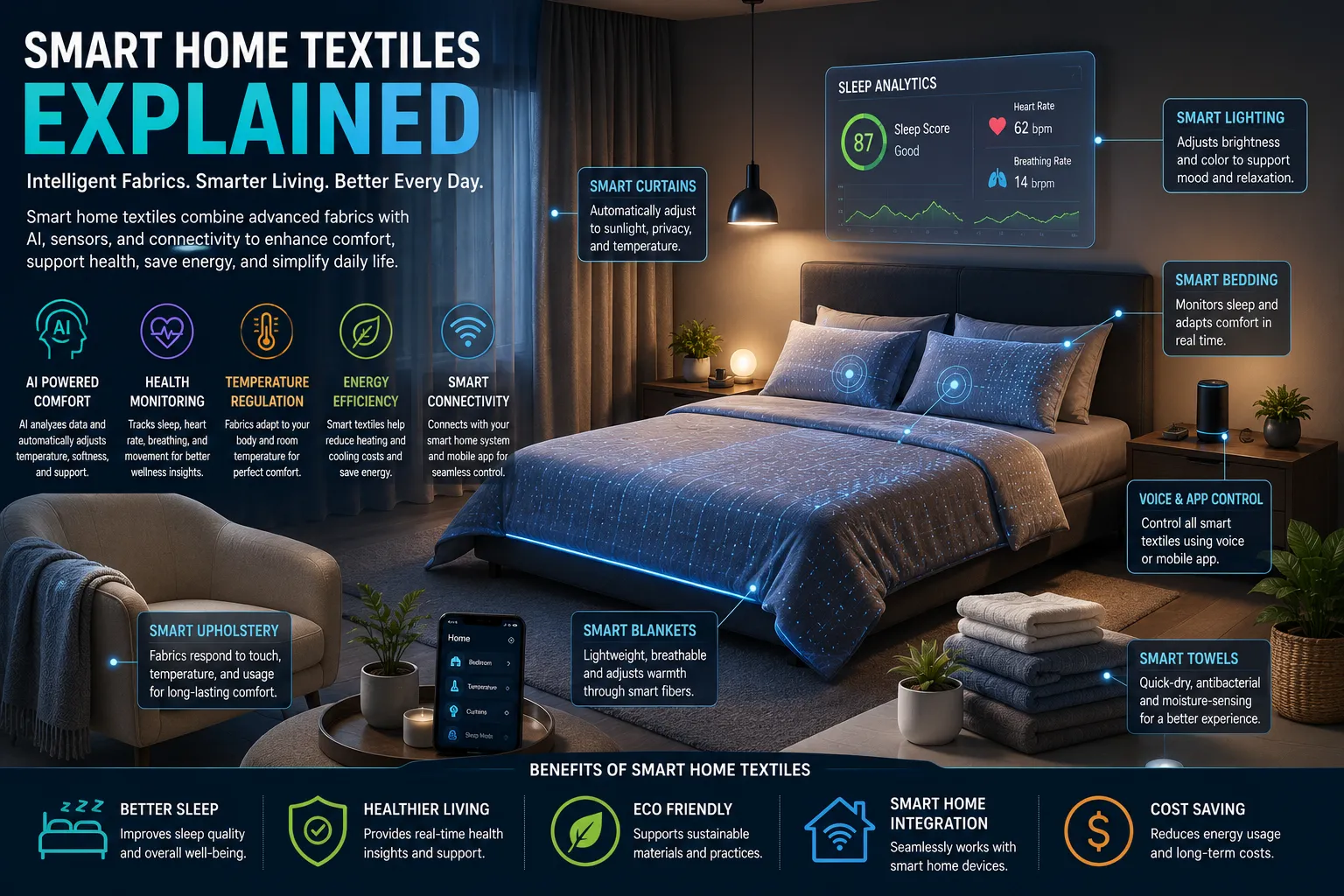
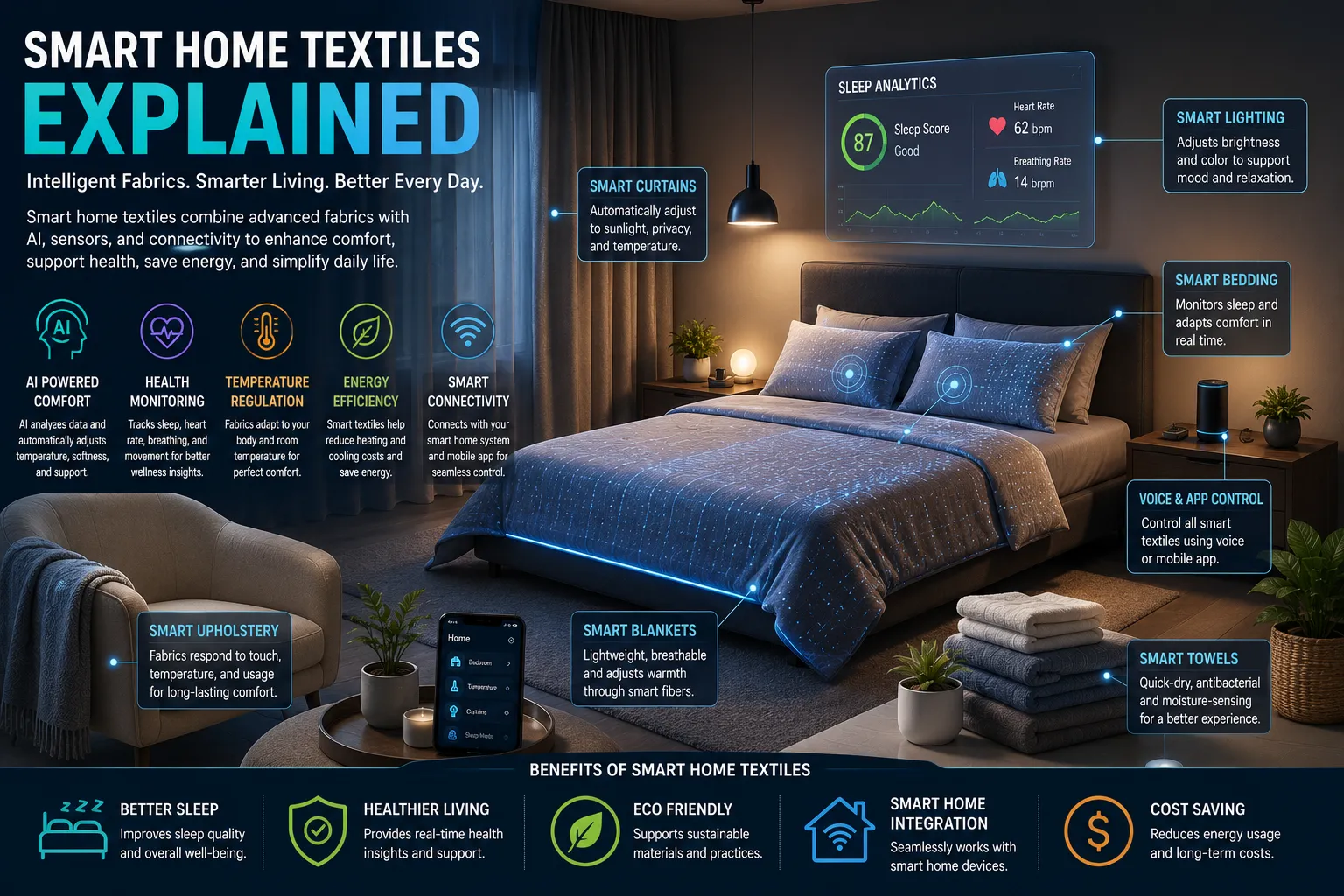
Smart home textiles are transforming the way people experience comfort, convenience, health, and energy efficiency inside their homes. Traditional home textiles such as bed sheets, blankets, towels, curtains, and upholstery have always focused on comfort and appearance. Today, technological innovation is taking these everyday products to an entirely new level. Smart home textiles combine advanced fabrics with digital technologies such as Artificial Intelligence, smart sensors, Internet of Things devices, and intelligent materials that can respond to changing environmental conditions or user needs. These innovative textiles can monitor temperature, adjust moisture levels, improve sleep quality, provide health related information, and even connect with smart home systems. As consumer demand continues to grow for healthier, more comfortable, and energy efficient homes, smart home textiles are becoming an important part of modern interior design and future home living.
What Are Smart Home Textiles
Smart home textiles are fabric products designed with advanced technologies that allow them to perform functions beyond traditional textile materials. These textiles may contain smart fibers, miniature sensors, conductive materials, or Artificial Intelligence powered systems that collect information and respond automatically.
Unlike ordinary fabrics, smart textiles can react to heat, humidity, movement, body temperature, light, or environmental conditions. Some products communicate with mobile applications or smart home devices, providing users with real time information and personalized comfort.
These intelligent fabrics combine textile engineering with modern digital technology to improve everyday living.
How Smart Home Textiles Work
Smart home textiles operate by integrating advanced materials with intelligent electronic components.
Sensors placed within the fabric collect information such as temperature, moisture, pressure, or body movement. Artificial Intelligence analyzes this information and determines the most appropriate response based on user preferences or environmental conditions.
For example, a smart blanket may automatically regulate warmth during sleep, while smart curtains can adjust according to sunlight entering the room.
Some smart textile products also connect with wireless home automation systems, allowing users to control them through smartphones or voice assistants.
Types of Smart Home Textiles
The smart home textile market continues to expand with many innovative products.
Popular examples include:
-
Smart Bed Sheets
-
Smart Pillows
-
Smart Blankets
-
Smart Comforters
-
Smart Curtains
-
Smart Towels
-
Smart Carpets
-
Smart Sofa Fabrics
-
Smart Cushion Covers
-
Smart Mattress Covers
These products combine comfort with intelligent functionality to improve everyday life.
Smart Bedding for Better Sleep
One of the fastest growing applications of smart home textiles is intelligent bedding.
Smart mattresses, bed sheets, pillows, and comforters monitor sleep patterns, body temperature, movement, and sleeping positions throughout the night.
Artificial Intelligence analyzes this information to provide sleep recommendations while automatically adjusting temperature and comfort levels.
Better sleep quality supports improved physical health, mental well being, and daily productivity.
Smart Curtains and Window Fabrics
Smart curtains help improve both comfort and energy efficiency.
These intelligent fabrics respond automatically to sunlight, room temperature, or programmed schedules.
During hot weather, smart curtains reduce heat entering the home, while during colder seasons they help maintain indoor warmth.
This improves indoor comfort while lowering heating and cooling costs.
Some systems can also be controlled remotely through smart home applications.
Health Monitoring Through Smart Textiles
Modern smart home textiles are increasingly being designed to support personal health.
Certain smart bedding products monitor heart rate, breathing patterns, sleep quality, and body movement without requiring wearable devices.
Artificial Intelligence processes this information and provides personalized health insights through connected applications.
These technologies may help users identify sleep problems and improve overall wellness.
Energy Efficiency and Sustainability
Smart home textiles contribute to sustainable living by helping reduce unnecessary energy consumption.
Intelligent curtains regulate indoor temperature naturally, reducing dependence on heating and air conditioning systems.
Temperature responsive bedding maintains comfort without requiring excessive heating during winter or cooling during summer.
Many manufacturers are also combining smart technology with organic cotton, recycled fibers, and environmentally friendly production methods to support sustainable home textile manufacturing.
Supporting Modern Home Textile Products
Smart technology can now be integrated into many common home textile products.
These include:
-
Bed Sheets
-
Pillowcases
-
Duvet Covers
-
Comforters
-
Blankets
-
Towels
-
Curtains
-
Cushion Covers
-
Table Linen
Manufacturers continue developing new intelligent features that improve comfort, convenience, and product performance.
Organizations such as Textile Exchange encourage textile companies to adopt advanced technologies.
The Role of Artificial Intelligence
Artificial Intelligence is the brain behind many smart textile products.
AI continuously analyzes information collected by textile sensors and automatically adjusts product performance according to user needs.
For example, AI may regulate bedding temperature, detect unusual sleeping patterns, recommend better sleep habits, or optimize room comfort throughout the day.
As machine learning becomes more advanced, smart home textiles will become increasingly personalized and efficient.
Challenges of Smart Home Textiles
Although smart home textiles offer many advantages, there are still challenges that manufacturers continue working to overcome.
Developing intelligent fabrics requires advanced materials, specialized manufacturing equipment, software integration, and reliable electronic components.
Manufacturers must also address issues related to product durability, battery life, washing safety, cybersecurity, and affordability.
Continuous innovation is making these products more practical and accessible every year.
The Future of Smart Home Textiles
The future of home textiles will become increasingly intelligent as Artificial Intelligence, smart sensors, wearable technology, and Internet of Things systems continue to develop.
Future products may automatically adjust room environments, monitor health continuously, improve sleep quality, communicate with household appliances, and optimize energy consumption without user intervention.
Smart home textiles will become an essential part of connected homes where comfort, health, and sustainability work together.
Manufacturers investing in intelligent textile technology today are helping shape the next generation of home living.
Why Consumers Are Choosing Smart Home Textiles
Consumers are looking for products that offer more than basic comfort.
Smart home textiles provide personalized experiences, improved sleep, better energy efficiency, health monitoring, enhanced convenience, and modern home automation features.
As prices become more affordable and technology continues to improve, smart textiles are expected to become increasingly common in homes around the world.
Conclusion
Smart home textiles represent the future of modern living by combining traditional fabric comfort with advanced digital technology. Through Artificial Intelligence, smart sensors, and intelligent materials, these products improve sleep, conserve energy, support health monitoring, and increase everyday convenience.
As innovation continues across the textile industry, smart home textiles will become more advanced, affordable, and widely available. Manufacturers that embrace these technologies today will lead the future of intelligent home textile solutions while providing consumers with safer, healthier, and more comfortable living environments.
Frequently Asked Questions
1. What are smart home textiles?
Smart home textiles are fabric products that use advanced technologies such as Artificial Intelligence and sensors to provide intelligent functions.
2. How do smart textiles work?
They collect information through built in sensors and use Artificial Intelligence to respond automatically based on environmental conditions or user needs.
3. What are examples of smart home textiles?
Smart bed sheets, smart pillows, smart blankets, smart curtains, smart towels, smart carpets, and smart mattress covers.
4. Can smart textiles improve sleep?
Yes. Smart bedding monitors sleep patterns and automatically adjusts comfort to improve sleep quality.
5. Do smart home textiles save energy?
Yes. Smart curtains and temperature regulating fabrics help reduce heating and cooling energy consumption.
6. Can smart textiles monitor health?
Yes. Some products monitor breathing, heart rate, body movement, and sleep quality.
7. Are smart home textiles environmentally friendly?
Many manufacturers combine smart technology with sustainable materials and energy efficient designs.
8. Can smart textiles connect with smart homes?
Yes. Many products integrate with home automation systems and mobile applications.
9. What technologies are used in smart home textiles?
Artificial Intelligence, smart sensors, conductive fibers, Internet of Things technology, and machine learning.
10. What is the future of smart home textiles?
Future smart textiles will become more intelligent, personalized, sustainable, and fully integrated into connected smart homes.
Recent Posts
Categories
- Home Textiles (11)
- AI & Textile Innovation (10)
- AI + Textile Manufacturing (10)
- AI + Sustainability (5)
- AI + Home Textiles (4)
- AI + Supply Chain (5)
- AI + Future Technology (7)