Admin July 21, 2026
How Computer Vision Is Revolutionizing Textiles
Computer vision is becoming one of the most powerful technologies transforming the modern textile industry. Traditional textile manufacturing has depended heavily on manual inspection and human judgment to identify fabric defects, monitor production quality, and maintain consistent product standards. Although experienced inspectors can detect many problems, manual inspection can be time consuming, inconsistent, and difficult to maintain across large production volumes. Computer vision is changing this process by using cameras, Artificial Intelligence, machine learning, and advanced image processing to examine fabrics and manufacturing processes with exceptional speed and accuracy. These intelligent systems can detect tiny defects, identify color variations, monitor patterns, inspect stitching, and analyze fabric surfaces while production is taking place. By providing continuous and automated quality monitoring, computer vision helps textile manufacturers reduce waste, improve product consistency, increase production efficiency, and lower operational costs. As Artificial Intelligence continues to develop, computer vision is expected to become an essential technology for smart textile factories and the future of automated textile manufacturing.
What Is Computer Vision in Textile Manufacturing
Computer vision is a technology that allows machines to analyze and understand visual information captured through cameras and imaging systems.
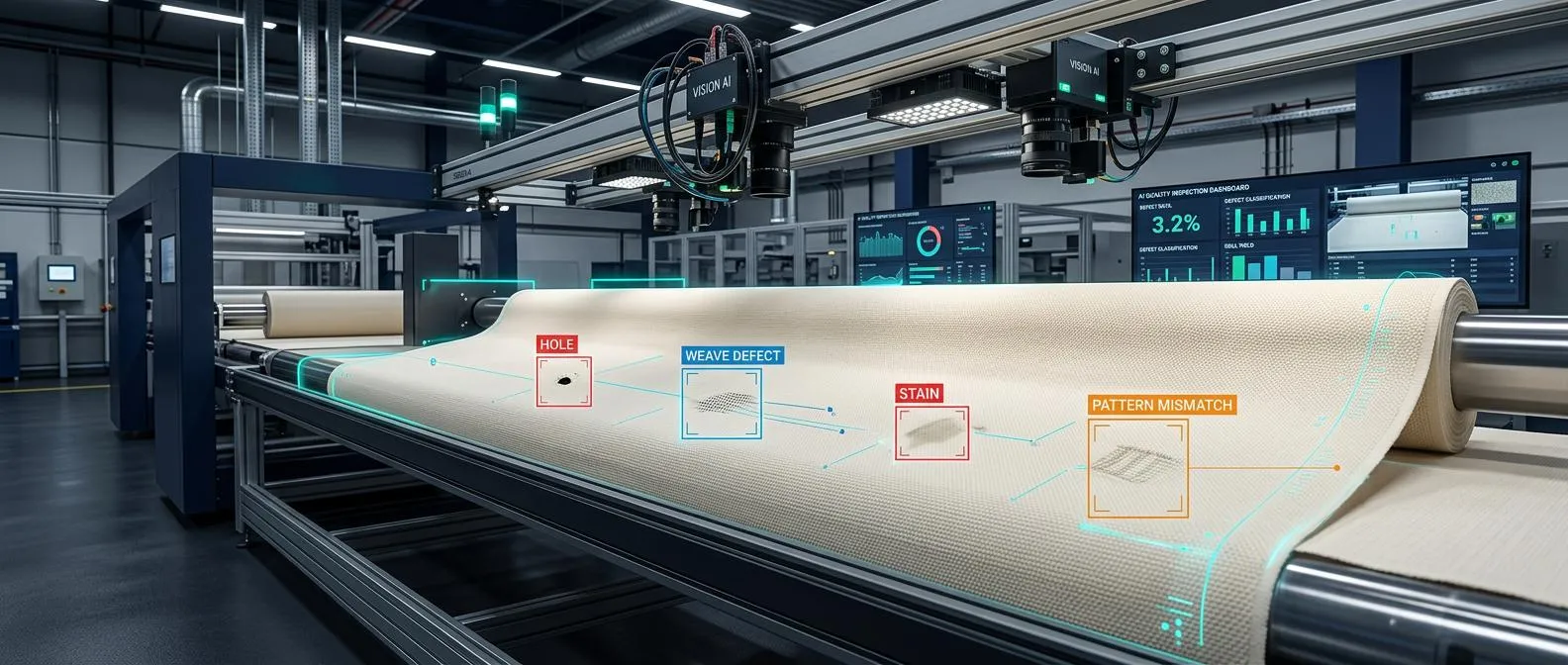
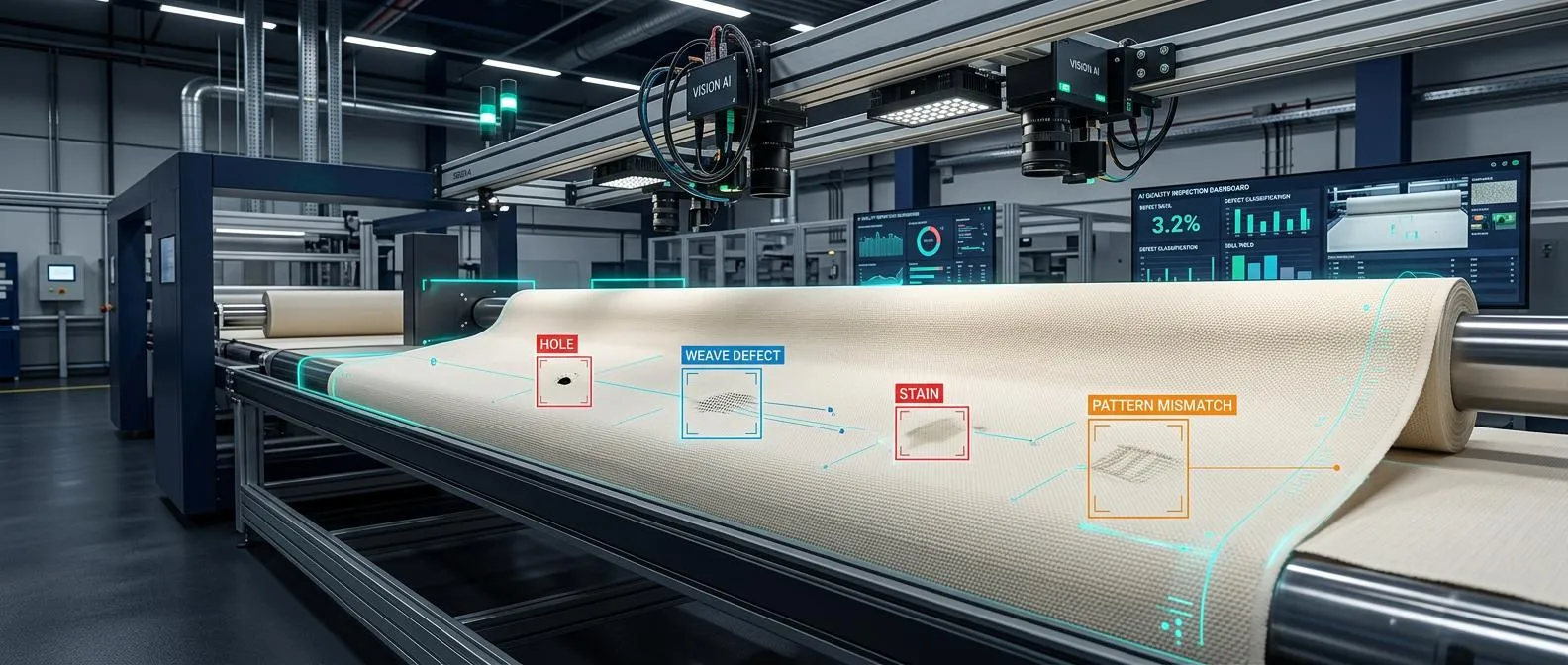
In textile manufacturing, high resolution cameras capture images of fabrics, yarns, garments, and finished products as they move through production lines.
Artificial Intelligence and machine learning systems analyze these images to identify defects, irregularities, color differences, and other quality problems.
The system can then alert factory employees or automatically remove defective products from the production process.
This enables manufacturers to maintain consistent quality while reducing dependence on manual inspection.
How Artificial Intelligence Supports Computer Vision
Artificial Intelligence plays an important role in making computer vision systems more intelligent and accurate.
Machine learning algorithms are trained using large collections of fabric images that contain both high quality materials and different types of defects.
Over time, the system learns to recognize patterns and identify problems with greater accuracy.
AI can detect defects that may be difficult for human inspectors to notice, especially when production lines operate at very high speeds.
This combination of visual technology and Artificial Intelligence creates a powerful quality control system for modern textile factories.
Automated Fabric Defect Detection
Fabric defects can occur during weaving, knitting, dyeing, finishing, and other stages of production.
Common problems include holes, stains, broken threads, uneven textures, color variations, and pattern inconsistencies.
Computer vision systems continuously scan fabric surfaces and identify these problems as soon as they appear.
Manufacturers can take immediate action before large quantities of defective fabric are produced.
Early detection reduces material waste and helps factories maintain higher quality standards.
Improving Textile Quality Control
Quality control is one of the most important applications of computer vision in textile manufacturing.
Traditional inspection methods depend on human employees who may experience fatigue or differences in judgment during long working hours.
Computer vision systems operate continuously and provide consistent inspection results throughout the production process.
This improves product reliability and reduces the risk of defective materials reaching customers.
Better quality control also reduces product returns and strengthens customer trust.
Detecting Color and Pattern Variations
Color consistency is extremely important for textile products.
Even small differences in color can affect the appearance of bed sheets, curtains, towels, clothing, and other textile products.
Computer vision systems compare fabric colors and patterns against predefined quality standards.
Artificial Intelligence identifies unusual variations and alerts manufacturers before products move to the next production stage.
This helps maintain consistent colors across large production batches.
Improving Production Efficiency
Computer vision does more than detect defects.
It also provides manufacturers with valuable information about production performance.
AI systems analyze images and production data to identify patterns that may indicate machine problems, material issues, or inefficient manufacturing processes.
Factories can use these insights to improve machine settings, reduce production interruptions, and increase overall productivity.
The result is a faster and more efficient production environment.
Supporting Smart Textile Factories
Computer vision is an important part of smart factory technology.
When combined with Artificial Intelligence, robotics, sensors, Internet of Things devices, and automated production systems, computer vision enables factories to operate with greater levels of automation.
Machines can identify problems, communicate information, and support decision making without requiring constant human intervention.
This creates more connected and intelligent manufacturing environments.
Reducing Textile Waste
Textile waste is a major concern for manufacturers and the environment.
Producing large quantities of defective fabric consumes valuable raw materials, water, energy, and chemicals.
Computer vision reduces waste by identifying defects at an early stage.
Manufacturers can stop production problems before they become widespread, saving materials and reducing unnecessary resource consumption.
This supports more sustainable manufacturing while also lowering production costs.
Supporting Home Textile Manufacturing
Computer vision provides valuable benefits for many home textile products.
These include:
-
Bed Sheets
-
Pillowcases
-
Duvet Covers
-
Comforters
-
Blankets
-
Towels
-
Curtains
-
Cushion Covers
-
Mattress Protectors
-
Table Linen
Manufacturers can use computer vision to inspect these products for fabric defects, color variations, stitching problems, pattern inconsistencies, and finishing issues.
Improving Textile Sorting
Computer vision can also help manufacturers sort textile materials according to color, quality, pattern, fiber characteristics, and product type.
Automated sorting systems process large quantities of textile materials much faster than manual methods.
This improves warehouse organization and reduces labor requirements.
Computer vision also supports recycling operations by helping identify different textile materials and separating them more efficiently.
Supporting Sustainable Textile Production
Computer vision contributes to sustainable manufacturing by reducing defective products and improving resource efficiency.
Manufacturers use fewer raw materials when production errors are detected early.
Reduced waste also means lower energy consumption and fewer resources used for producing replacement products.
Organizations such as Textile Exchange promote responsible textile production and resource efficiency throughout the global textile industry.
Challenges of Computer Vision Technology
Although computer vision offers significant benefits, implementing these systems requires investment in cameras, software, Artificial Intelligence models, data infrastructure, and employee training.
Manufacturers must also ensure that lighting conditions and camera positioning remain consistent for accurate image analysis.
Developing reliable AI models requires high quality training data that represents different fabrics, colors, textures, and defect types.
Despite these challenges, continuous technological improvements are making computer vision more accessible to textile manufacturers.
The Future of Computer Vision in Textiles
The future of computer vision in textiles will involve greater levels of automation and Artificial Intelligence.
Future systems will be able to identify increasingly complex defects, monitor entire production lines, predict quality problems, and automatically adjust manufacturing processes.
Computer vision may also become more closely connected with robotics, allowing machines to remove defective materials, adjust production settings, and perform automated quality checks.
These technologies will create textile factories that operate with greater precision and efficiency.
Why Textile Manufacturers Should Invest in Computer Vision
Computer vision provides significant advantages for textile manufacturers.
Companies can improve quality control, reduce waste, increase production speed, lower inspection costs, improve consistency, strengthen sustainability, and increase customer satisfaction.
As competition continues to grow, manufacturers that adopt advanced visual inspection technologies will be better positioned to deliver high quality products while maintaining efficient production operations.
Conclusion
Computer vision is revolutionizing the textile industry by transforming the way manufacturers inspect fabrics, monitor production, detect defects, and maintain product quality. By combining advanced cameras with Artificial Intelligence and machine learning, textile factories can identify problems faster and more accurately than traditional manual inspection methods.
As the industry continues moving toward smart manufacturing, computer vision will become increasingly important for improving efficiency, reducing waste, supporting sustainability, and delivering consistent product quality. Textile manufacturers that invest in this technology today will be better prepared for a future where intelligent automation and Artificial Intelligence define the next generation of textile production.
Frequently Asked Questions
1. What is computer vision in textile manufacturing?
Computer vision uses cameras and Artificial Intelligence to analyze fabrics and identify defects or quality problems automatically.
2. How does computer vision detect fabric defects?
High resolution cameras capture fabric images while AI systems analyze the images to identify holes, stains, broken threads, color differences, and other defects.
3. Can computer vision replace manual textile inspection?
Computer vision can significantly reduce dependence on manual inspection, but human expertise remains valuable for complex quality decisions.
4. Does computer vision improve textile quality?
Yes. It provides continuous and consistent inspection that helps manufacturers detect defects early.
5. Can computer vision reduce textile waste?
Yes. Early defect detection prevents large quantities of defective products from being manufactured.
6. Which textile products benefit from computer vision?
Bed sheets, pillowcases, duvet covers, comforters, blankets, towels, curtains, cushion covers, mattress protectors, and table linen.
7. Can computer vision identify color differences?
Yes. AI powered visual systems can compare colors and identify variations that may affect product consistency.
8. What technologies work with computer vision?
Artificial Intelligence, machine learning, robotics, sensors, Internet of Things devices, and automated production systems.
9. What challenges exist when implementing computer vision?
Equipment costs, lighting conditions, camera positioning, quality training data, software integration, and employee training are common challenges.
10. Why is computer vision important for the future of textiles?
It helps textile manufacturers improve quality, increase efficiency, reduce waste, support sustainability, and build smarter automated factories.
Recent Posts
Categories
- Home Textiles (11)
- AI & Textile Innovation (10)
- AI + Textile Manufacturing (10)
- AI + Sustainability (5)
- AI + Home Textiles (4)
- AI + Supply Chain (5)
- AI + Future Technology (7)