Admin July 13, 2026
How AI Prevents Supply Chain Disruptions
The textile industry depends on a reliable supply chain to ensure that raw materials, manufacturing processes, transportation, warehouses, and customer deliveries operate smoothly. Even a small disruption in one part of the supply chain can delay production, increase operating costs, reduce customer satisfaction, and affect business profitability. Events such as supplier delays, transportation issues, natural disasters, changing customer demand, labor shortages, and global economic conditions can interrupt the movement of materials and finished products. Traditional supply chain management often identifies problems only after they have already affected production. Artificial Intelligence changes this approach by helping manufacturers predict risks before they become serious disruptions. By analyzing real time information from suppliers, warehouses, logistics providers, production systems, and market conditions, AI enables companies to take preventive action and maintain continuous operations. As textile manufacturing becomes more connected through digital technologies, Artificial Intelligence is becoming one of the most important tools for building stronger, smarter, and more resilient supply chains.
What Are Supply Chain Disruptions
Supply chain disruptions are unexpected events that interrupt the normal flow of materials, products, or information during manufacturing and distribution.
These disruptions may include delayed raw material deliveries, transportation problems, equipment failures, inventory shortages, sudden increases in customer demand, weather related events, or supplier performance issues.
When disruptions occur, manufacturers may experience production delays, increased expenses, missed delivery deadlines, and reduced customer confidence.
Preventing these problems has become a major priority for modern textile companies.
How Artificial Intelligence Prevents Supply Chain Disruptions
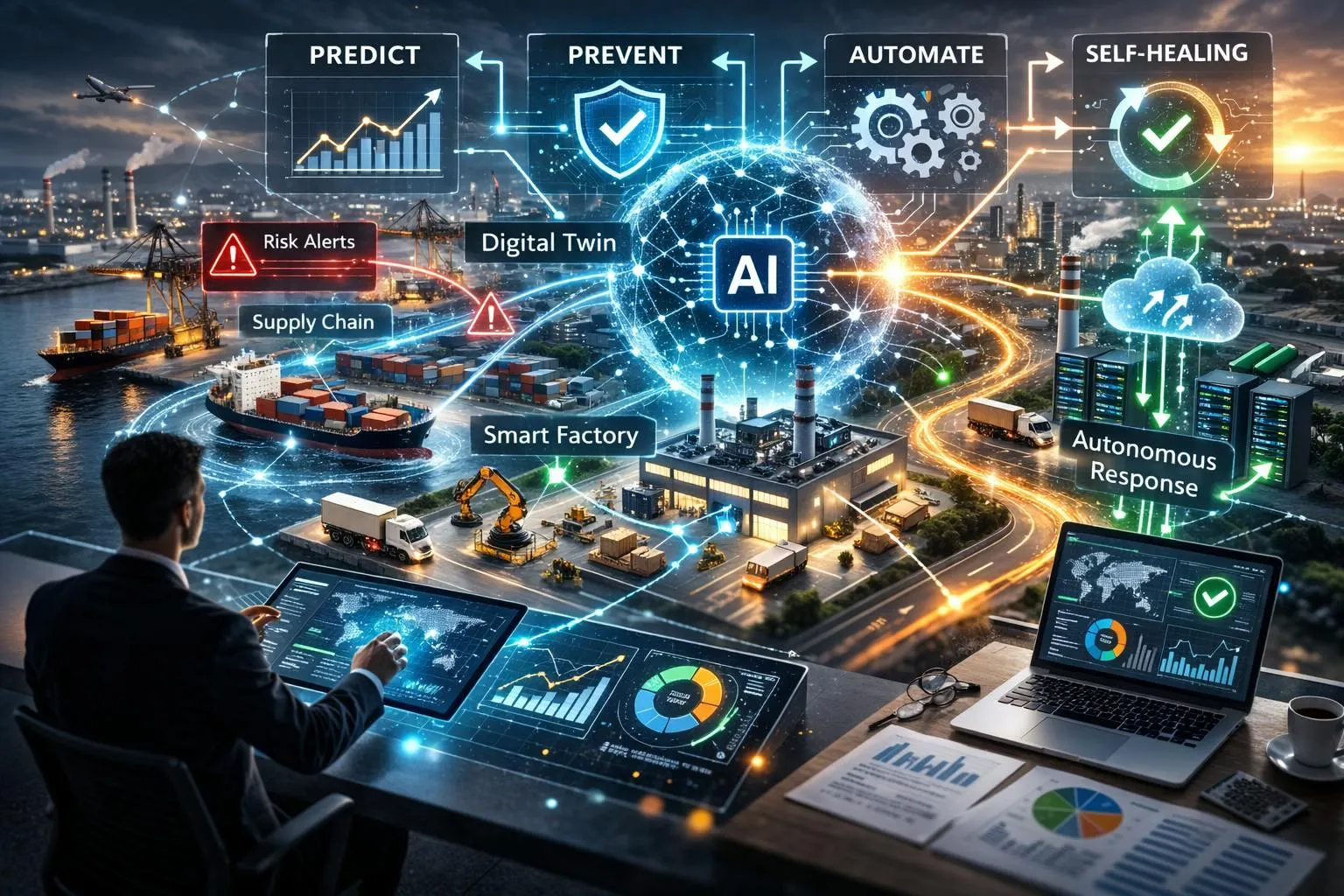
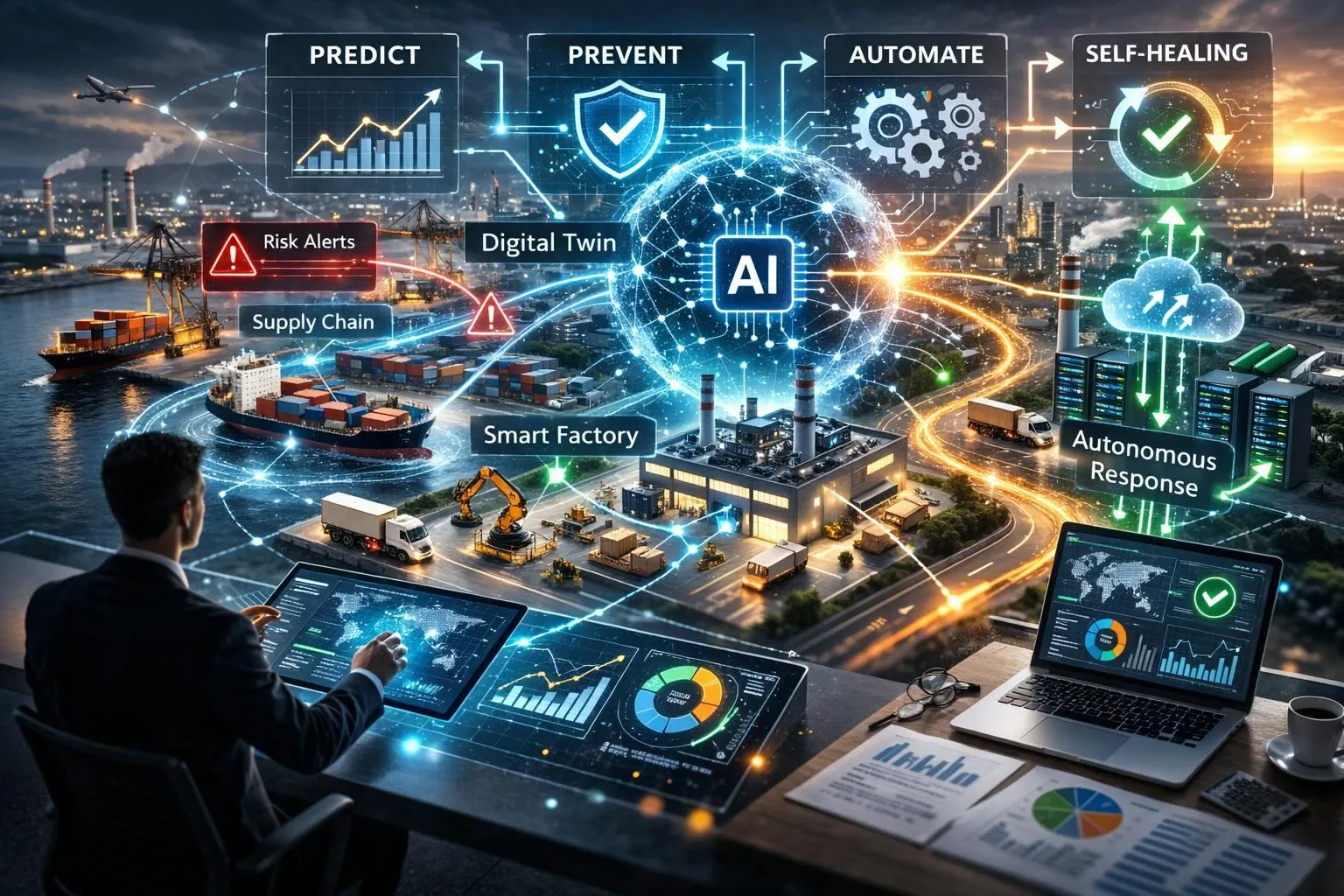
Artificial Intelligence collects information from production systems, suppliers, warehouses, transportation companies, inventory software, weather reports, market trends, and customer orders.
Machine learning analyzes this information to identify patterns, predict future risks, and recommend preventive actions before disruptions affect operations.
Instead of responding after problems occur, manufacturers receive early warnings that allow them to adjust purchasing, production schedules, inventory levels, or shipping plans.
This proactive approach significantly improves supply chain reliability.
Predicting Demand More Accurately
Unexpected changes in customer demand often create supply chain challenges.
Artificial Intelligence studies historical sales, seasonal buying patterns, online shopping behavior, promotional campaigns, regional demand, and market trends to forecast future customer requirements.
Accurate demand forecasting helps manufacturers maintain the correct inventory levels while avoiding unnecessary overproduction or stock shortages.
Better forecasting creates a more stable and efficient supply chain.
Improving Supplier Management
Reliable suppliers are essential for successful textile manufacturing.
Artificial Intelligence evaluates supplier performance by analyzing delivery history, product quality, pricing consistency, production capacity, and communication reliability.
Manufacturers can identify suppliers that consistently meet expectations while recognizing potential risks before they interrupt production.
AI also recommends alternative suppliers when disruptions are likely to occur.
This strengthens purchasing decisions and reduces dependence on a single supplier.
Smarter Inventory Management
Inventory shortages are among the most common causes of production delays.
Artificial Intelligence continuously monitors raw materials, work in progress inventory, finished goods, and warehouse activity.
When inventory levels change unexpectedly, AI recommends purchasing additional materials or adjusting production schedules before shortages occur.
This helps factories maintain continuous production without carrying excessive inventory.
Optimizing Transportation and Logistics
Transportation delays can quickly affect production schedules and customer deliveries.
Artificial Intelligence analyzes shipping routes, traffic conditions, fuel costs, warehouse locations, transportation capacity, and delivery schedules.
The system recommends the most efficient logistics plans while identifying possible delays before shipments begin.
Improved transportation planning reduces operating costs while ensuring products reach customers on time.
Supporting Home Textile Manufacturing
Artificial Intelligence strengthens supply chain performance across many home textile product categories.
These include:
-
Bed Sheets
-
Pillowcases
-
Duvet Covers
-
Comforters
-
Blankets
-
Towels
-
Curtains
-
Cushion Covers
-
Mattress Protectors
-
Table Linen
By improving planning and coordination for these products, manufacturers reduce delays while maintaining consistent product availability.
Monitoring Risks in Real Time
Artificial Intelligence continuously monitors every stage of the supply chain.
If production slows, supplier deliveries become delayed, transportation routes change, or customer demand increases unexpectedly, AI immediately alerts management teams.
These real time insights allow companies to respond quickly before disruptions spread throughout the manufacturing process.
Continuous monitoring improves operational stability and customer service.
Supporting Sustainable Manufacturing
Preventing supply chain disruptions also supports sustainability.
Artificial Intelligence reduces unnecessary transportation, minimizes production waste, improves inventory utilization, lowers energy consumption, and reduces excess manufacturing.
More efficient supply chains consume fewer resources while creating less environmental impact.
Organizations such as Textile Exchange encourage manufacturers to adopt advanced technologies that improve responsible supply chain management and sustainable textile production.
Challenges of Implementing Artificial Intelligence
Although Artificial Intelligence provides significant advantages, successful implementation requires reliable business data, digital infrastructure, software integration, employee training, and cybersecurity protection.
Manufacturers must ensure that information from suppliers, warehouses, production systems, and logistics providers remains accurate for AI to generate reliable predictions.
As technology continues improving, these systems become easier to implement and more effective.
The Future of AI in Supply Chain Management
Artificial Intelligence will continue becoming more advanced as smart factories, cloud computing, Internet of Things technology, and predictive analytics develop further.
Future supply chains will automatically coordinate suppliers, production schedules, warehouse operations, transportation planning, and customer deliveries through intelligent digital systems.
Manufacturers will respond to disruptions faster while improving efficiency, sustainability, and customer satisfaction.
Companies investing in AI today will be well prepared for the future of textile manufacturing.
Why Textile Manufacturers Should Invest in AI
Artificial Intelligence strengthens every stage of supply chain management.
Manufacturers improve forecasting, inventory planning, supplier relationships, transportation efficiency, quality control, sustainability, operational flexibility, customer satisfaction, and long term profitability.
These advantages help businesses remain competitive while reducing risks associated with global supply chain uncertainty.
Conclusion
Artificial Intelligence is transforming supply chain management by helping textile manufacturers prevent disruptions before they affect production. Through intelligent forecasting, supplier evaluation, inventory optimization, transportation planning, and continuous monitoring, AI enables companies to maintain stable operations while reducing costs and improving customer satisfaction.
As digital transformation continues across the textile industry, Artificial Intelligence will become even more important for building resilient, efficient, and sustainable supply chains. Manufacturers that adopt these technologies today will be better prepared to overcome future challenges while delivering high quality products to customers around the world.
Frequently Asked Questions
1. What are supply chain disruptions?
Supply chain disruptions are unexpected events that interrupt the movement of materials, products, or information during manufacturing and delivery.
2. How does AI prevent supply chain disruptions?
AI predicts risks, monitors operations, improves forecasting, and recommends preventive actions before disruptions occur.
3. Can AI improve supplier management?
Yes. AI evaluates supplier performance, delivery reliability, product quality, and purchasing risks.
4. How does AI improve inventory management?
AI monitors inventory levels continuously and recommends purchasing or production adjustments before shortages develop.
5. Can AI reduce transportation delays?
Yes. AI analyzes logistics routes, delivery schedules, and transportation conditions to improve shipping efficiency.
6. Which home textile products benefit from AI supply chain management?
Bed sheets, pillowcases, duvet covers, comforters, blankets, towels, curtains, cushion covers, mattress protectors, and table linen.
7. Does AI support sustainable manufacturing?
Yes. AI reduces waste, improves resource utilization, lowers unnecessary transportation, and supports environmentally responsible production.
8. What technologies work with AI supply chain management?
Machine learning, predictive analytics, cloud computing, Internet of Things devices, warehouse management software, and logistics platforms.
9. What challenges exist when implementing AI?
Reliable business data, digital infrastructure, employee training, cybersecurity, and software integration are important requirements.
10. Why is AI important for the future of textile supply chains?
AI helps manufacturers build resilient, efficient, intelligent, and sustainable supply chains while improving customer satisfaction and business performance.
Recent Posts
Categories
- Home Textiles (11)
- AI & Textile Innovation (10)
- AI + Textile Manufacturing (10)
- AI + Sustainability (5)
- AI + Home Textiles (4)
- AI + Supply Chain (5)
- AI + Future Technology (7)