Admin June 29, 2026
Home Textile Trends Shaping the Future of Modern Homes (2026 & Beyond)
Explore the latest home textile trends shaping modern homes. Discover how AI, smart textiles, sustainability, premium fabrics, and personalized designs are transforming the future of home textiles.
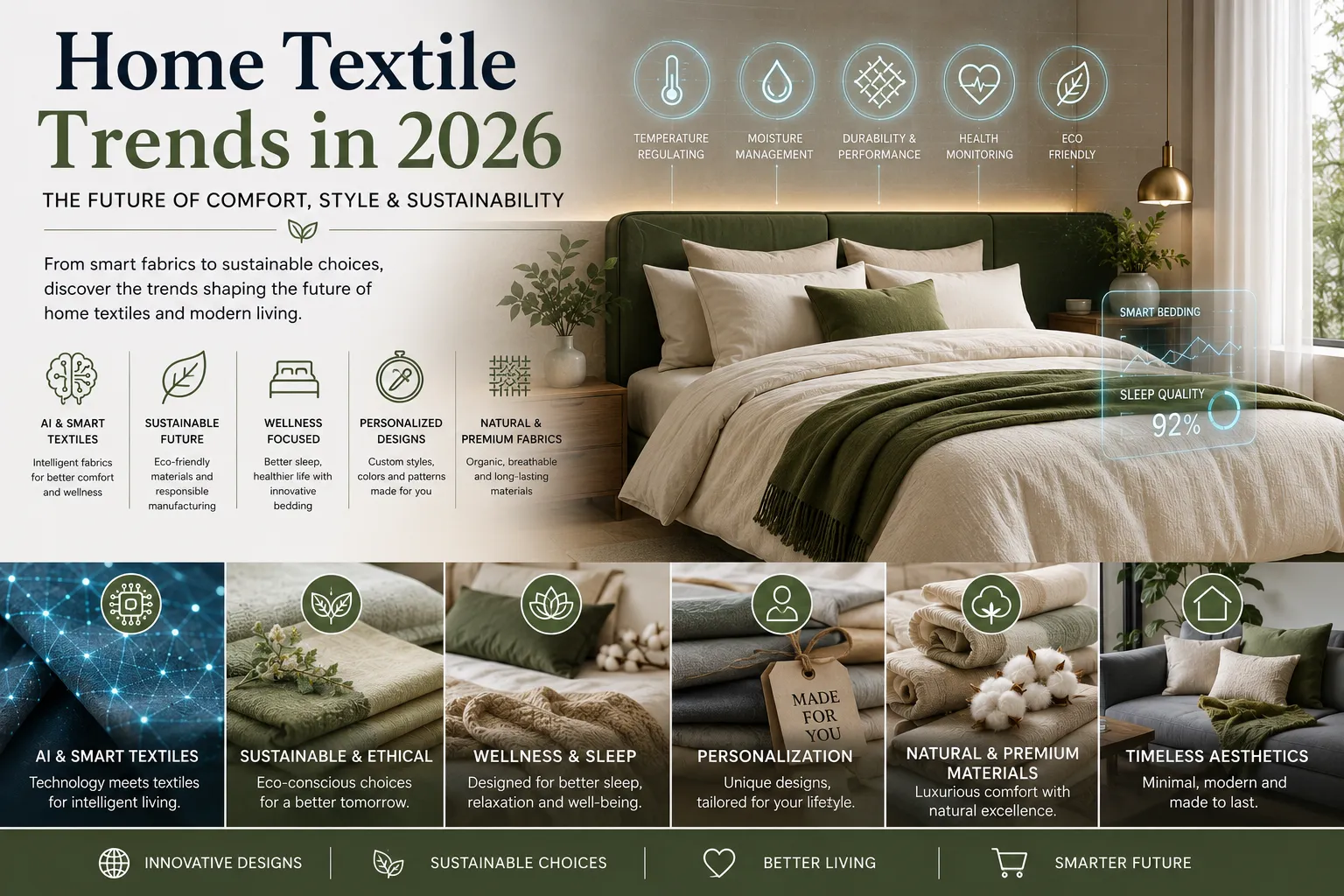
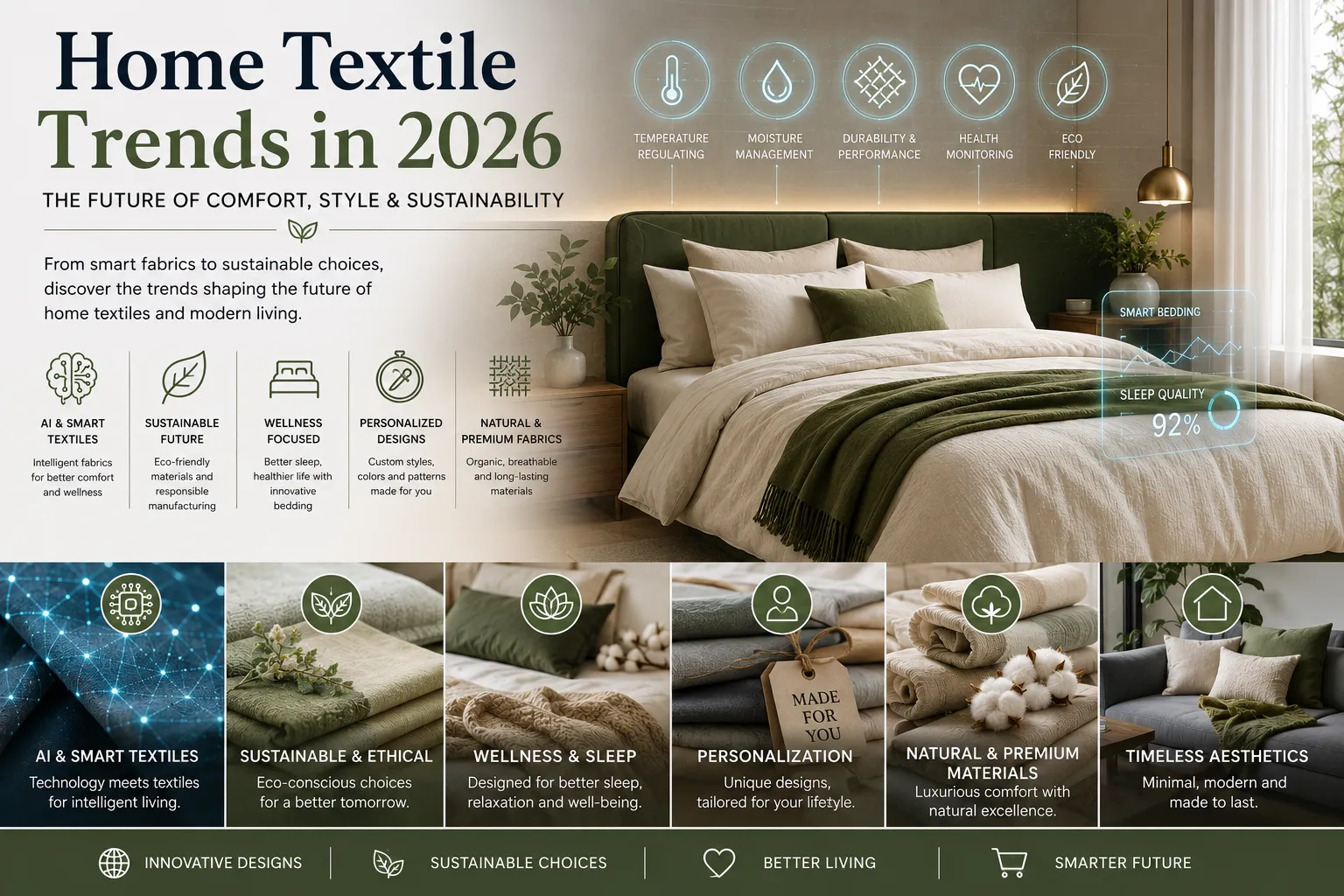
The home textile industry is evolving faster than ever. Consumer expectations have shifted beyond comfort and aesthetics toward sustainability, smart technology, personalization, and wellness. Modern buyers now expect textiles to be functional, eco-friendly, durable, and intelligently designed.
Artificial Intelligence (AI), digital manufacturing, and sustainable production are changing how home textile products are designed, manufactured, and delivered worldwide. These innovations are influencing everything from bed linen and towels to curtains, upholstery, and hotel textiles.
Whether you're a homeowner, interior designer, retailer, or textile manufacturer, understanding these emerging trends can help you stay ahead in a rapidly changing market.
1. AI Powered Textile Manufacturing
Artificial Intelligence has become one of the biggest drivers of innovation in textile manufacturing.
Manufacturers now use AI to:
-
Detect fabric defects automatically
-
Predict market demand
-
Optimize production planning
-
Improve inventory management
-
Reduce manufacturing waste
Instead of replacing skilled workers, AI helps factories produce better quality products with greater efficiency and consistency.
2. Smart Textiles Become Mainstream
Traditional fabrics are evolving into intelligent materials capable of monitoring temperature, moisture, movement, and even sleep quality.
Emerging smart home textile products include:
-
Temperature regulating bed sheets
-
Smart pillows
-
Intelligent mattress protectors
-
Health monitoring bedding
-
Connected home fabrics
As sensor technology becomes more affordable, smart textiles are expected to become increasingly common in modern homes.
3. Sustainability Is No Longer Optional
Consumers are paying closer attention to how textile products are manufactured.
Growing demand is driving interest in:
-
Organic cotton
-
Recycled fibers
-
Water-saving production
-
Eco friendly dyes
-
Plastic free packaging
Sustainability has become a major purchasing factor rather than simply a marketing advantage.
4. Wellness-Focused Bedding
Sleep has become a priority for many consumers.
Instead of simply buying attractive bedding, people are investing in products designed to improve sleep quality.
Popular wellness textiles include:
-
Breathable cotton bedding
-
Cooling fabrics
-
Moisture control sheets
-
Hypoallergenic pillow covers
-
Natural fiber blankets
The future of bedding is centered on comfort and healthy living.
5. Personalized Home Textiles
Consumers increasingly want products that reflect their personal style.
Manufacturers now offer:
-
Custom embroidery
-
Personalized bedding
-
Digital fabric printing
-
Custom colors
-
Made to order textile collections
AI is also helping brands recommend personalized textile products based on customer preferences.
6. Luxury Hotel Comfort at Home
One of the fastest-growing trends is bringing hotel quality bedding into residential spaces.
Popular choices include:
-
Premium cotton sheets
-
High quality towels
-
Luxury duvet covers
-
Soft bathrobes
-
Hotel style pillows
Consumers now expect hospitality level comfort in their own homes.
7. Minimalist Interior Textiles
Modern interior design continues to embrace simplicity.
Trending colors include:
-
Warm White
-
Sand Beige
-
Olive Green
-
Stone Grey
-
Soft Blue
Clean textures, natural fabrics, and timeless designs are replacing overly decorative patterns.
8. Digital Printing Revolution
Advanced digital printing allows manufacturers to produce highly detailed patterns with less water and lower waste than traditional printing methods.
Benefits include:
-
Faster production
-
Unlimited design possibilities
-
Small production runs
-
Greater color accuracy
This technology enables brands to respond quickly to changing design trends.
9. Circular Textile Economy
Instead of producing products that eventually become waste, manufacturers are increasingly adopting circular production models.
This includes:
-
Recycled fabrics
-
Textile recycling
-
Repairable products
-
Reusable packaging
-
Responsible sourcing
Circular manufacturing supports long-term environmental sustainability.
10. Transparent Supply Chains
Consumers increasingly want to know where products come from.
Leading manufacturers now provide greater transparency by sharing information about:
-
Cotton sourcing
-
Manufacturing processes
-
Factory standards
-
Sustainability certifications
-
Ethical labor practices
Trust has become a competitive advantage.
What These Trends Mean for Manufacturers
Companies that invest in innovation are more likely to succeed in the coming years.
Successful manufacturers focus on:
-
AI integration
-
Product quality
-
Sustainable production
-
Customer personalization
-
Digital transformation
-
Continuous innovation
These areas are becoming key competitive advantages in the global textile market.
The Future of Home Textiles
The next generation of home textiles will be defined by intelligence, sustainability, and personalization.
Future innovations may include:
-
AI designed fabrics
-
Self-cleaning textiles
-
Energy efficient manufacturing
-
Climate responsive bedding
-
Connected smart homes
-
Digital product passports
The companies that embrace these innovations today will be better positioned for tomorrow's market.
Conclusion
Home textiles are no longer just decorative products—they are becoming smarter, more sustainable, and more personalized. AI, smart fabrics, eco-friendly manufacturing, and wellness-focused designs are shaping the future of the industry.
For manufacturers, retailers, and consumers alike, understanding these trends is essential to making informed decisions and staying competitive in an evolving global market.
Frequently Asked Questions
1. What are the biggest home textile trends today?
AI, smart textiles, sustainability, wellness bedding, and personalized designs are among the leading trends.
2. How is AI changing the textile industry?
AI improves quality control, production efficiency, demand forecasting, and inventory management.
3. What are smart textiles?
Smart textiles are fabrics that can sense, monitor, or respond to environmental changes using advanced technology.
4. Why is sustainability important in home textiles?
Consumers increasingly prefer environmentally responsible products made with sustainable materials and production methods.
5. What fabrics are trending for modern homes?
Organic cotton, linen, bamboo, and recycled fibers are becoming increasingly popular.
6. What colors are popular in modern home textiles?
Neutral colors such as beige, white, olive green, grey, and soft blue continue to dominate interior design trends.
7. How does digital printing benefit textile manufacturing?
It reduces waste, supports customization, and allows faster production with high quality designs.
8. What is a circular textile economy?
It focuses on recycling, reusing, and designing textile products to reduce waste and improve sustainability.
9. Why do consumers want hotel quality bedding?
People value the comfort, durability, and premium feel associated with luxury hotel textiles.
10. What is the future of home textiles?
The future includes AI powered manufacturing, smart fabrics, sustainable materials, and personalized textile products.
Recent Posts
Categories
- Home Textiles (11)
- AI & Textile Innovation (10)
- AI + Textile Manufacturing (10)
- AI + Sustainability (5)
- AI + Home Textiles (4)
- AI + Supply Chain (5)
- AI + Future Technology (7)