Admin July 1, 2026
Generative AI in Textile Design: How Artificial Intelligence Is Revolutionizing Fabric Creativity
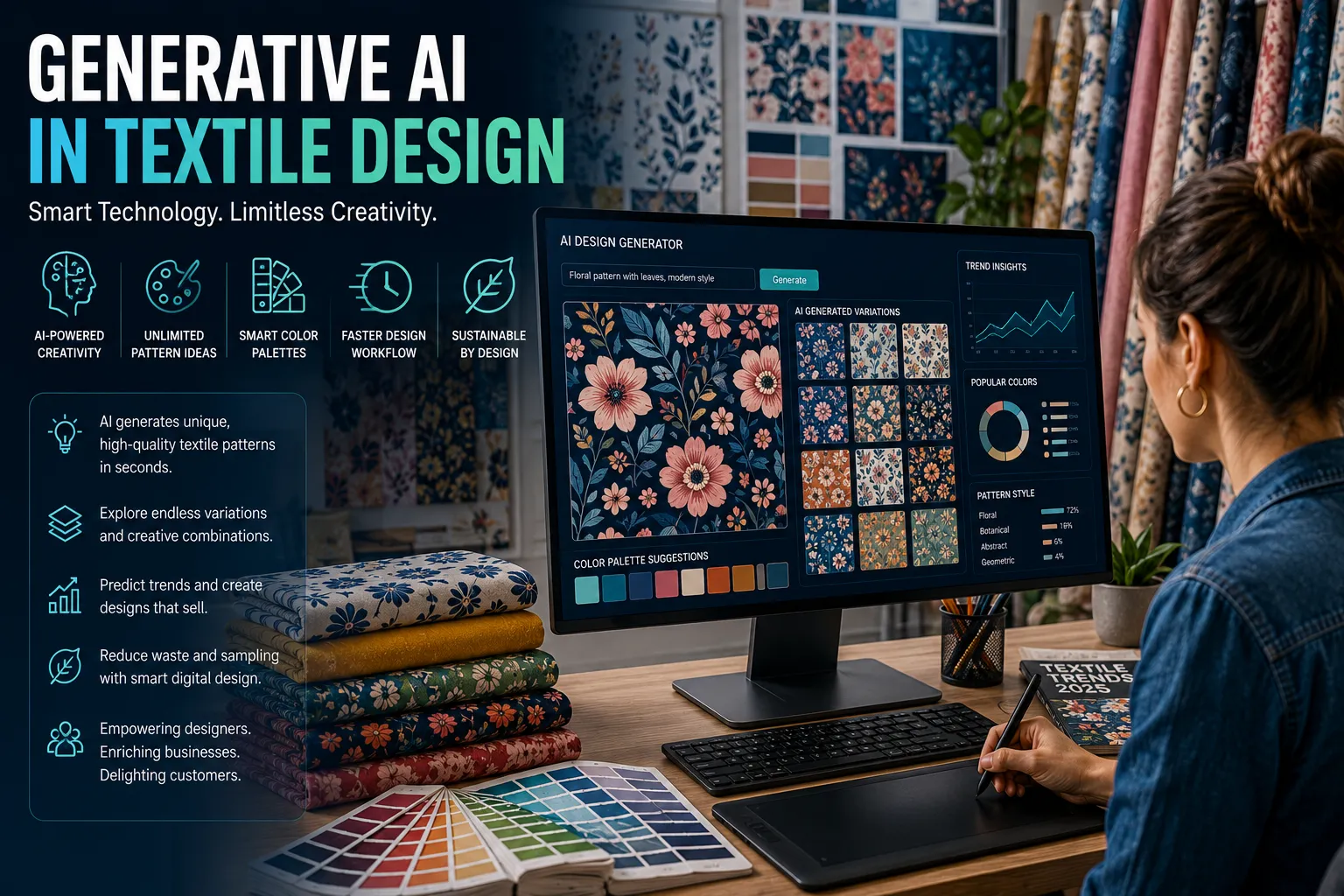
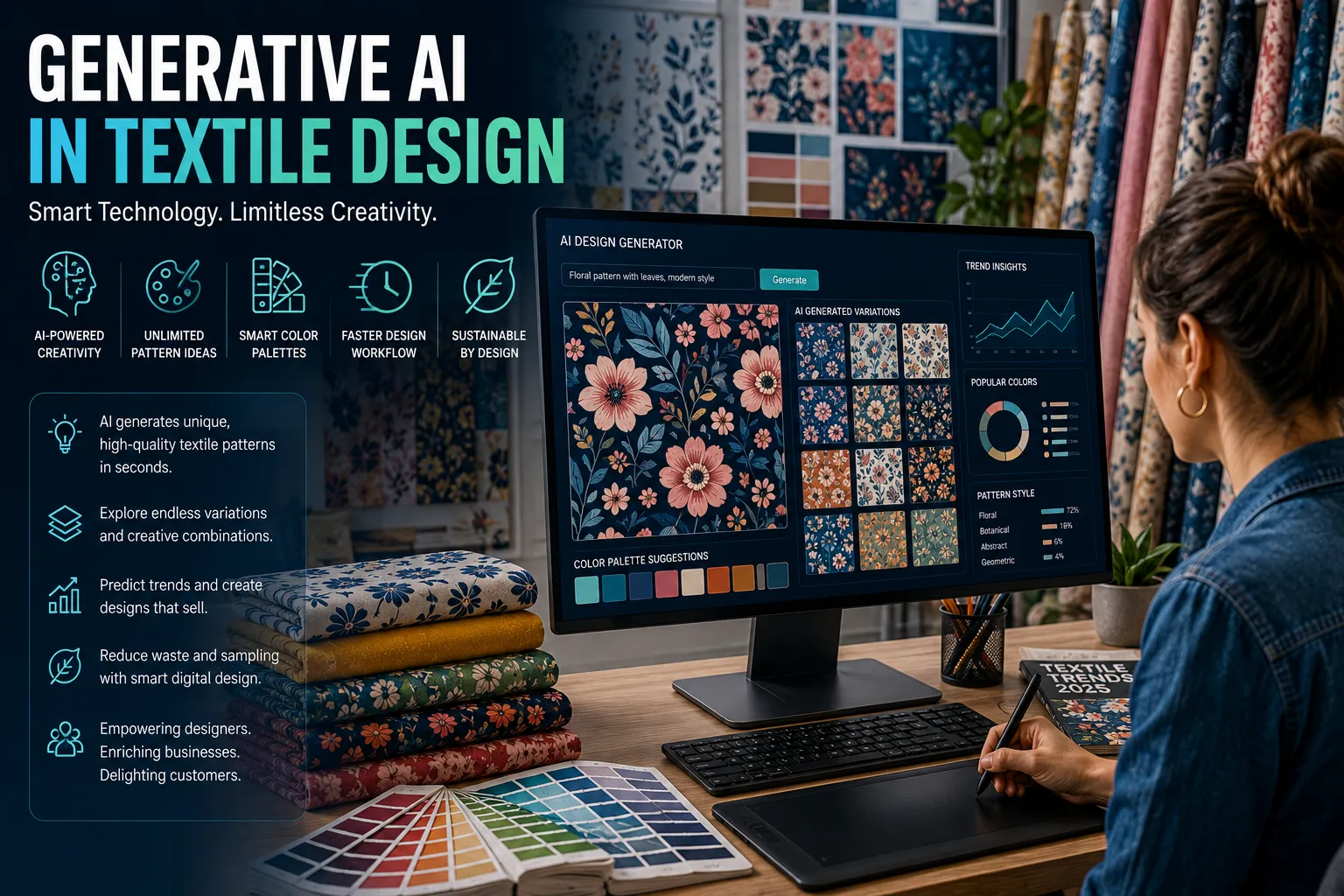
Generative Artificial Intelligence (Generative AI) is changing the way textile designers create fabrics, patterns, and home textile collections. For many years, textile design relied entirely on the creativity, experience, and artistic skills of professional designers. While human creativity remains the foundation of great design, today's competitive market demands faster product development, greater customization, and constant innovation. Consumers expect unique designs that match changing interior trends, seasonal colors, and personal preferences. Meeting these expectations manually can be time-consuming and expensive. Generative AI helps solve these challenges by generating original design concepts, suggesting color combinations, creating repeating fabric patterns, and producing multiple design variations within minutes. Rather than replacing designers, Generative AI acts as an intelligent creative assistant that provides inspiration, speeds up repetitive tasks, and enables professionals to focus on refining ideas and creating collections that stand out in the global marketplace. As AI technology continues to evolve, Generative AI is becoming one of the most valuable tools in modern textile design and product development.
What Is Generative AI?
Generative AI is a branch of Artificial Intelligence that creates new content instead of simply analyzing existing information. It learns from large collections of images, colors, textures, and design styles to generate completely new visual concepts based on user instructions.
In the textile industry, Generative AI can produce floral prints, geometric patterns, abstract artwork, traditional motifs, minimalist textures, embroidery concepts, and modern fabric layouts. Designers simply provide keywords, style references, color preferences, or inspiration images, and the AI generates multiple original design options within seconds.
This dramatically reduces the time required during the early stages of textile product development.
Why the Textile Industry Is Adopting Generative AI
The global textile market moves quickly, with new collections launching every season. Designers often face tight deadlines while responding to changing customer preferences and market trends.
Generative AI helps manufacturers and design teams work more efficiently by producing numerous creative concepts in a short period of time. Instead of beginning every project with a blank canvas, designers receive several AI-generated starting points that they can modify, combine, and improve.
This speeds up the creative process while allowing businesses to respond more rapidly to changing market demands.
AI Creates Innovative Fabric Patterns
Pattern development is one of the most exciting applications of Generative AI.
By studying thousands of historical and contemporary textile designs, AI learns how different shapes, colors, textures, and motifs interact. It can then generate entirely new repeating patterns suitable for bed sheets, duvet covers, pillowcases, curtains, upholstery fabrics, towels, and decorative home textiles.
Because AI explores countless design possibilities, it often produces creative combinations that designers may not have considered manually. Human designers remain responsible for selecting, refining, and adapting these concepts to match brand identity and customer expectations.
Faster Product Development
Traditional textile design may require days or even weeks to complete concept development, pattern creation, color selection, and design revisions.
Generative AI significantly accelerates this process by producing multiple design alternatives almost instantly.
Design teams can compare different concepts, experiment with color palettes, evaluate pattern scales, and modify layouts before investing time in detailed refinement.
This faster workflow enables manufacturers to launch collections more quickly while reducing development costs.
Personalized Home Textile Collections
Modern consumers increasingly prefer products that reflect their individual tastes and interior design preferences.
Generative AI supports product personalization by creating customized patterns based on customer requirements. Businesses can generate exclusive collections tailored for different markets, hotel brands, retailers, or regional preferences without redesigning every product from scratch.
This level of customization allows manufacturers to offer unique products while improving customer satisfaction and strengthening brand identity.
Supporting Home Textile Designers
Generative AI is particularly valuable for home textile manufacturers producing products such as:
-
Bed Sheets
-
Pillowcases
-
Duvet Covers
-
Comforters
-
Curtains
-
Towels
-
Cushion Covers
-
Table Linen
AI provides creative inspiration while helping designers develop coordinated collections more efficiently.
AI Improves Color Selection
Choosing the right color combinations is an important part of textile design.
Generative AI analyzes global color trends, consumer behavior, interior design preferences, and seasonal forecasts to recommend palettes likely to perform well in the market.
Designers can instantly test multiple color variations before finalizing a collection, reducing uncertainty and improving design quality.
This helps manufacturers create products that better match changing consumer preferences.
Sustainability Through Smarter Design
Generative AI also supports sustainable textile manufacturing.
By generating accurate digital prototypes before physical sampling begins, AI reduces unnecessary fabric usage, printing trials, dye consumption, and sample production.
Manufacturers require fewer physical prototypes, saving time, raw materials, energy, and production costs.
Organizations such as Textile Exchange encourage digital innovation that contributes to more sustainable textile manufacturing.
Human Creativity and AI Work Together
A common misconception is that Generative AI replaces textile designers.
In reality, AI functions as a creative assistant rather than a replacement. Human designers continue making artistic decisions, understanding cultural influences, interpreting customer preferences, and developing emotional connections through design.
AI simply automates repetitive creative tasks and provides new sources of inspiration.
The strongest collections are created when human imagination and AI technology work together.
Challenges of Using Generative AI
Although Generative AI offers impressive capabilities, manufacturers should also understand its limitations.
AI generated designs require human review to ensure originality, commercial suitability, technical feasibility, and brand consistency.
Designers must also consider copyright, intellectual property, ethical AI use, and responsible data management when adopting AI powered creative tools.
Proper oversight ensures that AI supports innovation while maintaining professional design standards.
The Future of Generative AI in Textile Design
Generative AI is expected to become even more advanced over the next decade.
Future design systems may generate complete textile collections, recommend matching home décor products, simulate fabric draping, predict customer preferences, and automatically prepare production-ready artwork.
Combined with virtual reality, digital twins, and smart manufacturing, Generative AI will help manufacturers shorten product development cycles while delivering highly personalized textile collections.
Businesses that embrace these technologies early will gain a significant competitive advantage in global textile markets.
Why Textile Businesses Should Invest in Generative AI
Companies adopting Generative AI benefit from:
-
Faster design development
-
More creative pattern options
-
Lower sampling costs
-
Better product customization
-
Improved productivity
-
Reduced material waste
-
Greater design flexibility
-
Faster market response
-
Better customer satisfaction
-
Stronger global competitiveness
These advantages make Generative AI one of the most promising technologies for future textile innovation.
Conclusion
Generative AI is transforming textile design by combining intelligent automation with human creativity. From generating original fabric patterns and personalized collections to improving color selection, accelerating product development, and supporting sustainable manufacturing, AI enables designers and manufacturers to work more efficiently without sacrificing artistic quality.
Rather than replacing creative professionals, Generative AI expands their capabilities by providing new ideas, reducing repetitive work, and enabling faster innovation. As the textile industry continues its digital transformation, businesses that combine human expertise with AI powered creativity will be better positioned to meet future customer expectations and compete successfully in the global marketplace.
Frequently Asked Questions
1. What is Generative AI in textile design?
Generative AI creates original textile patterns, prints, and design concepts using artificial intelligence.
2. Can AI create fabric designs?
Yes. AI can generate floral, geometric, abstract, and customized textile patterns in seconds.
3. Does Generative AI replace textile designers?
No. It supports designers by generating ideas, while humans make final creative and technical decisions.
4. How does AI improve textile product development?
AI speeds up concept creation, color selection, pattern development, and design revisions.
5. Can AI create customized home textile collections?
Yes. AI can generate personalized designs based on customer preferences and market trends.
6. Does Generative AI support sustainability?
Yes. It reduces physical sampling, saves raw materials, and minimizes production waste.
7. Which home textile products benefit from Generative AI?
Bed sheets, pillowcases, duvet covers, towels, curtains, cushions, upholstery fabrics, and table linen.
8. What technologies work with Generative AI?
Machine learning, computer vision, predictive analytics, cloud computing, and digital design software.
9. What challenges does Generative AI present?
Copyright, originality verification, ethical AI use, and human quality review remain important considerations.
10. What is the future of Generative AI in textiles?
Future systems will create complete collections, simulate fabrics, personalize designs, and integrate directly with smart manufacturing.
Recent Posts
Categories
- Home Textiles (11)
- AI & Textile Innovation (10)
- AI + Textile Manufacturing (10)
- AI + Sustainability (5)
- AI + Home Textiles (4)
- AI + Supply Chain (5)
- AI + Future Technology (7)