Admin July 3, 2026
Future Smart Beds and Intelligent Bedding Systems
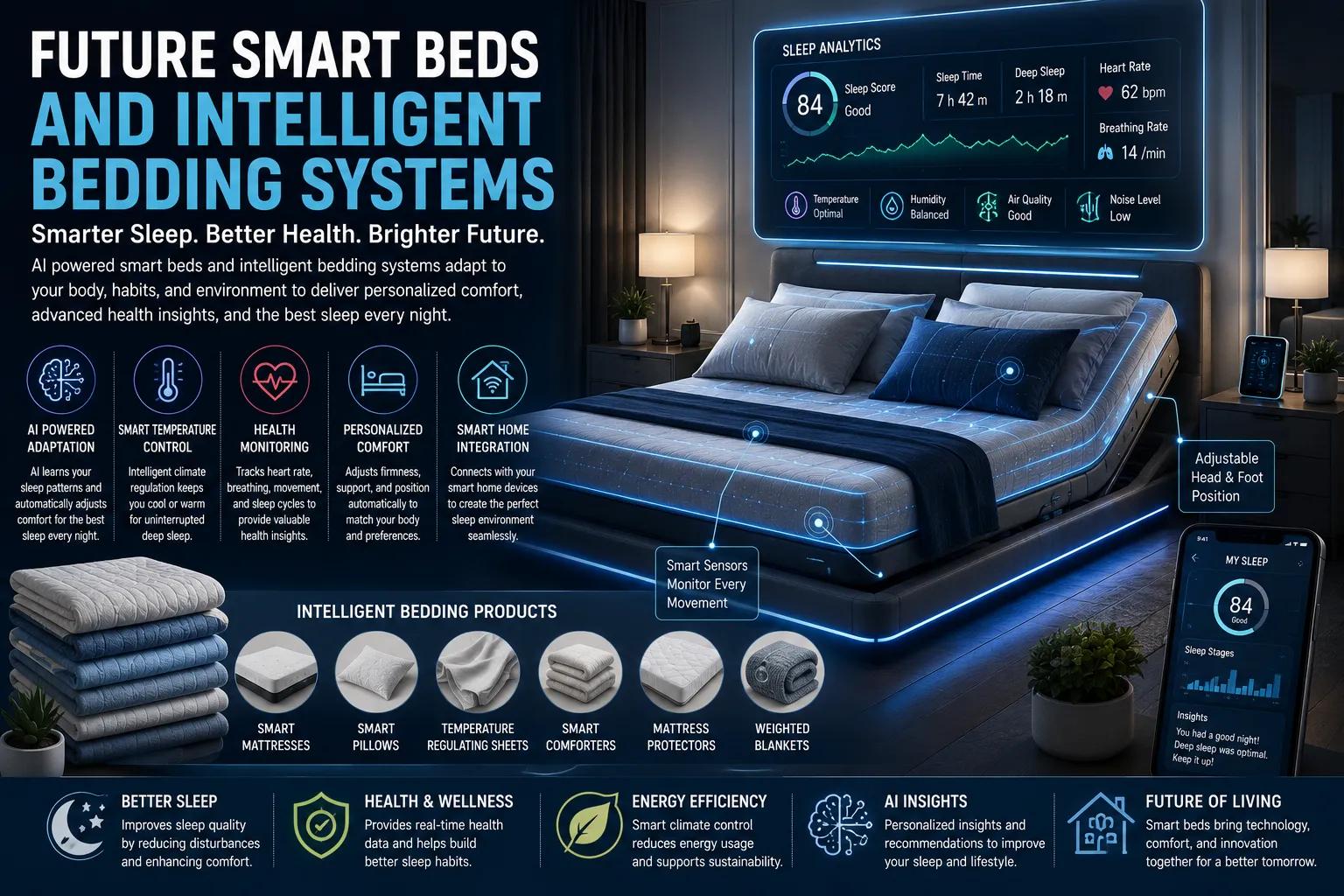
Sleep technology is entering a new era as smart beds and intelligent bedding systems become one of the most exciting innovations in the home textile industry. For many years, bedding products focused mainly on comfort, softness, durability, and appearance. Today, advances in Artificial Intelligence, smart sensors, connected devices, and intelligent fabrics are completely changing how people sleep and recover every night. Future smart beds are designed to do much more than provide a comfortable place to rest. They can monitor sleep quality, adjust mattress firmness, regulate temperature, detect body movement, analyze breathing patterns, and provide personalized recommendations for improving sleep health. Intelligent bedding systems combine advanced textile engineering with digital technology to create sleeping environments that automatically respond to each person's individual needs. As consumers become more interested in healthier lifestyles and smart homes, these innovative bedding solutions are expected to become a standard feature in modern bedrooms around the world.
What Are Smart Beds and Intelligent Bedding Systems
Smart beds and intelligent bedding systems are advanced sleep solutions that combine traditional bedding products with modern digital technologies. They use Artificial Intelligence, smart sensors, connected devices, and intelligent fabrics to monitor sleeping conditions and automatically improve comfort throughout the night.
Unlike ordinary beds, these systems continuously collect information such as body position, temperature, heart rate, breathing patterns, sleep duration, and movement. Artificial Intelligence processes this information and makes real time adjustments to provide the best possible sleeping experience for every individual.
The result is a bed that actively supports healthier and more comfortable sleep instead of simply providing a surface for resting.
How Artificial Intelligence Improves Sleep
Artificial Intelligence serves as the central technology behind intelligent bedding systems. It continuously analyzes information collected from sensors embedded inside mattresses, pillows, mattress protectors, and bed sheets.
Machine learning algorithms recognize sleeping habits over time and learn each person's comfort preferences. The system can automatically adjust mattress support, room temperature settings, humidity levels, and bedding warmth according to changing sleep conditions.
Instead of requiring manual adjustments, AI creates a personalized sleeping environment that adapts naturally throughout the night.
Personalized Sleeping Comfort
Every person sleeps differently, making personalized comfort one of the greatest advantages of intelligent bedding.
Some people prefer cooler temperatures while others sleep better in warmer conditions. Some require firmer mattress support while others benefit from softer pressure relief.
Artificial Intelligence studies individual sleeping behavior and automatically creates personalized comfort settings based on each user's needs.
This level of customization improves sleep quality while reducing discomfort caused by traditional one size fits all bedding.
Intelligent Temperature Regulation
Maintaining the correct sleeping temperature is essential for deep and uninterrupted sleep.
Future smart bedding systems use intelligent fabrics together with Artificial Intelligence to regulate heat throughout the night.
Temperature sensors monitor body warmth while AI adjusts cooling or heating elements within the bedding system.
These automatic adjustments help users remain comfortable regardless of seasonal weather or changing room temperatures.
Improved temperature regulation also reduces excessive sweating and nighttime discomfort.
Health Monitoring During Sleep
Modern smart beds are becoming valuable tools for monitoring overall health.
Embedded sensors continuously track breathing patterns, heart rate, body movement, sleeping position, and sleep cycles without requiring wearable devices.
Artificial Intelligence analyzes this information and generates detailed reports that help users better understand their sleeping habits.
Long term monitoring may also identify changes that encourage users to seek professional medical advice when appropriate.
These technologies promote healthier lifestyles through continuous sleep awareness.
Smart Home Integration
Future intelligent bedding systems will become fully connected with other smart home technologies.
Artificial Intelligence will communicate with lighting systems, air conditioning, room humidity controls, smart curtains, and home automation platforms to create the ideal sleeping environment.
For example, lights may automatically dim before bedtime, curtains may close at sunset, and room temperature may adjust according to personal sleep preferences.
This creates a fully connected bedroom that improves comfort while reducing energy consumption.
Supporting Modern Home Textile Products
Artificial Intelligence is expanding beyond mattresses to improve many home textile products.
These include:
-
Bed Sheets
-
Pillowcases
-
Duvet Covers
-
Comforters
-
Blankets
-
Mattress Protectors
-
Pillow Protectors
-
Weighted Blankets
-
Electric Blankets
-
Luxury Bedding Collections
Manufacturers continue developing intelligent versions of these products using advanced fabrics, smart sensors, and digital technologies.
Sustainable Smart Bedding
Future intelligent bedding systems are expected to support sustainable manufacturing through responsible material selection and efficient production.
Artificial Intelligence helps manufacturers optimize fabric usage, reduce production waste, improve quality control, lower energy consumption, and select environmentally responsible materials.
Many companies are also combining smart bedding technologies with organic cotton, recycled fibers, and environmentally friendly manufacturing practices.
Organizations such as Textile Exchange promote sustainable innovation throughout the global textile industry.
Benefits for Manufacturers
Artificial Intelligence provides significant advantages for home textile manufacturers developing smart bedding products.
Companies gain better market insights, improved product quality, faster product development, stronger inventory management, reduced manufacturing waste, improved customer satisfaction, and increased competitiveness.
AI also enables manufacturers to create premium products that offer greater value through advanced functionality rather than traditional comfort alone.
This creates new business opportunities within the growing smart home market.
Challenges of Intelligent Bedding Systems
Although smart bedding technologies continue advancing rapidly, manufacturers still face several challenges.
Developing intelligent fabrics requires specialized materials, electronic components, software development, reliable sensors, cybersecurity protection, and extensive product testing.
Manufacturers must also ensure that products remain comfortable, durable, washable, energy efficient, and affordable for consumers.
Continuous innovation is helping overcome these challenges every year.
The Future of Smart Beds
The future of intelligent bedding will extend far beyond sleep monitoring.
Artificial Intelligence may eventually predict sleep problems before they occur, recommend personalized wellness programs, coordinate with healthcare providers, adjust room environments automatically, and integrate with wearable health technologies.
Future smart beds may even recognize multiple users and automatically switch comfort settings according to individual preferences.
These innovations will transform bedrooms into intelligent wellness environments that actively support better physical and mental health.
Why Consumers Will Choose Intelligent Bedding
Consumers increasingly value products that improve health, comfort, convenience, and sustainability.
Smart bedding systems offer personalized comfort, improved sleep quality, advanced health monitoring, better temperature control, energy efficiency, and seamless smart home integration.
As technology becomes more affordable, intelligent bedding will become accessible to a much wider range of households around the world.
Conclusion
Future smart beds and intelligent bedding systems represent one of the most exciting developments in the home textile industry. By combining Artificial Intelligence, smart sensors, intelligent fabrics, and connected home technologies, these products create personalized sleeping environments that improve comfort, support better health, and enhance overall quality of life.
As innovation continues, intelligent bedding will become more advanced, more sustainable, and more affordable. Manufacturers investing in these technologies today will lead the future of home textiles while providing consumers with smarter, healthier, and more comfortable sleep experiences.
Frequently Asked Questions
1. What are smart beds?
Smart beds are advanced beds that use Artificial Intelligence and sensors to improve sleep comfort and monitor sleep quality.
2. How does Artificial Intelligence improve bedding?
AI analyzes sleep data and automatically adjusts comfort, temperature, and support according to individual preferences.
3. Can smart beds monitor health?
Yes. Many smart beds monitor heart rate, breathing patterns, body movement, and sleep quality.
4. What products are included in intelligent bedding systems?
Bed sheets, pillowcases, comforters, duvet covers, blankets, mattress protectors, and smart mattresses.
5. Can smart beds save energy?
Yes. Intelligent temperature regulation and smart home integration help reduce unnecessary energy consumption.
6. Are smart bedding systems environmentally friendly?
Many manufacturers combine intelligent technology with sustainable materials and responsible production methods.
7. Can smart beds connect with smart homes?
Yes. They can communicate with lighting, climate control, smart curtains, and home automation systems.
8. What challenges exist when developing smart bedding?
Manufacturers must address technology integration, durability, cybersecurity, affordability, and product reliability.
9. Is Artificial Intelligence replacing traditional bedding?
No. AI enhances traditional bedding by adding intelligent features that improve comfort and health.
10. What is the future of intelligent bedding?
Future systems will provide highly personalized sleep experiences, advanced health monitoring, predictive wellness features, and complete integration with smart homes.
Recent Posts
Categories
- Home Textiles (11)
- AI & Textile Innovation (10)
- AI + Textile Manufacturing (10)
- AI + Sustainability (5)
- AI + Home Textiles (4)
- AI + Supply Chain (5)
- AI + Future Technology (7)