Admin July 2, 2026
Can AI Make the Textile Industry More Sustainable
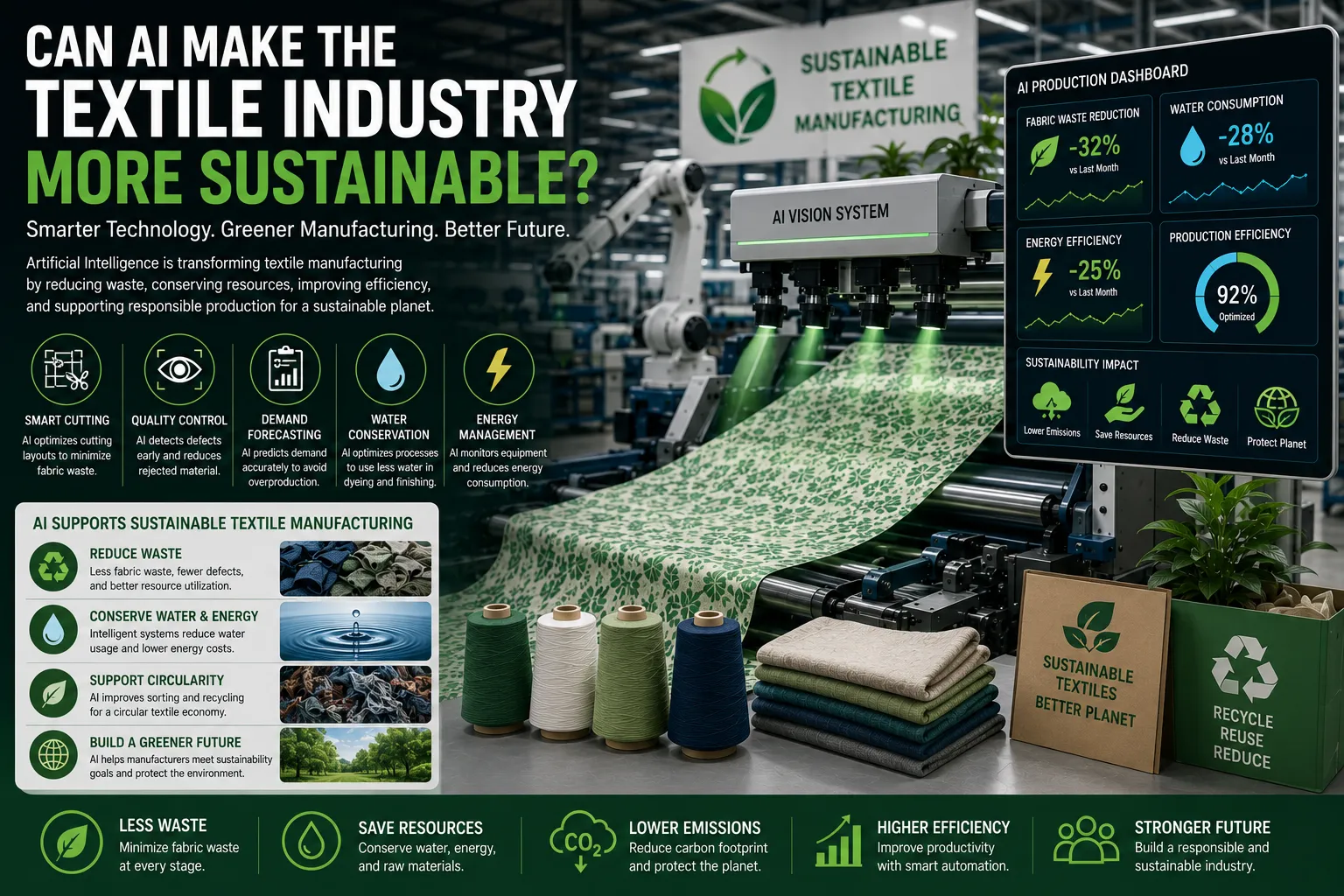
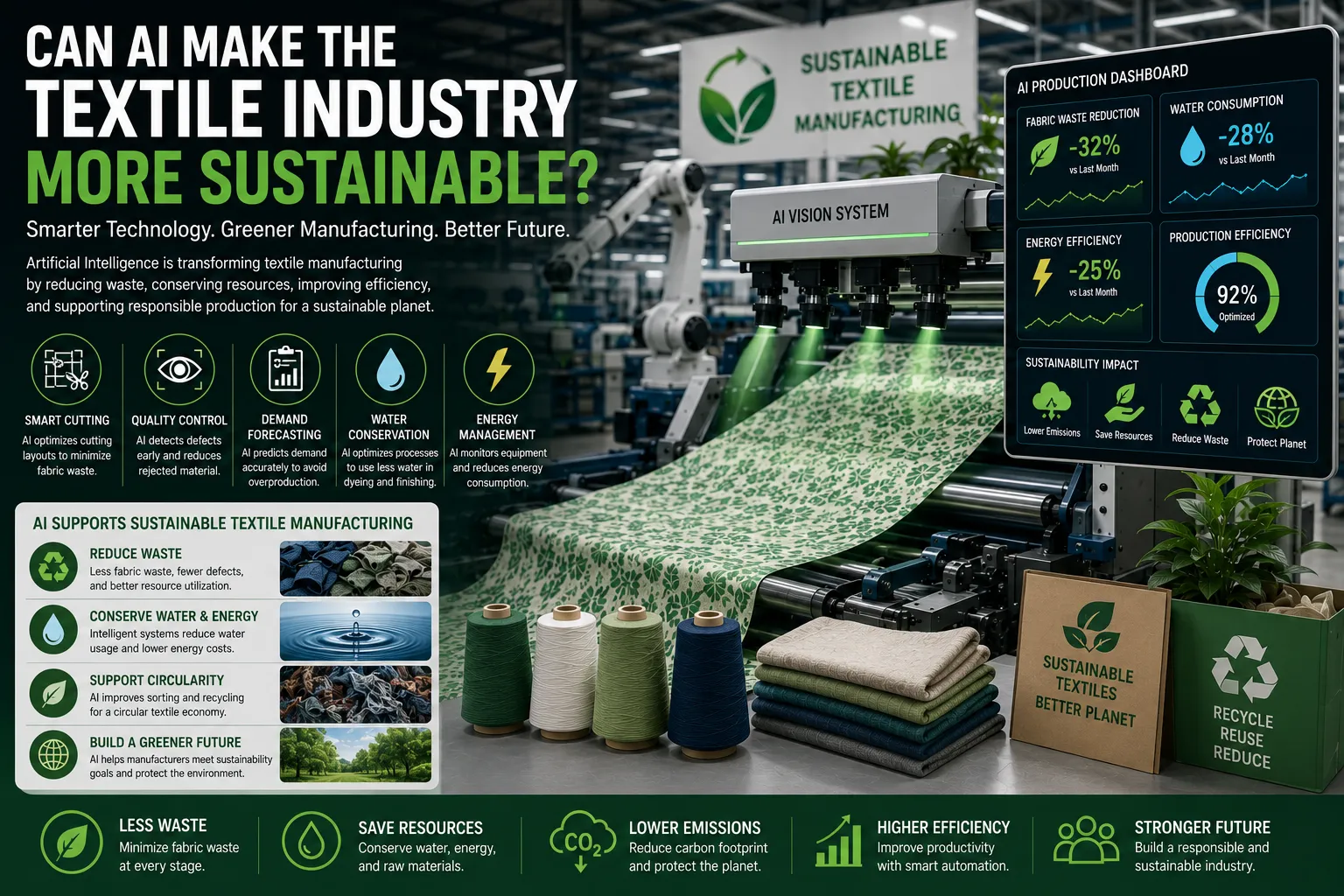
Artificial Intelligence is becoming one of the most powerful technologies helping the textile industry move toward a more sustainable future. The textile sector plays an important role in the global economy, producing clothing, home textiles, technical fabrics, and industrial materials used every day around the world. However, textile manufacturing also consumes large amounts of water, energy, chemicals, and raw materials while generating significant production waste and carbon emissions. As environmental concerns continue to grow, manufacturers are searching for smarter ways to reduce their environmental impact without affecting product quality or business profitability. Artificial Intelligence provides practical solutions by analyzing production data, improving manufacturing efficiency, reducing waste, optimizing resource utilization, and supporting better decision making. Rather than replacing human expertise, AI enables manufacturers to operate more intelligently while achieving sustainability goals. From production planning and quality control to inventory management, recycling, and supply chain optimization, Artificial Intelligence is helping create a cleaner, more efficient, and environmentally responsible textile industry.
What Does Sustainable Textile Manufacturing Mean
Sustainable textile manufacturing focuses on producing fabrics and textile products while minimizing environmental impact and using natural resources responsibly. The goal is to reduce waste, lower energy consumption, conserve water, minimize pollution, improve recycling, and create products that support long term environmental protection.
Artificial Intelligence strengthens these sustainability efforts by collecting and analyzing large amounts of manufacturing data. AI identifies opportunities to improve efficiency, reduce unnecessary resource consumption, and optimize production processes without sacrificing product quality.
This intelligent approach allows manufacturers to balance economic growth with environmental responsibility.
How Artificial Intelligence Improves Sustainability
Artificial Intelligence processes information collected from production machines, quality inspection systems, warehouse management software, customer orders, and supply chain operations.
Machine learning algorithms analyze this information to identify production inefficiencies, predict future demand, optimize manufacturing schedules, and improve resource utilization.
Instead of making decisions based only on experience or historical records, manufacturers receive accurate recommendations based on real time production data.
These improvements reduce waste while increasing productivity and profitability.
Reducing Fabric Waste
Fabric waste remains one of the largest environmental challenges in textile manufacturing.
Artificial Intelligence helps reduce waste by optimizing cutting layouts, improving production planning, identifying defects early, and predicting material requirements more accurately.
AI powered computer vision systems detect weaving faults, broken yarns, stains, printing errors, and color inconsistencies during production. Early detection prevents defective materials from continuing through manufacturing.
Reducing fabric waste lowers production costs while conserving valuable natural resources.
Saving Water in Textile Manufacturing
Water is essential during dyeing, washing, printing, and finishing operations.
Artificial Intelligence monitors water consumption throughout production and identifies opportunities to improve efficiency. Smart manufacturing systems recommend process adjustments that reduce unnecessary water usage while maintaining consistent product quality.
Lower water consumption helps manufacturers reduce operating expenses while protecting one of the world's most valuable natural resources.
Water conservation has become increasingly important as textile production continues to expand globally.
Improving Energy Efficiency
Textile factories consume large amounts of electricity to operate production equipment.
Artificial Intelligence continuously monitors machine performance, production schedules, and factory operations to identify energy saving opportunities.
AI recommends optimized machine settings, reduces unnecessary idle time, and improves equipment utilization throughout the manufacturing process.
Lower energy consumption decreases production costs while reducing carbon emissions and supporting environmentally responsible manufacturing.
Smarter Chemical Management
Many textile production processes require dyes, finishing chemicals, detergents, and treatment solutions.
Artificial Intelligence analyzes production conditions and recommends the precise amount of chemicals required for each manufacturing process.
Using chemicals more efficiently reduces pollution, minimizes waste, improves product consistency, and lowers manufacturing costs.
Responsible chemical management also creates a safer working environment for factory employees.
Better Production Planning
Producing more products than customers need often creates excess inventory and unnecessary waste.
Artificial Intelligence analyzes customer demand, seasonal buying patterns, sales history, warehouse inventory, and production capacity before creating optimized production schedules.
Manufacturers produce the right quantity of products at the right time while avoiding unnecessary overproduction.
Efficient production planning improves sustainability while increasing profitability.
Supporting Home Textile Manufacturing
Artificial Intelligence supports sustainable production across many home textile categories.
These include:
-
Bed Sheets
-
Pillowcases
-
Duvet Covers
-
Comforters
-
Towels
-
Curtains
-
Cushion Covers
-
Table Linen
AI helps manufacturers improve quality, reduce waste, optimize inventory, and produce these products more efficiently while conserving valuable resources.
AI Improves Recycling and Circular Manufacturing
The future of the textile industry depends on creating circular manufacturing systems where materials remain in use for as long as possible.
Artificial Intelligence improves recycling by identifying fabric types, sorting materials accurately, recognizing fiber compositions, and supporting efficient material recovery.
AI also helps manufacturers reuse production waste and improve recycling operations, reducing dependence on new raw materials.
These improvements contribute to a more sustainable textile economy.
Organizations such as Textile Exchange encourage manufacturers to adopt advanced technologies that improve recycling and responsible textile production.
Smarter Supply Chain Management
Sustainability extends beyond factory operations.
Artificial Intelligence improves supply chain efficiency by analyzing supplier performance, transportation routes, warehouse inventory, customer demand, and logistics schedules.
Better coordination reduces unnecessary transportation, lowers fuel consumption, minimizes inventory waste, and improves delivery efficiency.
A smarter supply chain creates both environmental and financial benefits.
Challenges of Using AI for Sustainability
Although Artificial Intelligence offers many sustainability advantages, successful implementation requires investment in modern software, connected production equipment, employee training, cybersecurity, and reliable manufacturing data.
Manufacturers must also ensure that AI systems are continuously updated and properly integrated with existing factory operations.
Despite these initial challenges, the long term environmental and financial benefits make AI a valuable investment.
The Future of Sustainable Textile Manufacturing
Artificial Intelligence will continue playing an increasingly important role in the future of sustainable textile manufacturing.
Future AI systems will automatically optimize production schedules, monitor water and energy usage, reduce waste, improve recycling, strengthen supply chains, and support environmentally responsible manufacturing decisions in real time.
As smart factories become more common, AI will help manufacturers achieve higher efficiency while protecting natural resources and reducing environmental impact.
Businesses that adopt these technologies early will gain important competitive advantages in the global textile market.
Why Textile Manufacturers Should Invest in AI
Artificial Intelligence provides benefits that extend far beyond sustainability.
Manufacturers gain improved production efficiency, lower operating costs, better quality control, stronger inventory management, reduced waste, higher customer satisfaction, greater profitability, improved environmental performance, stronger brand reputation, and increased competitiveness.
Consumers increasingly choose brands that demonstrate environmental responsibility, making sustainable manufacturing an important business strategy.
Conclusion
Artificial Intelligence has the potential to make the textile industry significantly more sustainable by improving production efficiency, reducing waste, conserving water, lowering energy consumption, optimizing chemical usage, strengthening recycling, and creating smarter supply chains. Rather than replacing human expertise, AI provides manufacturers with intelligent tools that support better decisions and more responsible manufacturing practices.
As sustainability becomes a global priority, Artificial Intelligence will continue helping textile manufacturers balance economic success with environmental responsibility. Companies that invest in AI today will be better prepared to meet future customer expectations while contributing to a cleaner and more sustainable textile industry.
Frequently Asked Questions
1. Can AI make the textile industry more sustainable?
Yes. AI helps reduce waste, conserve water, improve energy efficiency, optimize production, and support environmentally responsible manufacturing.
2. How does AI reduce textile waste?
AI improves production planning, quality control, inventory management, and fabric cutting efficiency.
3. Can AI save water in textile manufacturing?
Yes. AI monitors water usage and recommends more efficient production processes.
4. Does AI improve energy efficiency?
Yes. AI analyzes machine performance and helps reduce unnecessary energy consumption.
5. How does AI improve recycling?
AI identifies textile materials, sorts fibers accurately, and supports efficient recycling operations.
6. Which home textile products benefit from AI?
Bed sheets, pillowcases, duvet covers, comforters, towels, curtains, cushion covers, and table linen.
7. Can AI improve supply chain sustainability?
Yes. AI optimizes logistics, inventory management, supplier coordination, and transportation planning.
8. Is AI suitable for small textile manufacturers?
Yes. Many AI solutions are scalable and suitable for businesses of different sizes.
9. What challenges exist when implementing AI?
Technology investment, employee training, system integration, and reliable production data are the most common challenges.
10. Why is AI important for the future of sustainable textiles?
AI enables manufacturers to produce higher quality products with lower environmental impact while improving efficiency, profitability, and long term sustainability.
Recent Posts
Categories
- Home Textiles (11)
- AI & Textile Innovation (10)
- AI + Textile Manufacturing (10)
- AI + Sustainability (5)
- AI + Home Textiles (4)
- AI + Supply Chain (5)
- AI + Future Technology (7)