Admin July 1, 2026
AI Powered Fabric Inspection Systems: The Future of Textile Quality Control
Discover how AI powered fabric inspection systems improve textile quality control through computer vision, machine learning, and real-time defect detection. Learn the benefits, challenges, and future of AI in fabric inspection.
Artificial Intelligence (AI) is transforming the textile industry by making fabric inspection faster, smarter, and more accurate than ever before. For decades, manufacturers relied on experienced quality inspectors to examine fabrics for defects such as broken yarns, weaving faults, stains, color inconsistencies, and printing errors. While manual inspection remains valuable, it has limitations. Human inspectors can become tired, miss small defects, and struggle to maintain consistent accuracy during long production shifts. As textile production continues to grow and customer expectations increase, manufacturers need inspection systems that can operate with speed, precision, and consistency.
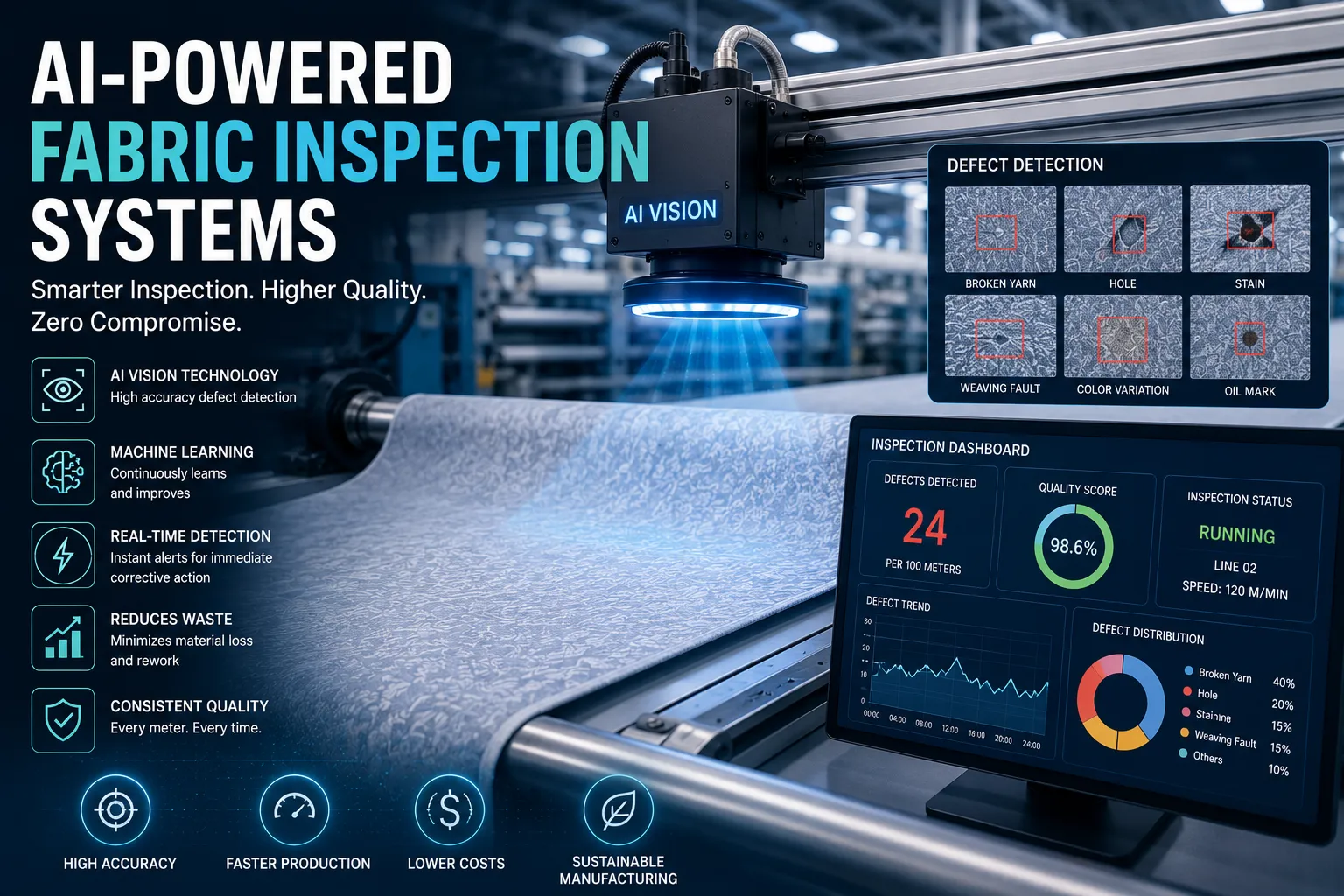
AI powered fabric inspection systems solve these challenges by combining computer vision, machine learning, high resolution cameras, and intelligent software. These systems continuously monitor fabrics as they move through the production line, identifying defects within milliseconds and alerting operators immediately. Instead of discovering problems after production is complete, manufacturers can correct issues in real time, reducing waste, improving product quality, and lowering manufacturing costs. This technology is rapidly becoming an essential part of modern textile manufacturing and is helping companies remain competitive in global markets.
What Is an AI-Powered Fabric Inspection System?
An AI powered fabric inspection system is an intelligent quality control solution that automatically examines fabrics during production using advanced imaging technology and artificial intelligence. High speed cameras capture thousands of images every minute while AI algorithms analyze each image to identify defects that might otherwise go unnoticed.
Unlike traditional inspection methods, AI systems do not become fatigued or distracted. Every meter of fabric is inspected using the same quality standards, resulting in more reliable and consistent inspections. The system continuously learns from new production data, allowing it to improve its accuracy over time.
How AI Fabric Inspection Works
The inspection process begins as fabric moves through the production line under specialized industrial cameras. These cameras capture detailed images of the textile surface at extremely high speeds. The images are instantly analyzed by machine learning models that have been trained using thousands of examples of both perfect and defective fabrics.
The AI compares every new image against its learned database and searches for abnormalities. When a defect is detected, the system immediately marks its location, classifies the type of defect, and notifies production staff. Some advanced systems can even stop the production line automatically to prevent additional defective material from being produced.
This entire process happens within seconds, allowing manufacturers to maintain continuous quality control without slowing production.
Types of Defects AI Can Detect
Modern AI powered inspection systems can identify a wide range of textile defects with exceptional accuracy. These include broken yarns, missing threads, weaving faults, stains, oil marks, color variations, dyeing inconsistencies, printing defects, holes, fabric distortion, stitching errors, wrinkles, contamination, and surface imperfections.
Unlike manual inspection, which depends on the experience and concentration of individual workers, AI applies the same inspection standards to every product. This consistency significantly reduces the number of defective products reaching customers.
Computer Vision Makes Inspection Smarter
Computer vision is the core technology behind AI powered fabric inspection. It enables computers to "see" fabrics in much the same way a human inspector would but with much greater speed and precision.
By analyzing texture, color, shape, and surface patterns, computer vision algorithms recognize subtle differences that may be invisible to the human eye. Deep learning models improve continuously as they process more production data, making inspections increasingly accurate over time.
This technology allows manufacturers to detect even microscopic defects before they become expensive quality issues.
Real Time Quality Monitoring
One of the greatest advantages of AI inspection systems is their ability to monitor quality in real time. Traditional inspections often identify defects after production has finished, resulting in costly rework or wasted materials.
AI continuously evaluates production while fabrics are still being manufactured. If defects begin appearing because of machine wear, incorrect machine settings, or raw material problems, operators receive immediate alerts.
This proactive approach allows production teams to correct problems instantly, reducing downtime and preventing large quantities of defective fabric from being produced.
AI Improves Production Efficiency
Quality control is closely connected to manufacturing efficiency. Every defective product represents wasted materials, labor, energy, and production time.
AI inspection systems improve efficiency by reducing manual inspections, minimizing production interruptions, lowering rejection rates, and helping manufacturers identify the root causes of quality problems. Because defects are detected earlier, corrective action can be taken before expensive downstream processes such as dyeing, finishing, cutting, or stitching are completed.
The result is faster production with greater consistency and lower operating costs.
Better Quality for Home Textile Products
Home textile manufacturers depend on consistent quality because customers expect products that look attractive, feel comfortable, and last for years.
AI powered inspection systems are widely used in the production of:
-
Bed Sheets
-
Pillowcases
-
Duvet Covers
-
Comforters
-
Towels
-
Curtains
-
Cushion Covers
-
Table Linen
These systems ensure that fabrics meet strict quality standards before they reach retailers and consumers.
AI Supports Sustainable Textile Manufacturing
Reducing waste is one of the biggest priorities in modern textile manufacturing. Every defective fabric roll consumes valuable raw materials, water, chemicals, electricity, and labor.
By identifying defects at the earliest possible stage, AI powered inspection systems prevent unnecessary processing and reduce material waste. Manufacturers also save water and energy by avoiding repeated dyeing, finishing, or reprocessing of defective fabrics.
Organizations such as Textile Exchange encourage the adoption of innovative technologies that improve efficiency while supporting environmentally responsible manufacturing practices.
Challenges of AI Fabric Inspection
Although AI inspection technology offers impressive benefits, implementation requires careful planning.
Manufacturers may face challenges including high initial investment, integration with existing machinery, employee training, software maintenance, cybersecurity, and data management. Smaller manufacturers may choose to introduce AI gradually, starting with critical production lines before expanding throughout the factory.
As AI technology becomes more affordable, these barriers are expected to decrease significantly.
The Future of AI Fabric Inspection
The next generation of AI inspection systems will be even more intelligent. Future technologies are expected to combine computer vision, robotics, Internet of Things (IoT) sensors, cloud computing, and predictive analytics into fully connected smart factories.
Manufacturers may soon use AI systems capable of predicting defects before they occur, automatically adjusting machine settings, and continuously optimizing production quality without manual intervention.
These innovations will further improve productivity, reduce waste, and strengthen global competitiveness for textile manufacturers.
Why AI Inspection Is Becoming an Industry Standard
Global competition requires textile manufacturers to deliver consistent quality while reducing production costs. Customers expect defect-free products, fast delivery, and sustainable manufacturing practices.
AI powered inspection systems help manufacturers achieve these goals by improving quality control, increasing production efficiency, supporting sustainability, and enhancing customer satisfaction.
Businesses that invest in intelligent inspection technologies today will be better prepared for the future of textile manufacturing.
Conclusion
AI powered fabric inspection systems are transforming textile quality control by combining computer vision, machine learning, and real-time monitoring into a single intelligent solution. These systems inspect fabrics more quickly and consistently than traditional manual methods while reducing waste, lowering production costs, and improving overall product quality.
Rather than replacing experienced quality professionals, AI provides powerful tools that support better decision making and continuous process improvement. As textile manufacturing continues to embrace digital transformation, AI powered inspection will become an essential technology for companies seeking long term growth, operational excellence, and global competitiveness.
Frequently Asked Questions
1. What is an AI powered fabric inspection system?
It is an automated quality control system that uses AI, computer vision, and cameras to detect fabric defects during production.
2. How does AI inspect fabric?
AI analyzes high resolution images of fabric and identifies defects such as holes, broken yarns, stains, and color inconsistencies.
3. Is AI better than manual fabric inspection?
AI provides faster, more consistent, and highly accurate inspections, while human experts remain important for oversight and decision making.
4. What defects can AI detect?
AI can detect weaving faults, printing errors, dyeing issues, stains, holes, wrinkles, contamination, and stitching defects.
5. Does AI reduce textile waste?
Yes. Early defect detection prevents unnecessary processing and reduces material waste.
6. Can AI improve textile manufacturing efficiency?
Yes. AI reduces downtime, improves quality, speeds up inspections, and lowers production costs.
7. Which textile products benefit from AI inspection?
Bed sheets, towels, duvet covers, curtains, cushion covers, table linen, and many other home textile products.
8. Is AI inspection expensive?
The initial investment may be high, but long term savings from improved quality and reduced waste often outweigh the cost.
9. Can small textile manufacturers use AI?
Yes. Many companies begin with one production line and gradually expand AI adoption as their business grows.
10. What is the future of AI powered fabric inspection?
Future systems will include predictive analytics, self learning algorithms, robotics, and fully automated smart factory integration.
Recent Posts
Categories
- Home Textiles (11)
- AI & Textile Innovation (10)
- AI + Textile Manufacturing (10)
- AI + Sustainability (5)
- AI + Home Textiles (4)
- AI + Supply Chain (5)
- AI + Future Technology (7)