Admin June 29, 2026
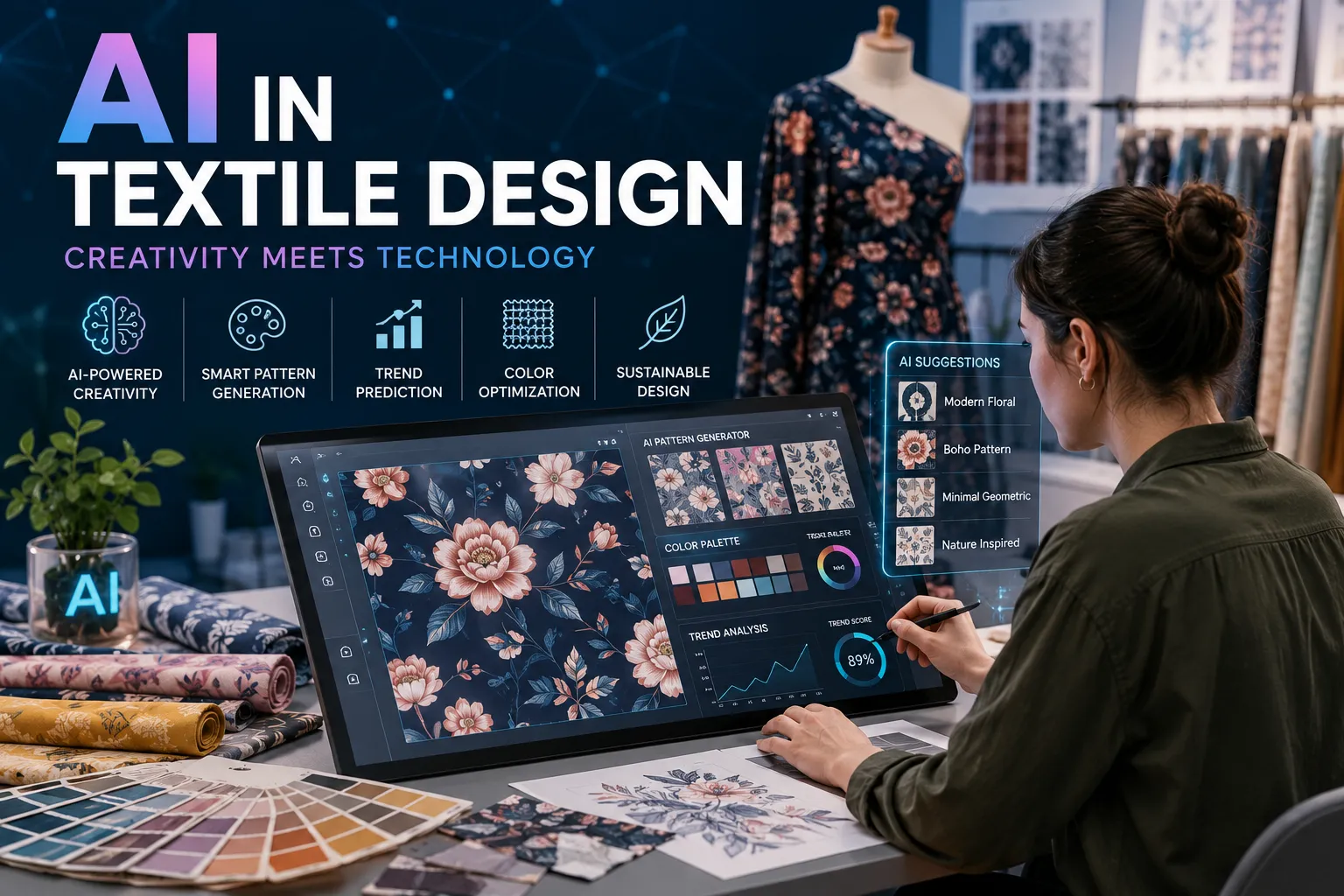
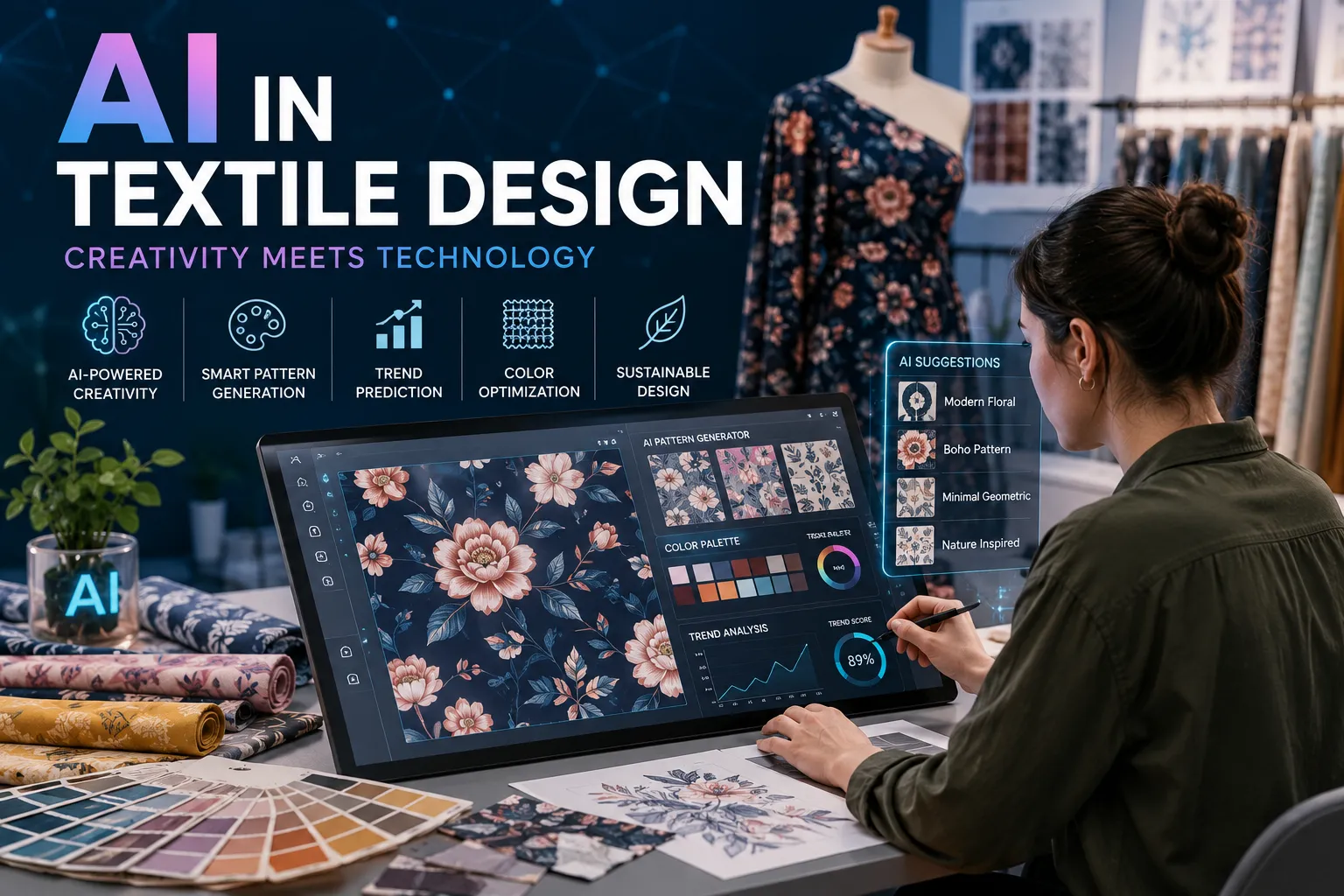
AI in Textile Design: Creativity Meets Technology
Discover how AI is transforming textile design by enhancing creativity, improving efficiency, predicting trends, and enabling personalized fabric development for the future of the textile industry.
Artificial Intelligence (AI) is changing the way textile products are designed, developed, and manufactured. Traditionally, textile design relied on the creativity and experience of designers. Today, AI acts as a powerful assistant, helping professionals generate ideas, predict market trends, optimize patterns, and create personalized textile collections faster than ever before.
Rather than replacing designers, AI enhances the creative process by automating repetitive tasks and providing valuable data-driven insights. This combination of human creativity and intelligent technology is shaping the future of the textile industry.
What Is AI in Textile Design?
AI in textile design refers to the use of machine learning, computer vision, and generative AI to support the creation of fabrics, patterns, colors, and product collections.
AI systems analyze large amounts of data, including fashion trends, customer preferences, historical sales, and color forecasts, to help designers make informed creative decisions.
Today, AI is used across various textile sectors, including:
- Home Textiles
- Fashion
- Upholstery Fabrics
- Hospitality Textiles
- Sports Textiles
- Interior Decoration
How AI Assists Textile Designers
Instead of starting every design from scratch, designers can use AI-powered tools to generate concepts and refine ideas more efficiently.
AI can assist by:
- Creating pattern variations
- Suggesting color combinations
- Recommending fabric textures
- Generating repeat designs
- Visualizing finished products
- Producing digital mockups
This allows designers to spend more time on innovation and less on repetitive manual work.
AI Powered Pattern Generation
One of the most exciting applications of AI is automated pattern creation.
By analyzing thousands of existing designs, AI can generate fresh geometric, floral, abstract, or minimalist patterns that align with current market preferences.
Designers can then customize these AI generated concepts to match their brand identity.
Predicting Design Trends
Understanding future trends is essential in the textile industry.
AI analyzes information from:
- Consumer buying behavior
- Social media trends
- Interior design movements
- Global fashion events
- Online search data
These insights help companies develop collections that better match customer demand.
Personalized Textile Design
Consumers increasingly prefer products that reflect their personal style.
AI enables personalized textile production by recommending:
- Custom colors
- Unique prints
- Personalized embroidery
- Individual room themes
- Tailored bedding collections
This level of customization improves customer satisfaction while creating new business opportunities.
AI in Home Textile Design
Home textile manufacturers are using AI to create collections that combine beauty, functionality, and sustainability.
AI supports the design of:
- Bed Sheets
- Pillowcases
- Duvet Covers
- Curtains
- Towels
- Cushions
- Table Linen
By analyzing market preferences, AI helps manufacturers create products that appeal to modern consumers.
Faster Product Development
Developing a new textile collection traditionally required weeks or even months.
AI accelerates product development by:
- Automating design drafts
- Creating digital samples
- Simulating fabrics
- Testing color combinations virtually
This reduces development time while lowering production costs.
Better Collaboration Between Designers and AI
AI should be viewed as a creative assistant rather than a replacement for human designers.
Designers contribute:
- Creativity
- Emotional understanding
- Cultural awareness
- Artistic vision
AI contributes:
- Data analysis
- Speed
- Pattern generation
- Trend prediction
- Process automation
Together, they produce stronger and more innovative textile collections.
Sustainability Through AI Design
AI also supports environmentally responsible textile production.
It helps manufacturers reduce waste by:
- Optimizing fabric layouts
- Minimizing material loss
- Predicting production demand
- Reducing unnecessary sampling
Organizations such as Textile Exchange encourage technologies that improve sustainability throughout the textile supply chain.
Challenges of Using AI in Textile Design
Despite its benefits, AI adoption also presents several challenges.
These include:
- High implementation costs
- Need for skilled professionals
- Data privacy concerns
- Software integration
- Learning curve for design teams
Many businesses adopt AI gradually while maintaining traditional creative workflows.
The Future of AI in Textile Design
Experts believe AI will become an essential part of the textile design process.
Future innovations may include:
- Real-time AI design assistants
- AI-generated fabric simulations
- Virtual reality textile visualization
- Digital twin fabric development
- Automated color forecasting
- AI-powered consumer personalization
As AI technology evolves, designers will have more powerful tools to create products that meet changing market expectations.
Why AI Matters for the Home Textile Industry
The home textile market is becoming increasingly competitive. Consumers expect products that combine quality, sustainability, functionality, and modern aesthetics.
AI helps manufacturers:
- Understand customer preferences
- Launch products faster
- Improve design accuracy
- Reduce production costs
- Increase innovation
Businesses that successfully combine creativity with AI technology will be better positioned for long term growth.
Conclusion
Artificial Intelligence is transforming textile design by making the creative process faster, smarter, and more data-driven. Rather than replacing designers, AI empowers them with insights, automation, and innovative design tools.
As the textile industry continues to evolve, the collaboration between human creativity and intelligent technology will shape the next generation of home textile products.
Frequently Asked Questions
1. What is AI in textile design?
AI in textile design uses artificial intelligence to assist with pattern creation, trend forecasting, color selection, and product development.
2. Can AI replace textile designers?
No. AI supports designers by automating repetitive tasks, while human creativity remains essential.
3. How does AI improve textile design?
It speeds up design development, predicts trends, and helps create personalized products.
4. Is AI used in home textile manufacturing?
Yes. Many manufacturers use AI to design bedding, towels, curtains, and other home textile products.
5. How does AI predict textile trends?
AI analyzes consumer behavior, market data, and design trends to identify future preferences.
6. Does AI help reduce textile waste?
Yes. AI optimizes production planning and fabric utilization, reducing material waste.
7. What industries use AI textile design?
Home textiles, fashion, hospitality, automotive, and sportswear industries all benefit from AI-assisted design.
8. Is AI expensive for textile companies?
The initial investment can be significant, but long term efficiency often offsets the cost.
9. What skills do textile designers need alongside AI?
Creativity, design principles, fabric knowledge, and the ability to work with AI powered software.
10. What is the future of AI in textile design?
The future includes smarter design tools, virtual prototyping, personalized collections, and more sustainable manufacturing.
Recent Posts
Categories
- Home Textiles (11)
- AI & Textile Innovation (10)
- AI + Textile Manufacturing (10)
- AI + Sustainability (5)
- AI + Home Textiles (4)
- AI + Supply Chain (5)
- AI + Future Technology (7)