Admin July 3, 2026
AI and Personalized Home Textile Collections
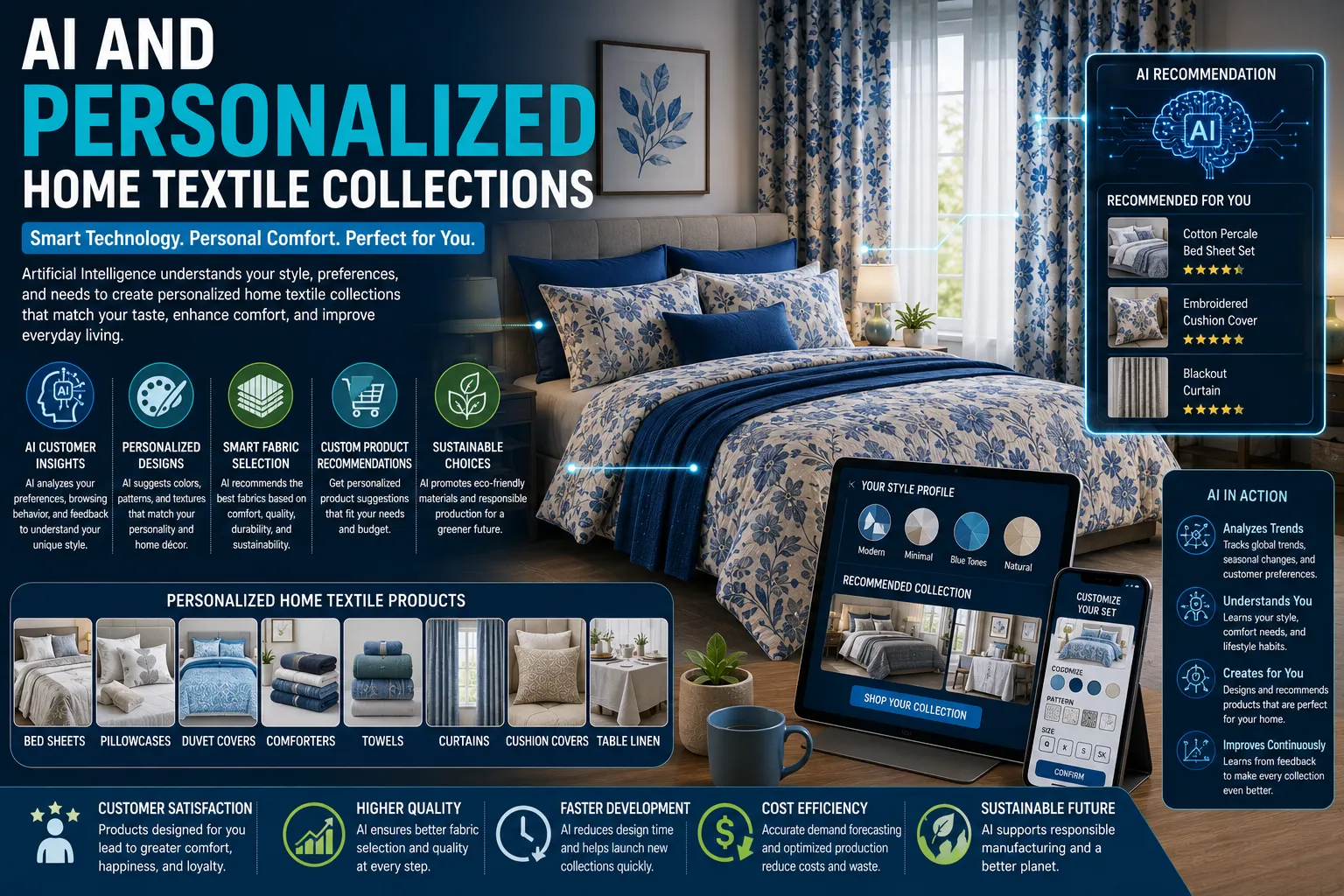
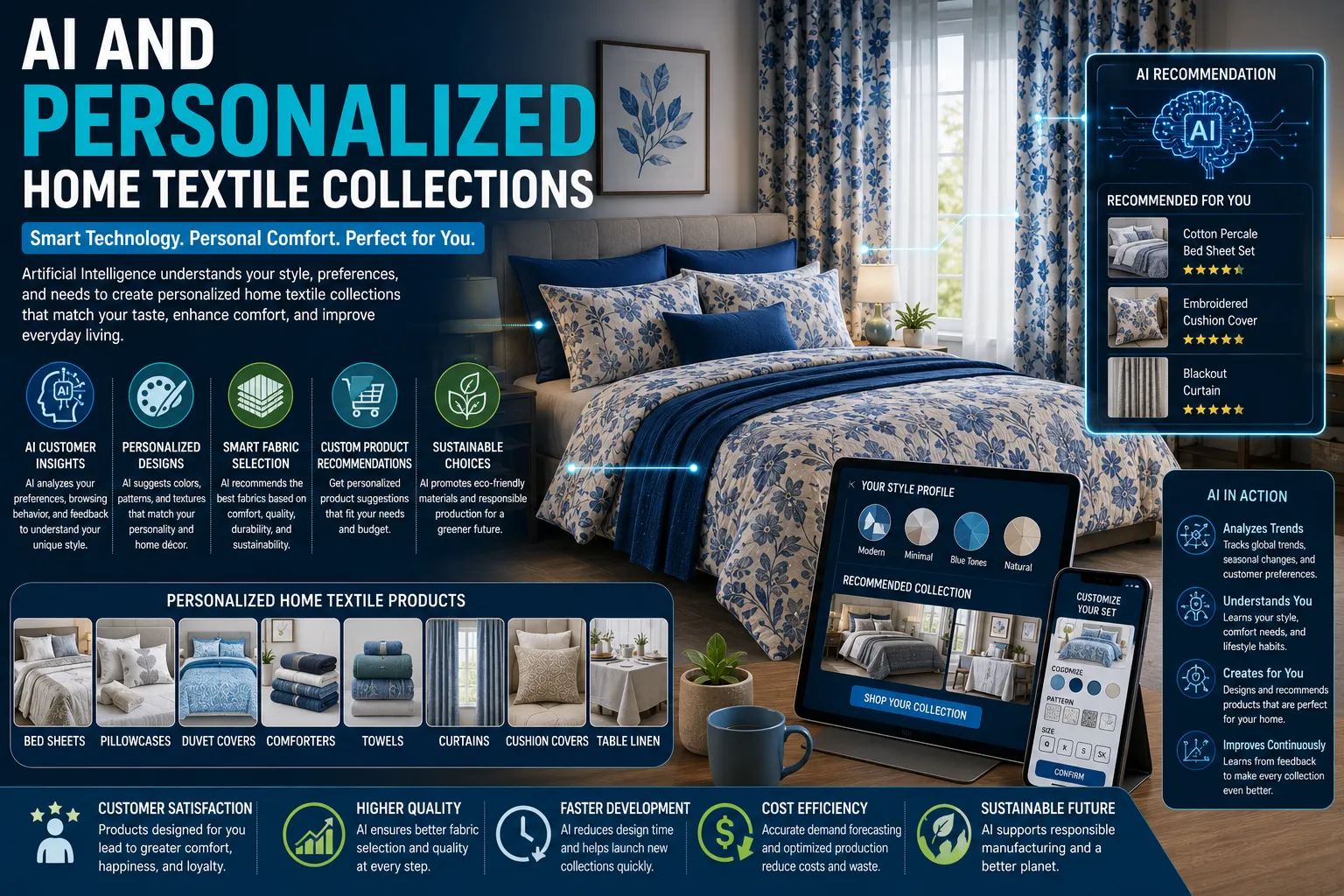
Artificial Intelligence is changing the way home textile collections are designed, produced, and sold by making personalization more accurate and accessible than ever before. Modern consumers no longer want products that are made for everyone. Instead, they prefer home textiles that match their personal style, comfort preferences, lifestyle, and interior decoration. Whether choosing bed sheets, comforters, towels, curtains, or cushion covers, customers expect products that reflect their individual taste and meet their practical needs. Artificial Intelligence makes this possible by analyzing customer behavior, shopping history, color preferences, design trends, seasonal demand, and product performance. Instead of relying on general market research alone, manufacturers and retailers can use AI to develop personalized home textile collections that deliver better customer experiences while improving business performance. From product design and fabric selection to inventory planning and online shopping recommendations, Artificial Intelligence is becoming one of the most valuable technologies shaping the future of the home textile industry.
What Are Personalized Home Textile Collections
Personalized home textile collections are product ranges designed to match the unique preferences of individual customers or specific groups of buyers.
Instead of offering identical products to everyone, manufacturers use customer information to create collections based on preferred colors, patterns, materials, textures, room styles, climate conditions, and lifestyle needs.
Artificial Intelligence makes personalization possible by analyzing large amounts of customer data and identifying purchasing patterns that would be difficult to recognize manually.
This creates shopping experiences that feel more relevant and satisfying for consumers.
How Artificial Intelligence Creates Personalized Collections
Artificial Intelligence collects information from online stores, customer reviews, shopping behavior, search history, seasonal purchasing trends, and product ratings.
Machine learning algorithms analyze this information to identify customer preferences and recommend products that closely match individual interests.
AI also helps designers understand which colors, prints, fabrics, and product combinations are becoming popular among different customer groups.
Manufacturers can use these insights to develop collections that better reflect real market demand instead of relying on assumptions.
Better Product Recommendations
One of the most visible uses of Artificial Intelligence is personalized product recommendations.
When customers browse an online home textile store, AI analyzes their interests and suggests products that complement previous purchases or match their preferred style.
For example, a customer purchasing cotton bed sheets may receive recommendations for matching pillowcases, duvet covers, comforters, or decorative cushion covers.
These intelligent recommendations improve the shopping experience while increasing customer satisfaction and sales.
Smarter Design Decisions
Artificial Intelligence supports textile designers by providing valuable information before the creative process begins.
AI analyzes market trends, social media discussions, interior design preferences, fashion influences, and customer feedback to identify emerging design opportunities.
Designers can combine their creativity with AI insights to develop collections that appeal to different customer lifestyles and regional markets.
This approach shortens product development time while increasing the likelihood of commercial success.
Personalized Fabric Selection
Different customers value different fabric characteristics.
Some prefer soft cotton for everyday comfort, while others choose bamboo fabrics for sustainability or linen for a natural appearance.
Artificial Intelligence studies customer preferences and recommends suitable materials based on comfort, durability, climate, maintenance requirements, and buying behavior.
This allows manufacturers to develop collections that satisfy diverse customer needs without unnecessary product variation.
Supporting Sustainable Manufacturing
Personalization also supports sustainability by reducing unnecessary production.
Artificial Intelligence predicts customer demand more accurately, allowing manufacturers to produce collections based on actual market needs instead of excessive inventory.
AI also improves fabric utilization, production planning, inventory management, and quality control while reducing waste and conserving resources.
These improvements help manufacturers achieve both environmental and financial goals.
Personalized Home Textile Products
Artificial Intelligence supports personalized development for many home textile categories, including:
-
Bed Sheets
-
Pillowcases
-
Duvet Covers
-
Comforters
-
Blankets
-
Towels
-
Curtains
-
Cushion Covers
-
Mattress Protectors
-
Table Linen
Each collection can be tailored according to customer preferences, interior themes, fabric choices, and seasonal requirements.
Improving Online Shopping Experiences
Artificial Intelligence makes online shopping more convenient by helping customers find products that suit their individual preferences.
AI powered search tools understand customer behavior and display products based on previous purchases, browsing activity, room decoration styles, preferred colors, and price expectations.
This creates a more enjoyable shopping experience while reducing the time customers spend searching for suitable products.
Personalized shopping also increases customer confidence when making purchasing decisions.
Better Inventory Management
Artificial Intelligence helps manufacturers avoid producing products that customers may not purchase.
By analyzing sales history, regional demand, seasonal changes, and consumer preferences, AI predicts future product demand with high accuracy.
Manufacturers maintain balanced inventory levels while reducing storage costs and minimizing unsold stock.
Efficient inventory management supports both profitability and sustainability.
The Role of Artificial Intelligence in Future Home Textiles
Artificial Intelligence will continue making home textile collections more personalized over the coming years.
Future AI systems will recommend products based on room dimensions, climate conditions, lifestyle habits, family needs, health preferences, and smart home integration.
Customers may even customize colors, patterns, fabric types, and sizes before products enter manufacturing.
This level of personalization will transform how home textiles are designed, produced, and sold.
Challenges of Personalized AI Systems
Although Artificial Intelligence offers many benefits, manufacturers must manage customer data responsibly while protecting privacy and maintaining cybersecurity.
Successful implementation also requires reliable production data, employee training, digital infrastructure, and continuous software improvement.
Companies that combine responsible data management with intelligent manufacturing will gain long term competitive advantages.
Why Home Textile Manufacturers Should Invest in AI
Artificial Intelligence improves customer satisfaction, strengthens product development, reduces waste, increases sales, supports sustainability, improves inventory planning, accelerates innovation, and enhances overall business performance.
Consumers increasingly expect personalized experiences, making AI an essential technology for future home textile manufacturers.
Conclusion
Artificial Intelligence is transforming personalized home textile collections by helping manufacturers understand customer preferences, improve product recommendations, optimize design decisions, reduce waste, and create products that better reflect individual lifestyles. Rather than replacing designers, AI provides valuable insights that support creativity while making manufacturing more efficient and sustainable.
As technology continues advancing, personalized home textile collections will become increasingly intelligent, customizable, and environmentally responsible. Companies investing in AI today will be better prepared to deliver products that meet changing customer expectations while building stronger brands in the competitive global home textile market.
To learn more about responsible and sustainable innovation in the global textile industry, visit Textile Exchange
Frequently Asked Questions
1. What are personalized home textile collections?
They are home textile products designed to match individual customer preferences, styles, and lifestyle needs.
2. How does AI personalize home textile collections?
AI analyzes customer behavior, shopping history, reviews, and market trends to recommend and develop products that suit specific preferences.
3. Can AI improve textile design?
Yes. AI provides designers with valuable market insights, color trends, fabric recommendations, and customer preferences.
4. Does AI improve online shopping?
Yes. AI offers personalized product recommendations and helps customers quickly find products that match their interests.
5. Can AI reduce textile waste?
Yes. AI predicts customer demand accurately, reducing overproduction and unnecessary inventory.
6. Which home textile products benefit from AI personalization?
Bed sheets, pillowcases, duvet covers, comforters, blankets, towels, curtains, cushion covers, mattress protectors, and table linen.
7. Does AI support sustainable manufacturing?
Yes. AI improves production planning, resource utilization, inventory management, and waste reduction.
8. What challenges exist when using AI?
Customer privacy, data security, employee training, and technology investment are the main challenges.
9. Is AI replacing textile designers?
No. AI supports designers with intelligent insights while human creativity remains essential.
10. Why is AI important for the future of home textiles?
AI enables manufacturers to create personalized, high quality, sustainable, and customer focused textile collections that improve business performance and customer satisfaction.
Recent Posts
Categories
- Home Textiles (11)
- AI & Textile Innovation (10)
- AI + Textile Manufacturing (10)
- AI + Sustainability (5)
- AI + Home Textiles (4)
- AI + Supply Chain (5)
- AI + Future Technology (7)