Admin July 2, 2026
AI and Circular Fashion: The Future of Sustainable Textiles
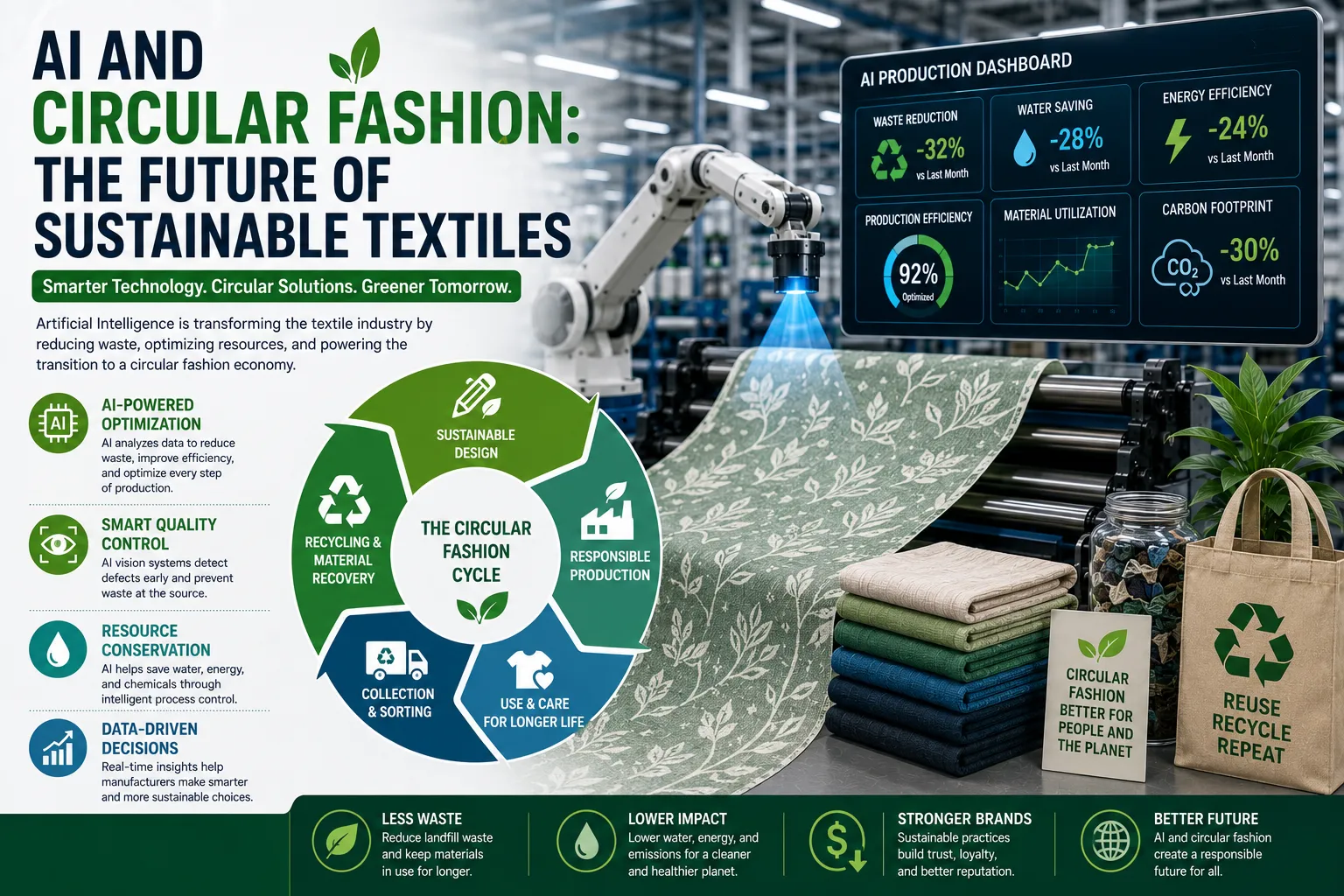
Artificial Intelligence is becoming a driving force behind the growth of circular fashion and sustainable textile manufacturing. The traditional textile industry has long followed a linear production model where raw materials are used to manufacture products that are eventually discarded after use. This approach has resulted in growing amounts of textile waste, excessive resource consumption, environmental pollution, and increasing pressure on natural ecosystems. Circular fashion offers a better alternative by keeping textile materials in use for as long as possible through recycling, repairing, reusing, and responsible manufacturing. Artificial Intelligence is making this transition more practical and efficient by helping manufacturers optimize production, reduce waste, improve recycling, predict customer demand, and manage resources intelligently. Instead of depending on outdated manufacturing methods, companies can use AI to create a textile industry that is both profitable and environmentally responsible. As technology continues to evolve, AI will play an essential role in building the future of sustainable textiles and supporting a global circular economy.
What Is Circular Fashion
Circular fashion is a manufacturing and business model that focuses on extending the life of textile products instead of treating them as disposable items. The goal is to design products that can be reused, repaired, recycled, or transformed into new materials after their original purpose has ended.
Unlike traditional manufacturing, circular fashion reduces waste by keeping valuable materials within the production cycle for as long as possible. This approach lowers demand for new raw materials while reducing landfill waste and protecting natural resources.
Artificial Intelligence strengthens circular fashion by making these processes faster, more accurate, and more efficient.
How Artificial Intelligence Supports Circular Fashion
Artificial Intelligence analyzes large amounts of production, sales, recycling, and customer data to help manufacturers make better decisions throughout the product life cycle.
Machine learning algorithms identify production patterns, predict future demand, optimize material usage, classify textile waste, and improve recycling efficiency.
AI also supports manufacturers by reducing overproduction, improving inventory planning, and helping companies create products designed for longer life and easier recycling.
These improvements reduce environmental impact while increasing operational efficiency.
Reducing Textile Waste
One of the biggest advantages of AI in circular fashion is its ability to reduce textile waste.
Artificial Intelligence improves production planning by predicting customer demand more accurately, allowing manufacturers to produce only the quantities required by the market.
Computer vision systems inspect fabrics during production and detect defects immediately, preventing large amounts of defective material from being wasted.
AI also creates optimized cutting layouts that maximize fabric utilization and reduce leftover material.
These improvements lower production costs while supporting sustainable manufacturing.
Smarter Textile Recycling
Recycling is one of the most important elements of circular fashion.
Artificial Intelligence improves recycling by identifying different fiber types, recognizing fabric blends, sorting textile materials automatically, and improving recycling accuracy.
Advanced AI systems analyze colors, fabric structures, and material compositions before directing textiles to the most suitable recycling process.
Better sorting increases the quality of recycled fibers while reducing contamination during recycling operations.
This allows manufacturers to recover valuable materials that would otherwise become waste.
Improving Sustainable Product Design
Artificial Intelligence helps designers create products that support circular fashion principles from the beginning.
AI analyzes material performance, customer preferences, environmental impact, and manufacturing efficiency before recommending sustainable design solutions.
Designers can select fabrics that are easier to recycle, require fewer natural resources, and maintain durability over a longer product life.
This intelligent design process reduces waste while supporting environmentally responsible innovation.
Better Demand Forecasting
Overproduction remains one of the largest causes of textile waste worldwide.
Artificial Intelligence analyzes historical sales data, seasonal demand, customer behavior, fashion trends, and market conditions to generate highly accurate demand forecasts.
Manufacturers can produce the right quantity of products while avoiding unnecessary inventory accumulation.
Better forecasting reduces waste, lowers storage costs, and improves overall business efficiency.
Supporting Home Textile Manufacturing
Circular fashion principles are becoming increasingly important in home textile manufacturing.
Artificial Intelligence supports sustainable production for products such as:
-
Bed Sheets
-
Pillowcases
-
Duvet Covers
-
Comforters
-
Towels
-
Curtains
-
Cushion Covers
-
Table Linen
AI helps manufacturers improve product durability, reduce waste, optimize inventory, and increase recycling opportunities throughout the product life cycle.
Improving Supply Chain Sustainability
A sustainable textile industry requires an efficient supply chain.
Artificial Intelligence analyzes supplier performance, transportation routes, warehouse inventory, customer demand, and production schedules to improve logistics and reduce environmental impact.
Better coordination reduces unnecessary transportation, lowers fuel consumption, minimizes inventory waste, and improves resource utilization across the supply chain.
These improvements strengthen both sustainability and profitability.
Supporting Responsible Resource Management
Artificial Intelligence helps manufacturers manage natural resources more efficiently by reducing water consumption, optimizing chemical usage, lowering energy requirements, and minimizing raw material waste.
AI continuously monitors production performance and recommends process improvements that increase efficiency while reducing environmental impact.
Organizations such as Textile Exchange encourage manufacturers to adopt advanced technologies that support circular production and responsible resource management.
Challenges of Implementing AI in Circular Fashion
Although Artificial Intelligence offers significant advantages, successful implementation requires investment in technology, employee training, digital infrastructure, and reliable production data.
Manufacturers must also integrate AI systems with existing production equipment while maintaining strong cybersecurity and data management practices.
Despite these challenges, many companies recover their investment through improved efficiency, lower waste, and stronger sustainability performance.
The Future of AI and Circular Fashion
The future of circular fashion will become increasingly connected through Artificial Intelligence, machine learning, robotics, computer vision, and smart manufacturing technologies.
Future AI systems will automatically identify recyclable materials, optimize recycling processes, monitor environmental performance, predict customer demand, and coordinate sustainable supply chains in real time.
These intelligent technologies will help manufacturers create products that remain valuable throughout multiple life cycles instead of becoming waste after a single use.
Businesses adopting these innovations today will become leaders in the future sustainable textile industry.
Why Textile Manufacturers Should Adopt AI for Circular Fashion
Artificial Intelligence provides numerous long term business advantages while supporting environmental responsibility.
Manufacturers benefit from reduced waste, improved production planning, higher product quality, stronger inventory management, lower operating costs, better recycling efficiency, improved customer satisfaction, stronger brand reputation, and increased global competitiveness.
Consumers increasingly choose brands that demonstrate sustainability, making AI powered circular manufacturing an important investment for long term business success.
Conclusion
Artificial Intelligence is transforming circular fashion by helping manufacturers reduce waste, improve recycling, optimize production, strengthen supply chains, and create products designed for longer life. Rather than replacing human creativity, AI provides intelligent tools that support smarter decisions and more responsible manufacturing practices.
As the global textile industry moves toward sustainability, Artificial Intelligence will continue driving innovation that benefits manufacturers, consumers, and the environment. Companies embracing AI powered circular fashion today will be well positioned to lead the future of sustainable textiles while achieving long term growth and environmental responsibility.
Frequently Asked Questions
1. What is circular fashion?
Circular fashion is a sustainable approach that focuses on reusing, repairing, recycling, and extending the life of textile products.
2. How does AI support circular fashion?
AI improves production planning, recycling, quality control, material usage, and demand forecasting to reduce textile waste.
3. Can AI improve textile recycling?
Yes. AI identifies fabric types, sorts materials accurately, and improves recycling efficiency.
4. How does AI reduce overproduction?
AI analyzes customer demand and market trends to help manufacturers produce only the required quantities.
5. Does AI support sustainable textile design?
Yes. AI helps designers choose durable, recyclable, and environmentally responsible materials.
6. Which home textile products benefit from AI?
Bed sheets, pillowcases, duvet covers, comforters, towels, curtains, cushion covers, and table linen.
7. Can AI reduce environmental impact?
Yes. AI reduces waste, conserves water, lowers energy consumption, and improves resource efficiency.
8. What technologies work with AI in circular fashion?
Machine learning, computer vision, robotics, smart manufacturing, and digital supply chain systems.
9. What challenges exist when adopting AI?
Technology investment, employee training, system integration, and reliable production data are common challenges.
10. Why is AI important for the future of sustainable textiles?
AI helps manufacturers build efficient, profitable, and environmentally responsible production systems while supporting a circular economy.
Recent Posts
Categories
- Home Textiles (11)
- AI & Textile Innovation (10)
- AI + Textile Manufacturing (10)
- AI + Sustainability (5)
- AI + Home Textiles (4)
- AI + Supply Chain (5)
- AI + Future Technology (7)